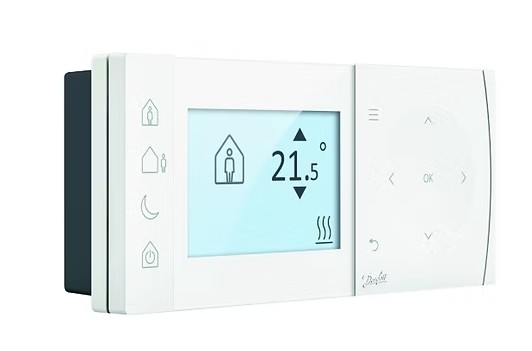
Description
Function of a Refrigeration Thermostat
The primary function of a thermostat is to maintain the required temperature by controlling the operation of connected refrigeration equipment.
Depending on the system design, a thermostat can:
- Monitor refrigerated-space temperature
- Start and stop the refrigeration compressor
- Control cooling cycles
- Maintain a preset temperature range
- Control evaporator or condenser fans where applicable
- Operate defrost-related components in specific applications
- Provide temperature-based switching
- Prevent excessive cooling or temperature rise
- Support automatic refrigeration-system operation
How a Refrigeration Thermostat Works
A thermostat operates by sensing temperature and changing its electrical switching state when the temperature reaches a predetermined set point.
For example, when the temperature rises above the configured cooling set point, the thermostat can signal the refrigeration system to begin cooling. Once the desired temperature is reached, it can switch the compressor or associated control circuit off.
The exact operating sequence depends on the thermostat type and refrigeration system configuration.
Types of Refrigeration Thermostats
Mechanical Thermostats
Mechanical thermostats use a temperature-sensitive mechanism to operate electrical contacts.
Common sensing arrangements may include:
- Bimetal sensing elements
- Capillary tube sensors
- Temperature-sensitive mechanical elements
They are widely used in conventional refrigeration equipment.
Electronic Thermostats
Electronic thermostats use an electronic temperature sensor and control circuit to monitor temperature and switch or control refrigeration equipment.
They may provide:
- Digital temperature display
- Adjustable temperature set points
- Differential adjustment
- Alarm functions
- Sensor inputs
- Relay outputs
- Additional control functions
Digital Refrigeration Thermostats
Digital thermostats are commonly used in modern commercial and industrial refrigeration systems where accurate temperature monitoring and programmable control are required.
Depending on the controller, features may include:
- Digital display
- Adjustable set point
- Temperature differential
- Defrost control
- Fan control
- Compressor protection functions
- Temperature alarms
- Sensor fault indication
Main Components
Depending on the thermostat design, the assembly may include:
- Temperature sensing element
- Thermostat body
- Electrical contacts or relay
- Adjustment mechanism
- Capillary tube and sensing bulb, where applicable
- Electronic temperature sensor, where applicable
- Terminals
- Control circuit
- Display and buttons on digital models
- Mounting hardware
Applications
Refrigeration thermostats are used in a wide range of equipment, including:
- Commercial refrigerators
- Industrial refrigerators
- Freezers
- Cold rooms
- Cold storage systems
- Display refrigerators
- Beverage coolers
- Food storage equipment
- Refrigerated cabinets
- Ice-making equipment
- HVAC-R systems
- Industrial cooling systems
- Refrigeration compressor control systems
Common Thermostat Problems
A faulty thermostat can cause incorrect temperature control or abnormal refrigeration operation.
Compressor Does Not Start
Possible causes may include:
- Faulty thermostat contacts
- Incorrect temperature setting
- Damaged sensor
- Wiring problem
- Electrical connection failure
- Faulty control circuit
Compressor Runs Continuously
Continuous operation may be associated with:
- Incorrect thermostat setting
- Faulty temperature sensing
- Stuck contacts
- Incorrect differential
- Refrigeration-system problems
- Inadequate cooling capacity
Incorrect Temperature Reading
Electronic thermostats may show incorrect readings due to:
- Sensor failure
- Sensor wiring problems
- Calibration issues
- Electrical interference
- Incorrect sensor type
- Controller configuration problems
Unstable Temperature Control
Temperature fluctuations can occur because of incorrect settings, sensor placement, thermostat malfunction, refrigeration-system performance, or inadequate temperature control configuration.
Inspection & Maintenance
Regular inspection helps maintain reliable temperature control.
Recommended checks include:
- Verify the thermostat set point
- Check temperature readings against an independent reference where appropriate
- Inspect wiring and terminals
- Check sensor condition
- Inspect capillary tubes for damage on mechanical models
- Check for loose electrical connections
- Verify switching operation
- Inspect mounting and sensor placement
- Check relay/contact condition
- Verify controller settings on electronic models
- Replace damaged or unreliable components
Testing should be performed according to the equipment manufacturer’s service requirements and applicable electrical safety procedures.
Thermostat Selection Parameters
Selecting the correct thermostat requires compatibility with the refrigeration system and its electrical and temperature requirements.
| Parameter | Requirement |
|---|---|
| Refrigeration Equipment | Refrigerator / freezer / cold room / other |
| Thermostat Type | Mechanical / electronic / digital |
| Temperature Range | Application-specific |
| Set Point Range | As required |
| Differential | Application-specific |
| Sensor Type | Capillary / bulb / electronic sensor / other |
| Electrical Rating | According to connected load |
| Supply Voltage | According to model |
| Contact Configuration | As required |
| Number of Outputs | According to application |
| Display | Required for digital models |
| Sensor Cable Length | According to installation |
| Mounting Type | Panel / surface / equipment-specific |
| Operating Temperature | Application-specific |
| Compressor Compatibility | Must match control requirements |
| Manufacturer / Part Number | As specified |
Why Choose Aegis Projects?
Aegis Projects Technology supplies refrigeration thermostats and temperature-control components for maintenance, replacement, and refrigeration-system requirements.
We can assist with thermostat selection based on:
- Refrigeration equipment model
- Original thermostat part number
- Temperature range
- Sensor configuration
- Electrical rating
- Control requirements
- Mounting arrangement
- Replacement compatibility
For reliable temperature control, the thermostat should be correctly matched to the refrigeration equipment and connected control circuit.
Contact Aegis Projects Technology for refrigeration thermostats and related refrigeration spare parts.