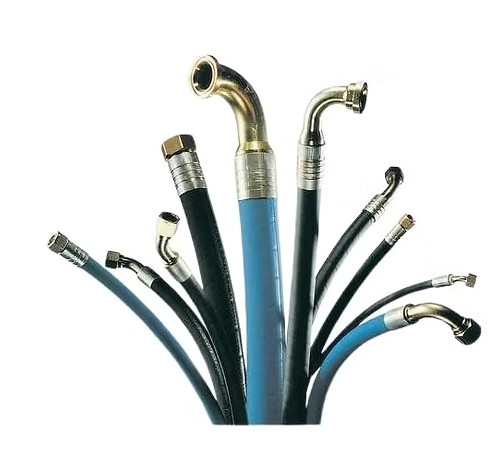
Description
Functions of Hydraulic Hose Pipes
Hydraulic hoses are used for:
- Transporting hydraulic fluid between system components
- Connecting hydraulic pumps to valves
- Connecting valves to hydraulic cylinders
- Connecting valves to hydraulic motors
- Connecting mobile or moving components
- Accommodating vibration and movement
- Connecting hydraulic power units to machinery
- Providing flexible connections around equipment
- Supporting hydraulic system installation and maintenance
How a Hydraulic Hose Pipe Works
A hydraulic hose provides a flexible passage for hydraulic fluid while withstanding the pressure and temperature conditions specified for the hose.
A typical hydraulic circuit may use hoses between:
Hydraulic Pump → Hose → Control Valve → Hose → Hydraulic Cylinder
As hydraulic fluid flows through the hose, the hose assembly must withstand the system’s operating pressure, temperature, movement, and environmental conditions.
The hose must be properly selected and assembled with compatible fittings to ensure safe and reliable operation.
Main Construction of a Hydraulic Hose
A hydraulic hose generally consists of multiple layers, depending on its design.
1. Inner Tube
The inner tube carries the hydraulic fluid and must be compatible with the specified hydraulic oil or other approved fluid.
2. Reinforcement Layer
The reinforcement provides the hose with its pressure-carrying capability.
Depending on the hose design, reinforcement may consist of:
- Textile reinforcement
- Braided wire
- Spiral wire
- Other application-specific reinforcement
3. Outer Cover
The outer cover protects the hose from environmental conditions such as abrasion, moisture, temperature, and other external influences.
The actual construction depends on the hose specification.
Types of Hydraulic Hoses
1. Wire-Braided Hydraulic Hoses
Wire-braided hoses are commonly used for hydraulic applications requiring suitable pressure capability and flexibility.
2. Wire-Spiral Hydraulic Hoses
Spiral-reinforced hoses are designed for applications requiring higher pressure or demanding dynamic conditions, subject to the specific hose specification.
3. Textile-Reinforced Hoses
Textile-reinforced hoses can be used in suitable lower-pressure hydraulic and fluid-transfer applications.
4. Thermoplastic Hydraulic Hoses
Thermoplastic hoses can provide flexibility and may be selected for specific hydraulic applications based on pressure, temperature, and fluid compatibility.
5. High-Temperature Hydraulic Hoses
Special hose constructions are available for applications involving elevated operating temperatures.
6. Hydraulic Hose Assemblies
A hose can be supplied as an assembly with crimped or otherwise suitably installed fittings at one or both ends.
Hydraulic Hose Fittings
Hydraulic hose fittings provide the connection between the hose and hydraulic equipment.
Depending on the application, fittings may include:
- Straight fittings
- Elbow fittings
- Tee fittings
- Adapters
- Threaded fittings
- Flange connections
- Quick couplings
- Swivel fittings
- Metric fittings
- BSP fittings
- SAE fittings
- Other application-specific connection types
The fitting must match the hose, equipment connection, pressure rating, sealing arrangement, and application.
Hydraulic Hose Applications
Hydraulic hoses are used in:
- Industrial hydraulic systems
- Hydraulic power units
- Construction equipment
- Excavators
- Material-handling equipment
- Cranes
- Hydraulic presses
- Machine tools
- Injection moulding machines
- Manufacturing machinery
- Mining equipment
- Agricultural machinery
- Mobile hydraulic equipment
- Packaging machinery
- Process equipment
- Hydraulic lifting systems
- Automation systems
Hydraulic Hose Pressure Rating
The hose must be capable of handling the hydraulic system’s operating pressure.
Important pressure parameters may include:
- Working pressure
- Maximum operating pressure
- Peak pressure
- Burst pressure
The hose should be selected with an appropriate pressure rating for the actual hydraulic application.
The pressure rating of the complete hose assembly may also depend on the fittings and assembly method.
Hydraulic Hose Temperature Rating
Hydraulic hose materials and construction must be suitable for the temperature conditions of the application.
Consider:
- Hydraulic fluid temperature
- Ambient temperature
- Minimum operating temperature
- Maximum operating temperature
- Heat sources near the hose
- Temperature fluctuations
Operating outside the manufacturer’s specified temperature range can reduce hose service life.
Hydraulic Fluid Compatibility
The hose inner tube must be compatible with the hydraulic fluid used in the system.
Compatibility should be verified for:
- Hydraulic oil type
- Fluid additives
- Operating temperature
- Fluid viscosity
- Special fluids where applicable
The hose manufacturer’s compatibility specifications should be checked before selecting a hose for a particular hydraulic fluid.
Common Hydraulic Hose Problems
Hydraulic hoses can deteriorate because of pressure, temperature, mechanical stress, contamination, incorrect installation, or environmental exposure.
Common problems include:
- External leakage
- Hose cracking
- Abrasion
- Bulging
- Kinking
- Twisting
- Cover damage
- Reinforcement exposure
- Fitting leakage
- Hose separation
- Excessive vibration
- Premature failure
- Incorrect hose routing
- Excessive bending
A damaged hydraulic hose should be inspected and replaced according to appropriate maintenance and safety procedures.
Hydraulic Hose Inspection and Maintenance
Regular hose inspection can help identify potential failures.
Check for:
- Cracks
- Cuts
- Abrasion
- Bulges
- Flattening
- Kinks
- Twisting
- Exposed reinforcement
- Oil leakage
- Damaged fittings
- Loose connections
- Excessive movement
- Incorrect routing
- Contact with hot surfaces
- Contact with sharp edges
Hoses showing significant physical damage or leakage should not be continued in service without appropriate assessment.
Hydraulic Hose Installation
Correct installation is important for hose service life and system reliability.
Consider the following:
- Select the correct hose size.
- Confirm pressure and temperature ratings.
- Use compatible fittings.
- Maintain the manufacturer’s minimum bend radius.
- Avoid twisting the hose during installation.
- Prevent excessive bending.
- Provide suitable hose support.
- Protect the hose from abrasion.
- Keep hoses away from excessive heat.
- Avoid unnecessary hose length.
- Ensure fittings are properly installed.
- Check the assembly for leakage after installation.
The hose should be routed so that normal machine movement does not create excessive bending, stretching, twisting, or abrasion.
Hydraulic Hose Selection
The correct hose should be selected according to the complete hydraulic application.
| Specification | Requirement |
|---|---|
| Application | Industrial / Mobile / Process / Hydraulic Equipment |
| Hose Type | Wire Braided / Spiral / Textile / Thermoplastic / Other |
| Nominal Bore | According to Required Flow |
| Inner Diameter | According to System Flow |
| Working Pressure | According to Hydraulic System |
| Maximum Pressure | According to Hose Specification |
| Burst Pressure | According to Manufacturer |
| Operating Temperature | Application Specific |
| Hydraulic Fluid | Application Specific |
| Reinforcement | Wire / Textile / Application Specific |
| Outer Cover | Application Specific |
| Hose Length | According to Installation |
| Minimum Bend Radius | According to Hose Specification |
| Fitting Type | Application Specific |
| Connection Size | According to Equipment |
| Thread Type | BSP / Metric / SAE / Other |
| End Configuration | Straight / Elbow / Swivel / Other |
| Coupling | As Required |
| Manufacturer / Part Number | As Required |
Hydraulic Hose Assembly
A hydraulic hose assembly consists of a hose combined with suitable end fittings.
The complete assembly should be selected based on:
- Hose type
- Hose bore
- Working pressure
- Temperature
- Fluid compatibility
- Fitting type
- Thread configuration
- Connection orientation
- Hose length
- Bend radius
- Machine movement
The hose and fittings should be compatible with one another and assembled using an appropriate method.
Replacement Considerations
When replacing a hydraulic hose, the replacement should not be selected only by matching its external dimensions.
Verify:
- Original hose specification
- Internal diameter
- Working pressure
- Temperature range
- Hydraulic fluid
- Reinforcement type
- Fitting type
- Thread size
- Hose length
- Bend radius
- Connection orientation
- Equipment movement
- Manufacturer and part number where applicable
A hose with the same nominal diameter may not be suitable if its pressure, temperature, fluid compatibility, or fitting configuration differs.
Hydraulic Hose Supplier – Aegis Projects
Aegis Projects Technology Pvt. Ltd. supplies hydraulic hoses and hose assemblies for industrial and commercial hydraulic applications.
Our hydraulic spare-parts range includes hydraulic hose pipes, hose assemblies, hydraulic fittings, quick couplings, hydraulic valves, hydraulic pumps, hydraulic cylinders, hydraulic filters, hydraulic seals, hydraulic accumulators, and other hydraulic components.
Hydraulic hose pipes can be selected according to the required bore size, pressure rating, temperature range, hydraulic fluid, reinforcement, fitting configuration, hose length, bend radius, and application requirements.
Contact Aegis Projects for hydraulic hose pipes and compatible hydraulic hose assemblies for your machinery and hydraulic system requirements.