Description
Function of Gerotors
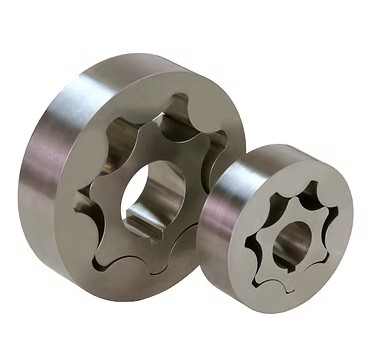
A gerotor assembly provides controlled fluid displacement through the relative movement of an inner and outer rotor.
Depending on the application, a gerotor can help:
- Circulate lubricating oil
- Supply lubricant to bearings
- Maintain oil circulation through auxiliary systems
- Support lubrication-system pressure
- Transfer fluid at controlled displacement
- Support continuous lubrication during compressor operation
- Provide compact positive-displacement pumping action
The exact function depends on the compressor’s lubrication and auxiliary-system configuration.
Gerotor Operating Principle
A typical gerotor arrangement consists of:
Inner Rotor + Outer Rotor → Fluid Chambers → Positive Fluid Displacement
As the inner and outer rotors rotate, the volume of the spaces between the rotor profiles changes.
This creates a pumping action that:
- Draws lubricant or fluid into the pump
- Traps the fluid between the rotor profiles
- Carries the fluid through the rotating assembly
- Discharges the fluid toward the outlet
- Maintains continuous fluid circulation while the pump operates
The exact displacement and flow characteristics depend on the gerotor geometry and pump design.
Gerotors in Compressor Lubrication Systems
Where a centrifugal compressor incorporates a gerotor-type oil pump, the gerotor assembly can form part of the lubrication circuit supplying oil to critical components.
The lubrication circuit may serve:
- Radial bearings
- Thrust bearings
- Gear assemblies
- Compressor shaft systems
- Gearbox components
- Other lubricated auxiliary components
Proper oil circulation is essential for maintaining the required lubrication conditions of high-speed rotating equipment.
Gerotor Construction
Gerotor assemblies are precision-machined components requiring accurate rotor geometry and controlled clearances.
Depending on the design, the assembly may include:
- Inner rotor
- Outer rotor
- Rotor teeth or lobes
- Pump housing
- Drive interface
- Locating surfaces
- Shaft connection
- Sealing interfaces
The exact configuration varies according to the pump manufacturer and compressor package.
Gerotor Materials
Material selection depends on the pumping application, lubricant characteristics, operating speed, temperature, pressure, and expected service life.
Potential material considerations include:
- Hardened alloy steel
- Carbon steel
- Stainless steel
- Wear-resistant alloys
- Application-specific engineering materials
The material, heat treatment, surface finish, and hardness should be matched to the original equipment specification.
Importance of Gerotor Clearances
Gerotor performance depends significantly on the clearances between the inner rotor, outer rotor, and surrounding housing.
Excessive clearance can contribute to:
- Reduced pumping efficiency
- Internal leakage
- Reduced oil flow
- Reduced lubrication pressure
- Increased wear
Insufficient or incorrect clearance can contribute to:
- Rotor contact
- Increased friction
- Excessive heat generation
- Premature component damage
Clearances should therefore be maintained according to the manufacturer’s specified tolerances.
Lubrication and Gerotor Operation
The fluid being pumped by the gerotor is often an important part of the component’s operating environment.
For compressor oil-pump applications, the lubrication system should maintain suitable:
- Oil viscosity
- Oil temperature
- Oil cleanliness
- Oil pressure
- Oil flow
Contaminated lubricant can accelerate wear of precision gerotor surfaces and associated pump components.
Common Causes of Gerotor Wear
Gerotors can experience wear due to:
- Contaminated lubricant
- Insufficient lubrication
- Incorrect lubricant viscosity
- Excessive operating temperature
- Foreign particles
- Incorrect clearances
- Rotor misalignment
- Excessive operating loads
- Prolonged service
- Improper installation
Wear should be evaluated together with the condition of the pump housing and associated components.
Signs of Gerotor or Oil Pump Problems
Potential indications of a gerotor or associated pump problem include:
- Low lubrication pressure
- Reduced oil flow
- Increased bearing temperature
- Increased lubricant temperature
- Abnormal pump noise
- Excessive vibration
- Oil-pressure fluctuations
- Lubrication-system alarms
- Compressor trips associated with low oil pressure
These symptoms can also originate from filters, valves, bearings, oil coolers, instrumentation, or other parts of the lubrication system.
Gerotor Inspection
During compressor maintenance or lubrication-system overhaul, inspection may include:
- Inner rotor condition
- Outer rotor condition
- Tooth or lobe wear
- Surface scoring
- Pitting
- Cracking
- Rotor clearances
- Housing condition
- Drive interface
- Shaft alignment
- Lubricant contamination
- Pump pressure and flow
Dimensional inspection should be performed against the manufacturer’s specified limits.
Gerotor Replacement
Aegis Projects can support gerotor requirements for:
- Centrifugal compressor maintenance
- Oil pump servicing
- Lubrication-system overhaul
- Compressor refurbishment
- Gerotor replacement
- Planned shutdowns
- Preventive maintenance
- Corrective maintenance
- Replacement of worn pumping components
When replacing a gerotor, the associated pump housing, shaft, drive components, seals, and clearances should also be inspected where applicable.
Gerotor Selection Parameters
| Selection Parameter | Requirement |
|---|---|
| Compressor Type | Centrifugal air compressor |
| Application | Lubrication or auxiliary oil pump |
| Pump Type | Gerotor-type positive displacement pump |
| Compressor Make | Original equipment manufacturer |
| Compressor Model | Exact compressor model |
| Pump Model | Applicable pump identification |
| Inner Rotor | Original dimensions/profile |
| Outer Rotor | Original dimensions/profile |
| Number of Lobes/Teeth | Original specification |
| Displacement | Required pump displacement |
| Operating Speed | Pump rotational speed |
| Lubricant | Specified compressor lubricant |
| Operating Temperature | Normal and maximum temperature |
| Material | Original/approved material |
| Clearances | Manufacturer-specified tolerances |
| Drive Arrangement | Applicable shaft or drive interface |
Industrial Applications
Gerotors used in compressor lubrication and auxiliary systems can support equipment operating in:
- Oil & Gas
- Petrochemical
- Chemical Processing
- Power Generation
- Steel Plants
- Cement Plants
- Automotive Manufacturing
- Pharmaceutical Manufacturing
- Food & Beverage
- Textile Industries
- Engineering Industries
- Process Industries
- Manufacturing Plants
- Industrial Utilities
- Large-Scale Compressed-Air Systems
Why Choose Aegis Projects?
Aegis Projects Technology Pvt. Ltd. provides industrial compressor equipment, spare parts, lubrication-system components, automation solutions, and engineering support for compressed-air and process applications.
Our gerotor solutions can support:
- Compressor lubrication systems
- Oil pump maintenance
- Gerotor replacement
- Compressor overhauls
- Preventive maintenance
- Planned shutdowns
- Lubrication-system refurbishment
- Replacement of worn pumping components
We can assist with gerotor requirements based on the compressor make and model, oil pump details, gerotor part number, inner and outer rotor dimensions, displacement, operating speed, material specification, and available technical drawings.
Request a Quote
For centrifugal compressor gerotors, provide the compressor make and model, oil pump make/model, existing gerotor part number, dimensions, photographs, and available drawings or technical documentation.
Aegis Projects can review the equipment requirements and assist with suitable gerotor replacement and compressor lubrication-system solutions.
Aegis Projects – Industrial Compressor, Lubrication & Spare Parts Solutions