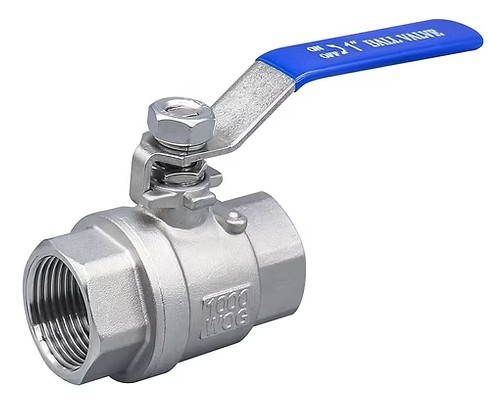
Description
Function of a Refrigeration Ball Valve
A refrigeration ball valve can be used to:
- Isolate sections of a refrigeration circuit
- Shut off refrigerant flow during maintenance
- Provide manual isolation for components
- Support refrigeration servicing and repair
- Facilitate component replacement
- Control refrigerant flow where the valve is suitable for the application
- Isolate liquid, suction, or other compatible refrigerant lines
- Provide compact quarter-turn operation
Ball valves are generally used for on/off isolation rather than precision throttling.
How a Ball Valve Works
A ball valve contains a spherical valve element with a central passage.
When the handle is turned so that the passage aligns with the pipe:
Handle Open → Ball Passage Aligned → Refrigerant Flow Allowed
When the handle is rotated approximately 90 degrees:
Handle Closed → Ball Rotated Across Passage → Refrigerant Flow Stopped
The exact operating arrangement depends on the valve design.
Main Components
A refrigeration ball valve may consist of:
- Valve body
- Internal ball
- Valve stem
- Handle
- Valve seats
- Stem seal
- Body seals
- Inlet connection
- Outlet connection
Depending on the design, materials may include copper alloys, brass, stainless steel, steel, PTFE-based seating materials, and other refrigerant-compatible materials.
Types of Refrigeration Ball Valves
Full-Port Ball Valve
Provides a relatively unrestricted internal passage when fully open and can be suitable where low pressure drop is important.
Reduced-Port Ball Valve
Uses a smaller internal passage and may be selected where the application allows a more compact valve arrangement.
Straight Ball Valve
Has inline inlet and outlet connections and is commonly used in refrigeration piping.
Service Ball Valve
Designed for refrigeration-system isolation and servicing applications.
Access / Service Ball Valve
Some refrigeration ball-valve designs incorporate service or access arrangements for maintenance and system servicing.
Applications
Refrigeration ball valves can be used in:
- Commercial refrigeration systems
- Industrial refrigeration plants
- Cold rooms
- Cold storage systems
- Freezers
- Refrigerated display cabinets
- Chillers
- Condensing units
- Food processing refrigeration
- Beverage cooling systems
- Process cooling systems
- HVAC-R systems
- Refrigerant liquid lines
- Suction lines
- Service and maintenance circuits
Advantages of Ball Valves
Depending on the application and valve design, ball valves can provide:
- Quick quarter-turn operation
- Compact construction
- Positive shut-off
- Low operating effort
- Simple manual operation
- Suitable isolation capability
- Easy visual indication of valve position
- Long service life when correctly selected and maintained
Common Ball Valve Problems
Refrigerant Leakage
Leakage may occur around:
- Stem seals
- Valve connections
- Body joints
- Seat areas
- Damaged components
Difficult Operation
A stiff handle may be caused by:
- Corrosion
- Contamination
- Internal wear
- Mechanical damage
- Excessive pressure conditions
- Long periods without operation
Valve Does Not Fully Shut Off
Possible causes include:
- Damaged valve seat
- Contamination
- Internal ball damage
- Seal deterioration
- Mechanical wear
Restricted Flow
A partially open or damaged valve may restrict refrigerant flow. Incorrect valve sizing can also contribute to excessive pressure drop.
Inspection & Maintenance
Routine inspection helps identify leakage or mechanical problems.
Recommended checks include:
- Inspect the valve body for damage
- Check for refrigerant leakage
- Inspect stem and seal areas
- Verify smooth handle operation
- Confirm the valve reaches the required open and closed positions
- Inspect connections
- Check for corrosion
- Inspect the valve during system maintenance
- Replace damaged valves or seals where applicable
Ball valves should generally be operated in their intended fully open or fully closed positions unless the specific valve is designed for another purpose.
Installation Considerations
Correct installation is important for reliable operation.
Important considerations include:
- Select a valve compatible with the refrigerant
- Confirm pressure and temperature ratings
- Match the connection size
- Match the connection type
- Follow the specified flow direction where applicable
- Avoid excessive mechanical stress on the valve
- Support adjacent piping correctly
- Follow appropriate brazing or connection procedures
- Protect the valve from excessive heat during installation
- Check the completed installation for leakage
Ball Valve Selection Parameters
| Parameter | Requirement |
|---|---|
| Application | Refrigeration / HVAC-R |
| Valve Type | Ball valve |
| Refrigerant | System-specific |
| Line Application | Liquid / suction / discharge / service |
| Port Type | Full port / reduced port |
| Valve Size | According to piping |
| Connection Type | Flare / solder / brazed / threaded / other |
| Pressure Rating | According to system |
| Temperature Range | Application-specific |
| Body Material | As specified |
| Seat Material | Refrigerant-compatible |
| Seal Material | Refrigerant-compatible |
| Operating Method | Manual / quarter-turn |
| Flow Direction | As applicable |
| Manufacturer | As specified |
| Part Number | Required for exact replacement |
Replacement Considerations
When replacing a refrigeration ball valve, the replacement should be selected based on more than pipe size.
Important information includes:
- Original valve part number
- Refrigeration equipment model
- Refrigerant type
- Line application
- Valve size
- Connection type
- Pressure rating
- Temperature range
- Port configuration
- Body and seal materials
- Installation arrangement
The replacement valve must be compatible with the refrigerant and the pressure and temperature conditions of the refrigeration circuit.
Why Choose Aegis Projects?
Aegis Projects Technology supplies refrigeration ball valves and manual isolation components for commercial, industrial, cold-storage, and HVAC-R applications.
We can assist with replacement selection based on:
- Original part number
- Refrigeration equipment model
- Refrigerant
- Line application
- Valve size
- Connection type
- Pressure and temperature requirements
- Port configuration
- Installation requirements
Contact Aegis Projects Technology for refrigeration ball valves and other refrigeration spare parts.