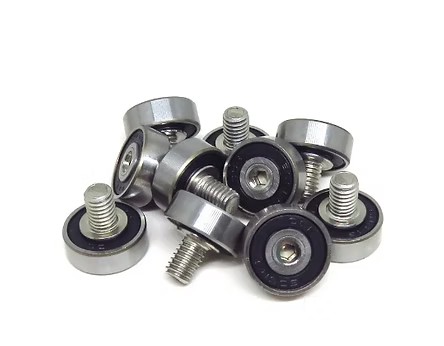
Description
What Are Anti-Friction Bearings?
Anti-friction bearings are rolling-element bearings that use balls or rollers between the inner and outer raceways to reduce friction between moving components.
They are broadly classified into:
- Ball bearings
- Roller bearings
Depending on the compressor design, different bearing arrangements may be used to handle radial loads, axial loads, or a combination of both.
Ball Bearings
Ball bearings use spherical rolling elements between the bearing races.
They can be suitable for applications requiring:
- High rotational speed
- Low friction
- Radial load support
- Combined radial and axial load capability, depending on bearing type
- Smooth shaft rotation
Different configurations can include:
- Deep groove ball bearings
- Angular contact ball bearings
- Thrust ball bearings
- Other application-specific ball bearing designs
The correct bearing type depends on the compressor’s shaft arrangement and load requirements.
Roller Bearings
Roller bearings use cylindrical, tapered, spherical, or other shaped rolling elements.
They can provide high load-carrying capacity and are used in applications where significant radial or axial loads may occur.
Common roller bearing configurations include:
- Cylindrical roller bearings
- Tapered roller bearings
- Spherical roller bearings
- Needle roller bearings
- Thrust roller bearings
The appropriate bearing configuration depends on the mechanical design of the compressor.
Role of Bearings in Screw Compressors
In a screw compressor, bearings support the rotating components and maintain the required rotor position and alignment.
Depending on the compressor design, bearings may be used to:
- Support compressor shafts
- Maintain rotor alignment
- Carry radial loads
- Carry axial loads
- Control shaft movement
- Reduce friction
- Support high-speed rotation
- Maintain internal rotor clearances
Correct bearing condition is particularly important in precision screw compressor air ends.
Key Features
- Precision rolling-element construction
- Available in ball and roller configurations
- Designed for rotating machinery applications
- Suitable for industrial compressor systems
- Supports radial and/or axial loads depending on bearing type
- Low-friction operation
- Available in different dimensions and load ratings
- Suitable for compressor maintenance and overhaul
- Available for replacement applications
- Selection based on compressor specifications
Applications
Anti-friction roller and ball bearings can be used in:
- Rotary screw compressors
- Oil-injected screw compressors
- Oil-free screw compressors
- Industrial air compressors
- Process gas compressors
- Compressor air ends
- Compressor drive systems
- Pumping equipment
- Industrial rotating machinery
- Manufacturing plants
- Chemical industries
- Petrochemical facilities
- Oil and gas installations
- Power plants
- Pharmaceutical facilities
- General industrial equipment
Bearing Loads in Compressor Applications
Bearing selection must consider the loads generated by the compressor.
Radial Loads
Radial loads act perpendicular to the shaft axis and can result from rotor forces, drive arrangements, and other mechanical loads.
Axial Loads
Axial loads act along the shaft axis and can occur due to pressure forces generated during compression.
Depending on the compressor design, a combination of radial and axial bearings may be required.
Bearing Selection Parameters
Correct bearing selection is critical for reliable compressor operation.
| Parameter | Selection Requirement |
|---|---|
| Compressor Manufacturer | Make / Brand |
| Compressor Model | Exact model |
| Bearing Part Number | Existing identification |
| Bearing Type | Ball / Roller |
| Bearing Configuration | Application dependent |
| Bore Diameter | Shaft dimension |
| Outer Diameter | Housing dimension |
| Bearing Width | Required dimension |
| Radial Load | Application requirement |
| Axial Load | Application requirement |
| Operating Speed | Shaft RPM |
| Operating Temperature | Application condition |
| Lubrication | Oil / grease / application-specific |
| Clearance | Application requirement |
| Sealing | Open / sealed / shielded as applicable |
The bearing should be selected according to the compressor manufacturer’s technical specification and original bearing arrangement.
Bearing Failure & Replacement
Bearings can require replacement due to:
- Normal wear
- Insufficient lubrication
- Contaminated lubricant
- Excessive load
- Misalignment
- Incorrect installation
- Excessive operating temperature
- Shaft or housing damage
- Vibration
- Corrosion
- Extended operating life
Potential symptoms of bearing problems can include:
- Abnormal noise
- Increased vibration
- Excessive temperature
- Shaft movement
- Reduced compressor performance
- Lubricant contamination
- Repeated compressor trips
These symptoms may have multiple causes, so appropriate mechanical inspection should be carried out before replacing the bearing.
Bearings During Compressor Overhaul
Bearings are commonly inspected or replaced during major compressor overhaul and air-end refurbishment.
An overhaul inspection may include:
- Bearing condition
- Rotor condition
- Shaft condition
- Bearing clearances
- Housing condition
- Lubrication system
- Shaft seals
- Gaskets and O-rings
- Couplings
- Compressor alignment
Replacing worn bearings as part of a properly planned overhaul can help restore the mechanical condition of the compressor assembly.
Bearing Lubrication
Proper lubrication is essential for bearing performance.
Depending on the compressor design, bearings may be lubricated using:
- Compressor oil
- Dedicated bearing oil
- Grease
- Other manufacturer-specified lubricants
The lubricant type, viscosity, quantity, and replenishment interval should follow the equipment manufacturer’s requirements.
Replacement & Identification
For accurate bearing identification, provide:
- Compressor manufacturer
- Compressor model
- Compressor serial number
- Air-end model
- Existing bearing part number
- Bearing markings
- Bearing dimensions
- Shaft dimensions
- Housing dimensions
- Compressor operating speed
- Photograph of the existing bearing
Bearing markings or the original part number are particularly useful when identifying replacement components.
Industrial Compressor Spare Parts
Anti-friction roller and ball bearings form part of the wider range of screw compressor spare parts and industrial compressor components supplied by Aegis Projects Technology.
Related components include:
- Rotary screw elements
- Compression chamber components
- Compressor motors
- Separator vessels
- Air-oil separator elements
- In-suction air filters
- Oil filters
- After coolers
- Water separators
- Non-return check valves
- Discharge valves
- System controllers
- Gaskets and seals
- Minimum pressure valves
- Thermostatic valves
- Solenoid valves
- Couplings
- Compressor service kits
- Compressor overhaul kits
Aegis Projects Technology
Aegis Projects Technology supplies anti-friction roller bearings, ball bearings, and industrial compressor spare parts for screw compressor maintenance, repair, overhaul, refurbishment, and replacement applications.
For accurate bearing selection, share the compressor make, model, serial number, existing bearing number, bearing markings, dimensions, or a photograph of the bearing and compressor nameplate.
Aegis Projects Technology — Industrial Compressor Spare Parts & Compressed Air Solutions.