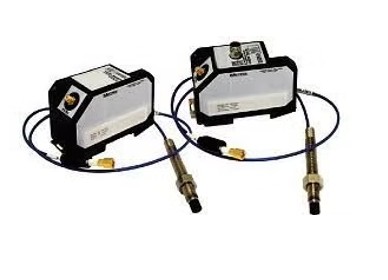
Description
Functions of Vibration Probes, Cables & Transmitters
Vibration monitoring components perform several important functions within a centrifugal compressor protection system:
- Detect radial and axial vibration of rotating equipment
- Monitor shaft displacement and movement where applicable
- Measure vibration at bearings and other critical locations
- Transmit sensor signals to monitoring or protection systems
- Provide continuous condition monitoring
- Support early identification of mechanical abnormalities
- Generate signals for alarms and compressor shutdown systems
- Interface with PLC, DCS, SCADA, or dedicated vibration monitoring systems
- Support predictive and preventive maintenance programs
Vibration Probes
Vibration probes are sensing elements installed at specific compressor locations to detect mechanical movement or vibration.
Depending on the compressor design and monitoring philosophy, different sensor technologies may be used.
Common Vibration Probe Types
1. Proximity Probes
Non-contact proximity probes are commonly used for monitoring shaft displacement and shaft vibration. They operate with a probe, extension cable, and compatible driver or signal-conditioning electronics.
2. Velocity Sensors
Velocity-type vibration sensors measure vibration velocity and may be used for monitoring bearing housings or other machine structures.
3. Accelerometers
Accelerometers measure vibration acceleration and are widely used for machinery condition monitoring, particularly on bearing housings and structural locations.
4. Seismic or Housing Vibration Sensors
These sensors monitor vibration transmitted through the compressor bearing housing or machine casing and can be used as part of overall machinery protection and condition monitoring.
Vibration Cables
Vibration cables provide the electrical connection between the vibration probe or sensor and its associated monitoring electronics.
For proximity probe systems, the cable arrangement may include the probe, extension cable, and compatible driver/signal-conditioning system.
Cable selection is important because signal integrity can be affected by cable length, shielding, connector quality, electrical interference, temperature, and installation conditions.
Cable Features
Depending on the application, vibration cables may include:
- Shielded construction
- High-temperature insulation
- Oil and chemical resistance
- Flexible construction
- Low-noise signal transmission
- Compatible connectors
- Suitable electrical characteristics
- Protective outer jackets
- Required cable length for the installation
The cable must be matched with the vibration probe and monitoring electronics to ensure proper signal transmission.
Vibration Transmitters
Vibration transmitters convert sensor signals into standardized outputs that can be interpreted by industrial control and monitoring systems.
Depending on the system architecture, transmitters may provide outputs such as:
- 4–20 mA
- Voltage signals
- Frequency or pulse outputs
- Relay outputs
- Digital communication interfaces
- Other manufacturer-specific signal formats
A transmitter can allow vibration information to be integrated with a PLC, DCS, SCADA, compressor controller, or machinery protection system.
Typical Vibration Monitoring Arrangement
A centrifugal compressor vibration monitoring system may consist of:
Vibration Probe → Extension Cable → Driver/Signal Conditioner → Vibration Transmitter/Monitor → PLC/DCS/Protection System
The exact arrangement depends on the compressor manufacturer, instrumentation architecture, sensor technology, and required monitoring parameters.
Construction & Materials
Vibration monitoring components are manufactured using materials and construction methods selected for reliable operation in industrial environments.
Vibration Probes
Typical construction may include:
- Stainless steel or alloy-metal probe bodies
- Precision sensing elements
- Threaded mounting sections
- Sealed electrical connections
- High-temperature insulation
- Protected sensor assemblies
Vibration Cables
Typical construction may include:
- Conductive signal cores
- Electrical insulation
- Shielding
- Protective outer jacket
- Connector or termination assembly
Transmitters
Typical construction may include:
- Industrial electronic housing
- Signal-conditioning circuitry
- Terminal connections
- Input/output interfaces
- Protective enclosure
- Configuration or calibration interfaces where applicable
The exact materials and construction should always be selected according to the original compressor instrumentation specification.
Applications in Centrifugal Air Compressors
Vibration probes, cables, and transmitters can be used for monitoring:
- Compressor shaft vibration
- Radial vibration
- Axial shaft movement
- Bearing vibration
- Bearing housing vibration
- Gearbox vibration
- Motor-driven compressor systems
- High-speed rotating assemblies
- Auxiliary rotating equipment
- Compressor train components
They are particularly important in applications where continuous machinery protection and condition monitoring are required.
Importance of Vibration Monitoring
Centrifugal compressors operate at high rotational speeds, making accurate vibration monitoring an important part of machinery protection.
Changes in vibration levels can be associated with conditions such as:
- Rotor imbalance
- Shaft misalignment
- Bearing wear
- Mechanical looseness
- Shaft rubbing
- Coupling problems
- Gear-related abnormalities
- Rotor or impeller damage
- Excessive shaft movement
- Changes in operating conditions
Vibration monitoring does not by itself identify the root cause of every abnormal condition, but it provides valuable information for machine protection, troubleshooting, and maintenance decisions.
Common Vibration Monitoring Problems
Incorrect or Unstable Signal
Possible causes include sensor damage, cable problems, loose connections, electrical interference, incorrect configuration, or monitoring-system faults.
Excessive Vibration Reading
An increase in measured vibration may be associated with mechanical or aerodynamic conditions and should be investigated using the compressor’s operating and maintenance procedures.
Signal Loss
Signal loss can result from:
- Damaged probe
- Broken cable
- Loose connector
- Incorrect wiring
- Faulty transmitter
- Power-supply problems
- Monitoring-system faults
Sensor Drift
Changes in sensor characteristics, environmental conditions, wiring problems, or electronic faults can affect measurement accuracy.
Cable Damage
Vibration cables may deteriorate because of:
- Heat
- Oil exposure
- Chemical exposure
- Mechanical abrasion
- Excessive bending
- Improper routing
- Connector damage
Inspection & Maintenance
Regular inspection of vibration monitoring components helps maintain reliable compressor protection.
Recommended checks may include:
- Inspect probe mounting and physical condition
- Check probe-to-target clearance where applicable
- Inspect cables for cuts, cracking, abrasion, or heat damage
- Check connectors and terminals
- Verify cable shielding and grounding
- Check transmitter power supply
- Verify signal output
- Compare readings with established operating trends
- Inspect for loose mounting hardware
- Verify calibration according to the applicable instrumentation procedure
- Check alarm and trip functions as part of the compressor protection-system maintenance program
Any calibration or adjustment should be performed according to the sensor and compressor manufacturer’s specified procedure.
Selection & Replacement Considerations
When replacing vibration probes, cables, or transmitters, compatibility is critical.
| Parameter | Requirement |
|---|---|
| Compressor Manufacturer | As applicable |
| Compressor Model | Required for compatibility |
| Sensor Type | Proximity / velocity / accelerometer / other |
| Measurement | Radial vibration / axial position / housing vibration etc. |
| Probe Part Number | As specified |
| Probe Dimensions | Thread, length, tip configuration |
| Measurement Range | According to monitoring requirement |
| Cable Type | Compatible with sensor and electronics |
| Cable Length | According to installation |
| Connector Type | Application-specific |
| Transmitter Type | Compatible with sensor |
| Output Signal | 4–20 mA / voltage / digital / other |
| Power Supply | As required |
| Operating Temperature | According to installation |
| Environmental Protection | Suitable for compressor environment |
| Monitoring System | PLC / DCS / SCADA / vibration monitor |
| Mounting Arrangement | According to compressor design |
Why Choose Aegis Projects?
Aegis Projects Technology provides vibration probes, cables, transmitters, and related compressor instrumentation components for centrifugal air compressor maintenance and replacement requirements.
Our selection approach focuses on matching the component with the required:
- Compressor model and configuration
- Sensor technology
- Measurement parameter
- Probe dimensions
- Cable characteristics
- Signal output
- Monitoring system
- Operating environment
- Original equipment specification
Whether you require individual vibration probes, replacement cables, transmitters, or a complete vibration monitoring component set, Aegis Projects can support your centrifugal compressor spare-parts and instrumentation requirements.
Contact Aegis Projects Technology for vibration monitoring components matched to your centrifugal air compressor system.