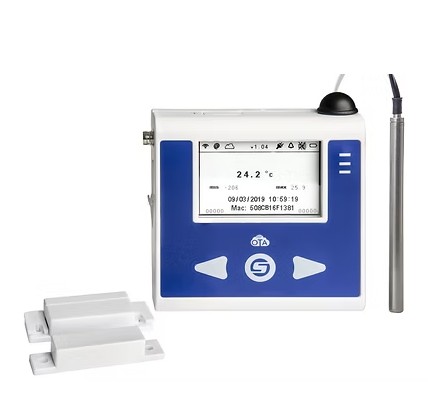
Description
Functions of HACCP Temperature Sensors
Temperature sensors used for HACCP monitoring can be applied for:
- Monitoring refrigerator temperatures
- Monitoring freezer temperatures
- Monitoring cold-room temperatures
- Monitoring cold-storage facilities
- Monitoring food display cabinets
- Monitoring food-processing equipment
- Monitoring storage areas
- Recording temperature data
- Providing temperature deviation alarms
- Supporting critical control point monitoring
- Providing temperature feedback to refrigeration controllers
- Supporting preventive food-safety monitoring procedures
How a HACCP Temperature Sensor Works
The sensor measures the temperature at a defined monitoring point and converts the measured temperature into an electrical signal.
Depending on the sensor design, the signal may be based on a change in resistance, voltage, or another electrical characteristic. A compatible controller, monitoring device, or data logger interprets the signal and displays or records the temperature.
A typical HACCP monitoring arrangement is:
Temperature Sensor → Monitoring Device / Controller → Temperature Display → Data Recording / Alarm
If the measured temperature moves outside the defined operating or control range, the monitoring system can generate an alarm or record the deviation, depending on the system configuration.
HACCP Temperature Monitoring Applications
Temperature sensors can be used at various points where temperature control is important, including:
Cold Rooms
Sensors can continuously monitor the temperature inside refrigerated storage areas and provide data to the refrigeration control or monitoring system.
Freezer Rooms
Temperature sensors can be selected for low-temperature applications to monitor frozen-food storage conditions.
Refrigerated Cabinets
Sensors can monitor temperatures in commercial refrigerators, display cabinets, and refrigerated counters.
Food Storage
Temperature monitoring can support controlled storage of temperature-sensitive food products.
Food Processing
Sensors may be installed at selected monitoring points within food-processing and temperature-controlled equipment.
Commercial Kitchens
Temperature sensors can support monitoring of refrigerators, freezers, cold storage, and other temperature-controlled equipment.
Cold Chain Applications
Sensors can be integrated into monitoring systems used during temperature-controlled storage and handling.
Types of Temperature Sensors for HACCP
Depending on the monitoring equipment and application, HACCP temperature monitoring systems may use different sensor technologies.
NTC Sensors
NTC thermistors change resistance according to temperature and are commonly used with electronic temperature controllers and monitoring systems.
RTD Sensors
RTD sensors provide temperature measurement through a predictable resistance-temperature relationship and can be used where the monitoring system is designed for RTD inputs.
Digital Temperature Sensors
Digital sensors provide temperature information in a format compatible with specific electronic monitoring systems.
Probe Sensors
Probe-style sensors are suitable for temperature measurement at specific locations and can be configured for different installation requirements.
Air Temperature Sensors
Air sensors are used for monitoring the ambient temperature within refrigerators, freezers, cold rooms, cabinets, and other controlled spaces.
Surface or Contact Sensors
These sensors can be used for measuring the temperature of equipment surfaces or refrigeration lines where the application requires contact measurement.
Key Features for HACCP Applications
Depending on the selected model, temperature sensors can offer:
- Accurate temperature measurement
- Stable temperature sensing
- Suitable temperature range for refrigeration applications
- Compatibility with monitoring controllers
- Probe-based temperature measurement
- Different cable lengths
- Different probe dimensions
- Digital or resistance-based output
- Suitable construction for refrigerated environments
- Integration with temperature data logging systems
- Compatibility with alarm systems
The actual accuracy, temperature range, sensor characteristic, protection rating, and response time depend on the selected sensor model.
Temperature Monitoring and HACCP
HACCP systems identify Critical Control Points (CCPs) where hazards can be controlled or reduced. Where temperature is a critical parameter, appropriate temperature monitoring equipment can be used to measure the relevant condition.
A temperature sensor itself does not establish whether a food-safety limit has been met. The applicable HACCP plan, product requirements, monitoring procedure, and defined control limits determine the acceptable temperature conditions.
The sensor provides the measurement required by the monitoring system.
Common Temperature Sensor Problems
Temperature-monitoring problems can occur because of sensor failure, wiring problems, incorrect installation, or incompatibility with the monitoring device.
Common issues include:
- Incorrect temperature readings
- Sensor open circuit
- Sensor short circuit
- Intermittent readings
- Damaged sensor probe
- Damaged cable
- Loose electrical connection
- Moisture ingress
- Incorrect sensor type
- Incorrect sensor calibration or configuration
- Sensor installed at an unsuitable location
- Monitoring device and sensor incompatibility
An inaccurate sensor can result in incorrect temperature records or unnecessary temperature alarms.
Inspection and Testing
Temperature sensors used for HACCP monitoring should be inspected and verified according to the applicable monitoring procedure and equipment requirements.
Typical checks may include:
- Inspecting the sensor probe
- Checking cable condition
- Checking electrical connections
- Verifying sensor response
- Comparing readings with an appropriate reference thermometer
- Checking the sensor’s specified temperature range
- Checking the monitoring device configuration
- Verifying sensor identification and installation location
- Checking for moisture or physical damage
- Maintaining appropriate calibration or verification records where required by the applicable procedure
The verification interval and calibration requirements should be established according to the applicable HACCP plan, monitoring procedure, equipment specification, and regulatory or customer requirements.
Selection of HACCP Temperature Sensors
Selecting the correct temperature sensor requires consideration of the monitoring application and the device receiving the sensor signal.
| Specification | Requirement |
|---|---|
| Application | HACCP / Food Safety Temperature Monitoring |
| Monitoring Point | Refrigerator / Freezer / Cold Room / Cabinet / Process |
| Sensor Type | NTC / RTD / Digital / Other |
| Temperature Range | According to application |
| Accuracy | According to monitoring requirement |
| Sensor Characteristic | According to monitoring device |
| Probe Type | Probe / Air / Surface / Contact |
| Probe Material | Stainless Steel / Suitable Material |
| Probe Length | As required |
| Probe Diameter | As required |
| Cable Length | As required |
| Output | Resistance / Digital / Other |
| Connector | Compatible with monitoring equipment |
| Protection | According to installation environment |
| Response Time | Application dependent |
| Monitoring Device | Controller / Data Logger / Alarm System |
| Calibration / Verification | According to monitoring procedure |
| Operating Environment | Refrigerated / Frozen / Food Processing |
| Manufacturer / Part Number | As required |
Replacement Considerations
When replacing a HACCP temperature sensor, physical compatibility alone is not sufficient. The replacement should match the sensor characteristic, temperature range, accuracy requirements, probe configuration, cable, connector, and monitoring device.
Before replacement, verify:
- Existing sensor type
- Manufacturer and part number
- Sensor characteristic
- Temperature range
- Accuracy requirement
- Probe dimensions
- Cable length
- Connector type
- Monitoring equipment compatibility
- Installation location
- Required verification or calibration procedure
Using an incorrect sensor can produce inaccurate readings even when the sensor appears physically suitable.
Temperature Sensor Supplier for HACCP Applications – Aegis Projects
Aegis Projects Technology Pvt. Ltd. supplies temperature sensors and refrigeration components for commercial and industrial applications, including HACCP temperature monitoring, cold rooms, cold storage, refrigeration systems, food-processing applications, refrigerated cabinets, and temperature-controlled environments.
Our temperature-sensor solutions can be selected according to the monitoring equipment, required temperature range, measurement location, sensor technology, and application requirements.
Contact Aegis Projects for temperature sensors and refrigeration spare parts suitable for your HACCP temperature-monitoring requirements.