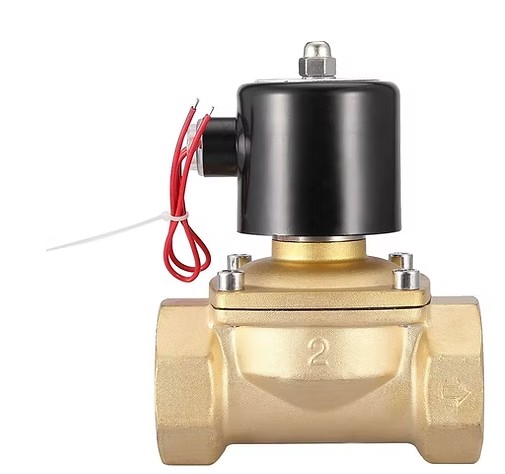
Description
Function of a Refrigeration Solenoid Valve
A solenoid valve provides automatic on/off control of refrigerant flow.
Its functions can include:
- Controlling liquid refrigerant flow
- Isolating refrigerant circuits
- Controlling refrigerant flow during cooling cycles
- Supporting pump-down operation
- Controlling liquid-line refrigerant supply
- Supporting defrost arrangements where applicable
- Automatically opening or closing a refrigeration circuit
- Interfacing with thermostats, controllers, PLCs, or other control systems
Unlike a thermostatic expansion valve, which regulates refrigerant flow according to operating conditions, a solenoid valve is primarily an electrically controlled on/off valve.
How a Solenoid Valve Works
A typical refrigeration solenoid valve consists of a valve body, electromagnetic coil, plunger, spring, and valve seat.
When the electrical coil is energized, it produces a magnetic field that moves the internal plunger and changes the valve position.
Depending on the valve design:
Energized → Valve Opens
De-energized → Valve Closes
The exact operation can vary between normally closed and normally open configurations.
The valve is controlled by a thermostat, electronic refrigeration controller, PLC, pressure control system, or other electrical control device.
Types of Refrigeration Solenoid Valves
Normally Closed Solenoid Valve
The valve remains closed when the coil is not energized and opens when the electrical signal is applied.
This is a common arrangement for refrigeration liquid-line control.
Normally Open Solenoid Valve
The valve remains open when de-energized and closes when the coil is energized.
This configuration is used in applications where the control sequence requires the opposite operating condition.
Direct-Acting Solenoid Valve
The electromagnetic force directly operates the valve mechanism. These valves are generally suitable for applications within their specified pressure and flow range.
Pilot-Operated Solenoid Valve
A pilot-operated valve uses system pressure and an internal pilot mechanism to assist valve operation. These valves can be suitable for larger flow capacities where the required pressure conditions are available.
Main Components
A refrigeration solenoid valve may include:
- Valve body
- Electromagnetic coil
- Plunger
- Spring
- Valve seat
- Orifice
- Diaphragm or piston, depending on design
- Inlet connection
- Outlet connection
- Electrical terminals
- Seals and internal components
The exact construction varies according to valve design, capacity, refrigerant, pressure rating, connection type, and manufacturer.
Applications
Refrigeration solenoid valves are commonly installed in:
- Liquid refrigerant lines
- Refrigeration compressors and systems
- Cold rooms
- Cold storage systems
- Commercial refrigerators
- Freezers
- Display cabinets
- Chillers
- Food processing refrigeration
- Beverage cooling systems
- Industrial refrigeration plants
- HVAC-R systems
- Defrost control circuits
- Pump-down systems
Solenoid Valve in Pump-Down Systems
A solenoid valve is commonly used in refrigeration pump-down arrangements.
When the thermostat or controller calls for cooling, the liquid-line solenoid valve opens and allows refrigerant to flow toward the evaporator.
When the required temperature is reached, the solenoid valve closes. The compressor may continue operating until the suction pressure falls to the configured cut-out value, depending on the system’s pressure-control arrangement.
This arrangement can help isolate the evaporator from the liquid refrigerant supply when cooling is not required.
Common Solenoid Valve Problems
Valve Does Not Open
Possible causes include:
- Incorrect coil voltage
- Failed electrical coil
- Wiring problem
- Faulty controller
- Excessive pressure differential
- Internal contamination
- Stuck plunger
- Damaged internal components
Valve Does Not Close
Possible causes may include:
- Dirt or debris on the valve seat
- Damaged plunger or diaphragm
- Incorrect installation
- Internal mechanical damage
- Incorrect pressure conditions
- Faulty valve components
Coil Overheating
Coil overheating can be associated with:
- Incorrect voltage
- Incorrect coil specification
- Continuous operation outside the specified conditions
- Electrical problems
- Improper installation
Refrigerant Leakage
Leakage can occur through connections, seals, valve-body joints, or damaged internal components.
Restricted Refrigerant Flow
Restriction can result from contamination, incorrect valve sizing, damaged internal components, or unsuitable operating conditions.
Inspection & Maintenance
Regular inspection can help maintain reliable solenoid-valve operation.
Recommended checks include:
- Verify coil voltage
- Inspect electrical connections
- Check coil condition
- Inspect valve body for leakage
- Check refrigerant-flow direction
- Inspect connections and fittings
- Check for abnormal coil heating
- Inspect internal components when servicing
- Check for contamination
- Verify proper opening and closing operation
- Confirm compatibility with the refrigeration system
Before servicing a refrigeration solenoid valve, appropriate refrigerant isolation, pressure control, electrical isolation, and safety procedures should be followed.
Installation Considerations
Correct installation is important for reliable valve operation.
Important considerations include:
- Install according to the marked flow direction
- Use the correct valve capacity
- Select the correct coil voltage
- Confirm refrigerant compatibility
- Use appropriate pipe connections
- Avoid excessive mechanical stress on the valve body
- Keep the refrigeration circuit clean
- Protect the valve from excessive heat during installation
- Ensure the coil is installed according to manufacturer requirements
- Verify operating pressure and differential-pressure requirements
Solenoid Valve Selection Parameters
| Parameter | Requirement |
|---|---|
| Application | Refrigeration / HVAC-R / industrial cooling |
| Valve Type | Normally closed / normally open |
| Actuation | Solenoid |
| Refrigerant | System-specific |
| Valve Capacity | According to refrigerant flow requirement |
| Operating Pressure | Application-specific |
| Differential Pressure | As required by valve |
| Connection Size | According to piping |
| Connection Type | Threaded / flared / solder / other |
| Coil Voltage | As specified |
| Coil Frequency | As specified |
| Refrigerant Compatibility | Required |
| Body Material | As specified |
| Temperature Range | Application-specific |
| Flow Direction | According to valve design |
| Manufacturer / Part Number | Required for exact replacement |
Replacement Considerations
When replacing a refrigeration solenoid valve, physical dimensions alone should not be used to determine compatibility.
The replacement should be checked against:
- Original valve part number
- Refrigeration equipment model
- Refrigerant type
- Required flow capacity
- Operating pressure
- Differential pressure
- Connection size
- Connection type
- Coil voltage
- Valve configuration
- Temperature range
The solenoid coil and valve body must also be compatible. Using an incorrect coil voltage can result in improper operation or coil damage.
Why Choose Aegis Projects?
Aegis Projects Technology supplies refrigeration solenoid valves and related refrigeration spare parts for commercial, industrial, cold-storage, and HVAC-R applications.
We can assist with replacement selection based on:
- Original valve part number
- Refrigeration system model
- Refrigerant
- Flow requirement
- Pressure conditions
- Connection size
- Coil voltage
- Valve configuration
- Application requirements
Contact Aegis Projects Technology for refrigeration solenoid valves and other refrigeration spare parts.