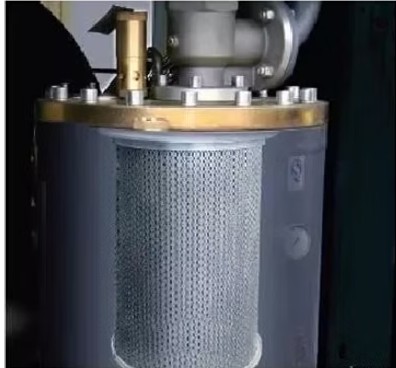
Description
What is a Separator Vessel?
A separator vessel, also known as an air-oil separator tank, is a pressure vessel used in oil-injected screw compressors to separate compressed air from lubricating oil.
During compression, the air and oil mixture exits the compressor air end and enters the separator vessel. Inside the vessel, mechanical separation and separator elements work together to remove oil from the compressed air stream.
The recovered oil is returned to the compressor lubrication circuit while the compressed air continues through the air treatment system.
How a Separator Vessel Works
Typical Process Flow
Air End → Air/Oil Mixture → Separator Vessel → Separator Element → Compressed Air Outlet
The separation process generally occurs in multiple stages:
- Primary mechanical separation inside the vessel.
- Gravity separation of larger oil droplets.
- Fine oil removal through the separator element.
- Oil return through the scavenging system.
- Clean compressed air delivered to downstream equipment.
This process helps minimize oil carryover while maintaining efficient compressor operation.
Key Features
- Heavy-duty pressure vessel construction
- Suitable for oil-injected screw compressors
- Efficient air-oil separation
- Reduced oil carryover
- Supports compressor efficiency
- Compatible with separator elements
- Corrosion-resistant finishing options
- Available in various capacities and pressure ratings
- Designed for continuous industrial operation
- Suitable for new installations and replacement applications
Separator Vessel Components
A typical separator vessel assembly may include:
- Pressure vessel shell
- Separator element housing
- Air-oil separator element
- Oil return line
- Pressure relief valve connection
- Minimum pressure valve connection
- Instrument ports
- Drain connections
- Air outlet connection
- Oil inlet and return ports
- Mounting supports
Configuration depends on compressor make, model, and operating requirements.
Benefits of Separator Vessels
A properly functioning separator vessel helps provide:
- Reduced oil consumption
- Lower oil carryover
- Improved compressed air quality
- Protection of downstream equipment
- Increased separator element efficiency
- Stable compressor operation
- Extended equipment life
- Improved system reliability
- Reduced maintenance requirements
Applications
Separator vessels are commonly used in:
- Rotary screw compressors
- Oil-injected air compressors
- Industrial compressed air systems
- Manufacturing facilities
- Power plants
- Chemical industries
- Petrochemical facilities
- Food and beverage plants
- Pharmaceutical industries
- Textile manufacturing
- Automotive production facilities
- Oil and gas installations
- Process industries
- Utility air systems
Separator Vessel Construction Materials
Depending on the application, separator vessels may be manufactured using:
- Carbon Steel
- Stainless Steel
- Pressure Vessel Quality Steel
- Special Alloy Materials
Material selection depends on operating pressure, temperature, environment, and application requirements.
Selection Parameters
The correct separator vessel should be selected according to compressor and system specifications.
| Parameter | Requirement |
|---|---|
| Compressor Make | Manufacturer |
| Compressor Model | Exact model |
| Operating Pressure | System pressure |
| Air Flow Capacity | Compressor capacity |
| Vessel Volume | Required capacity |
| Connection Size | Inlet and outlet connections |
| Design Pressure | Maximum allowable pressure |
| Operating Temperature | Application temperature |
| Material | Carbon steel / stainless steel |
| Mounting Configuration | Vertical / horizontal |
| Separator Element Type | Compatible element |
Providing compressor nameplate details helps ensure proper vessel selection.
Common Signs of Separator Vessel Problems
Inspection and maintenance are important for reliable operation.
Possible indicators of issues include:
- Excessive oil carryover
- High differential pressure
- Air leaks
- Oil leaks
- Reduced compressor performance
- Abnormal pressure readings
- Corrosion or vessel damage
- Frequent separator element failures
Regular inspections can help identify maintenance requirements before they affect production.
Maintenance & Inspection
Routine maintenance may include:
- Vessel inspection
- Checking pressure ratings
- Monitoring differential pressure
- Inspecting separator elements
- Checking oil return systems
- Verifying safety devices
- Inspecting connections and fittings
- Internal cleaning during major overhauls
Maintenance schedules should follow compressor manufacturer recommendations and plant maintenance procedures.
Replacement Separator Vessels
Aegis Projects can supply replacement separator vessels for various screw compressor brands and industrial applications.
To identify the correct replacement, provide:
- Compressor manufacturer
- Compressor model
- Serial number
- Existing vessel dimensions
- Pressure rating
- Air flow capacity
- Connection sizes
- Photographs of existing equipment
- Part number, if available
Industrial Compressor Spare Parts
Separator vessels form part of a complete range of industrial compressor spare parts and maintenance components.
Related products include:
- Rotary Screw Elements
- Separator Vessels
- Air-Oil Separator Elements
- Air Filters
- Oil Filters
- Water Separators
- After Coolers
- Non Return Check Valves
- Minimum Pressure Valves
- Thermostatic Valves
- Solenoid Valves
- Gaskets & Seals
- Bearings
- Couplings
- Service Kits
- Overhaul Kits
Aegis Projects Technology
Aegis Projects Technology supplies separator vessels, separator elements, compressor spare parts, and compressed air system components for maintenance, overhaul, refurbishment, and replacement applications.
For accurate selection, share your compressor make, model, serial number, vessel dimensions, operating pressure, or existing part number with our technical team.
Aegis Projects Technology — Industrial Compressor Spare Parts & Compressed Air Solutions.