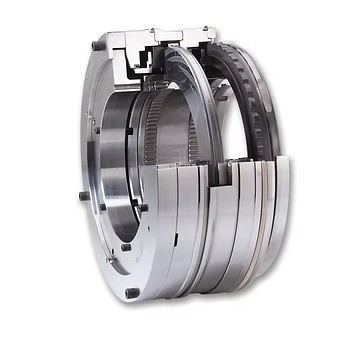
Description
Function of Seals
The primary function of a compressor seal is to control or prevent unwanted leakage between adjacent components.
Seals may be used to:
- Reduce air leakage from the compressor
- Prevent lubricating oil from entering the compressed-air path
- Prevent air ingress into lubrication areas where applicable
- Separate process-air and oil environments
- Maintain required internal pressure conditions
- Protect bearings and lubrication systems
- Reduce contamination
- Support efficient compressor operation
- Maintain required clearances between rotating and stationary components
The specific sealing function depends on the location and type of seal.
Types of Seals Used in Centrifugal Compressors
Different sealing technologies may be used depending on compressor design and operating conditions.
Labyrinth Seals
Labyrinth seals use a series of precisely machined passages and clearances to restrict fluid flow between rotating and stationary components.
They are commonly associated with high-speed rotating machinery because they can provide non-contacting sealing without conventional rubbing surfaces.
Oil Seals
Oil seals are used to help retain lubricating oil within designated lubrication areas and reduce leakage around shafts or housings.
Mechanical Seals
Mechanical seals use controlled contact between sealing faces and may be used in specific auxiliary or lubrication-system applications depending on compressor design.
Carbon or Dry Gas Sealing Arrangements
Certain compressor configurations may use specialized non-contacting or carbon-based sealing systems. The actual arrangement depends on the compressor manufacturer and application.
O-Rings and Static Seals
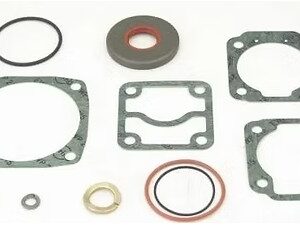
O-rings and other static sealing elements may be used at covers, flanges, housings, fittings, and other stationary interfaces.
Shaft Seals
Shaft seals are particularly important where a rotating shaft passes through a stationary housing.
Depending on the compressor design, shaft sealing arrangements may help control:
- Compressed-air leakage
- Oil leakage
- Air migration
- Pressure differences between internal areas
The seal design must be compatible with the shaft speed, temperature, pressure, and required running clearance.
Labyrinth Seals in Centrifugal Compressors
Labyrinth seals are commonly used in high-speed rotating equipment because the sealing mechanism can operate with controlled clearances rather than continuous contact.
A labyrinth seal typically consists of carefully designed teeth, grooves, or passages that restrict fluid movement through a series of pressure drops.
Seal performance depends on factors such as:
- Radial clearance
- Axial geometry
- Shaft condition
- Seal tooth condition
- Pressure differential
- Rotor movement
- Installation accuracy
Excessive clearance can increase leakage, while insufficient clearance can increase the risk of rubbing.
Seals and Compressor Efficiency
Internal leakage reduces the amount of compressed air effectively delivered by the compressor.
Worn or damaged seals can increase leakage and may contribute to:
- Reduced compressor efficiency
- Increased power consumption
- Reduced capacity
- Higher operating temperatures
- Unstable operating conditions
- Increased maintenance requirements
Maintaining the correct seal condition and clearances is therefore an important part of compressor maintenance.
Seals in Lubrication Systems
Seals also play an important role in preventing lubricating oil from migrating into areas where it is not intended to be present.
Oil leakage can lead to:
- Lubricant loss
- Contamination
- Reduced oil pressure
- Increased maintenance requirements
- Potential damage to downstream components
The correct seal material and design must be compatible with the compressor lubricant and operating temperature.
Seal Construction and Materials
Seal materials depend on the type of seal and application.
Possible materials include:
- Carbon-based materials
- Stainless steel
- Alloy steels
- PTFE
- NBR
- EPDM
- Fluoroelastomers
- Graphite
- Engineered polymers
- Composite materials
- Other manufacturer-specific materials
Material selection should be based on the actual operating conditions and original compressor specification.
Common Seal Problems
Seals can deteriorate because of wear, incorrect clearances, contamination, vibration, temperature, or mechanical damage.
Common problems include:
- Excessive leakage
- Seal wear
- Seal rubbing
- Cracking
- Hardening
- Deformation
- Erosion
- Corrosion
- Damaged seal teeth
- Incorrect clearances
- Shaft surface damage
- O-ring deterioration
- Gasket failure
- Improper installation
The appropriate corrective action depends on the seal type and location.
Causes of Seal Failure
Excessive Clearance
Excessive running clearance can increase internal leakage and reduce sealing effectiveness.
Rotor Movement
Excessive shaft movement caused by bearing problems, imbalance, or other mechanical conditions can result in seal rubbing or damage.
Contamination
Particles or deposits can damage precision sealing surfaces and affect clearances.
Excessive Temperature
Operating temperatures outside the seal material’s specification can accelerate deterioration.
Incorrect Installation
Incorrect orientation, dimensions, alignment, or installation procedures can cause premature seal failure.
Shaft Damage
Grooves, scoring, corrosion, or excessive wear on the shaft can affect seal performance.
Lubrication Problems
For seals that require lubrication or are exposed to the lubrication system, incorrect lubricant conditions can contribute to deterioration.
Seal Inspection
During compressor maintenance and overhaul, seals should be inspected according to their location and design.
Inspection may include:
- Checking sealing surfaces
- Measuring clearances
- Inspecting labyrinth teeth
- Checking for rubbing marks
- Inspecting shaft surfaces
- Checking O-rings and elastomeric seals
- Inspecting for cracking
- Checking for erosion or corrosion
- Checking seal dimensions
- Inspecting mounting arrangements
- Checking rotor and bearing condition
Where required, dimensional inspection and non-destructive testing may be used.
Seal Clearance
Correct clearance is particularly important for non-contacting rotating seals.
Clearance that is too large may increase leakage, while clearance that is too small may increase the possibility of contact between rotating and stationary components.
The correct clearance must be determined from the compressor manufacturer’s design specifications and the actual operating conditions.
Seal Maintenance
Seal maintenance generally forms part of the compressor’s scheduled inspection or overhaul program.
Maintenance may include:
- Cleaning sealing areas
- Inspecting seal surfaces
- Measuring clearances
- Replacing damaged sealing elements
- Checking shaft condition
- Replacing O-rings and gaskets
- Verifying correct installation
- Inspecting associated bearings
- Checking for abnormal leakage after commissioning
Seal replacement should be accompanied by investigation of the original failure mechanism where applicable.
Replacement of Seals
A replacement seal should be matched to the exact compressor application.
Important selection parameters include:
- Compressor manufacturer
- Compressor model
- Compressor serial number
- Seal location
- Existing seal part number
- Seal type
- Shaft diameter
- Housing dimensions
- Seal dimensions
- Running clearance
- Operating pressure
- Operating temperature
- Shaft speed
- Lubricant compatibility
- Material
- Installation arrangement
- Rotation direction where applicable
A seal should not be selected solely by outside diameter or shaft diameter because the internal geometry and clearances can be compressor-specific.
Applications
Seals for centrifugal air compressors are used in industrial systems across industries including:
- Manufacturing plants
- Steel plants
- Cement plants
- Power plants
- Chemical industries
- Petrochemical facilities
- Refineries
- Pharmaceutical manufacturing
- Food and beverage industries
- Automotive manufacturing
- Textile industries
- Process industries
- Industrial compressed-air plants
Seal Selection Specifications
| Parameter | Requirement |
|---|---|
| Component | Compressor Seal |
| Equipment | Centrifugal Air Compressor |
| Compressor Make | As per equipment |
| Compressor Model | As per equipment |
| Seal Location | Shaft / Bearing / Impeller / Gear / Housing / Other |
| Seal Type | Labyrinth / Oil / Mechanical / O-Ring / As applicable |
| Seal Part Number | As per original component |
| Shaft Diameter | As specified |
| Housing Diameter | As specified |
| Seal Dimensions | As required |
| Operating Pressure | As per application |
| Operating Temperature | As per application |
| Shaft Speed | As specified |
| Running Clearance | As per compressor specification |
| Material | As specified |
| Lubricant Compatibility | As required |
| Rotation | As applicable |
| Installation | As per compressor design |
| Application | Air, oil, or fluid leakage control |
Why Choose Aegis Projects?
Aegis Projects Technology provides industrial compressor spare parts and replacement sealing components for centrifugal air compressor systems.
Our seal solutions can be evaluated according to the compressor’s original sealing arrangement, shaft dimensions, operating conditions, material requirements, and specified clearances.
We support requirements for:
- Centrifugal compressor seals
- Labyrinth seals
- Shaft seals
- Oil seals
- Mechanical seals
- O-rings
- Static sealing elements
- Seal assemblies
- Compressor overhaul seal kits
- Replacement and retrofit requirements
For accurate identification, share the compressor make, model, serial number, seal location, existing seal part number, photographs, shaft dimensions, seal dimensions, drawings, or compressor documentation wherever available.
Request a Quote
Looking for seals for a centrifugal air compressor?
Contact Aegis Projects Technology Pvt. Ltd. with your compressor and seal details. Our team can assist with identifying a suitable replacement seal or sealing assembly for your compressor application.