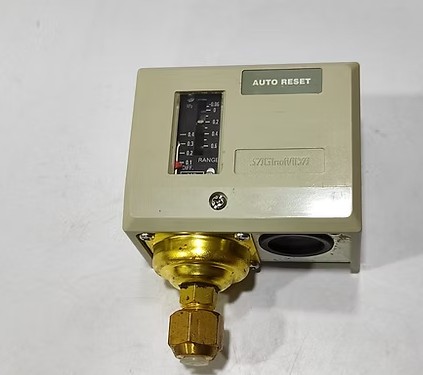
Description
Function of Saginomiya Pressure Switches
A pressure switch monitors pressure in the connected refrigeration circuit and changes its electrical contact state when the pressure reaches the configured operating point.
Depending on the model and application, a pressure switch can be used to:
- Control compressor operation
- Provide high-pressure protection
- Provide low-pressure control or protection
- Monitor refrigeration-system pressure
- Control pressure-dependent electrical circuits
- Protect refrigeration equipment from abnormal pressure conditions
- Support automatic compressor cycling
- Provide oil-pressure protection in applicable systems
- Interface with contactors, relays, controllers, and control panels
The exact function depends on the selected Saginomiya pressure-switch series and its configuration.
Saginomiya Pressure Switch Series
Saginomiya’s refrigeration product range includes several pressure-control families.
SNS Pressure Switches
The SNS series is a single-function pressure control designed for general pressure-control applications. Saginomiya describes SNS as a standard pressure control with high reliability and durability.
SNS models use an SPDT contact mechanism and are available with different pressure ranges, different electrical ratings, and connection configurations depending on the specific model.
HNS Pressure Switches
The HNS series is designed for high-pressure regulation with a fixed differential pressure. Manual-reset versions are also available.
DNS Dual Pressure Switches
The DNS series combines high- and low-pressure control functions in a single pressure-control arrangement. It can provide high-side overpressure protection together with low-side pressure control.
ONS Oil Protection Controls
The ONS series is designed for oil-pressure protection in refrigeration equipment and air compressors and incorporates a time-delay mechanism.
Other Saginomiya Pressure Controls
Saginomiya also offers pressure-control families such as ACB/LCB, CCB, CKB, FNS/ANS, WNS/YNS, SYS, DYS, and others, with different pressure ranges, differential characteristics, refrigerant compatibility, and applications.
How a Refrigeration Pressure Switch Works
A pressure switch is connected to the refrigeration circuit through an appropriate pressure connection.
As system pressure changes, the sensing mechanism responds to the applied pressure. When the pressure reaches the configured switching point, the internal electrical contacts change state.
The electrical signal can then be used to:
Pressure Change → Pressure-Sensing Mechanism → Contact Switching → Compressor / Control Circuit Response
The switching behavior, reset arrangement, differential, and pressure range depend on the particular pressure-switch model.
Pressure Control Applications
Saginomiya pressure switches can be used in refrigeration systems for:
High-Pressure Protection
A high-pressure control can interrupt the compressor control circuit when discharge or condensing pressure reaches the specified limit.
Low-Pressure Control
A low-pressure control can be used to control or protect the refrigeration system according to suction-side pressure conditions.
High/Low Pressure Control
Dual pressure controls combine high- and low-pressure functions in one assembly, depending on the selected model.
Oil Pressure Protection
Oil-protection controls such as the Saginomiya ONS series are designed to protect lubrication circuits in applicable refrigeration equipment and compressors.
Construction
Depending on the Saginomiya series, a pressure switch may include:
- Pressure-sensing element
- Bellows or sensing mechanism
- Spring mechanism
- Pressure-adjustment mechanism
- Electrical contact mechanism
- Terminal connections
- Pressure connection
- Protective enclosure
- Manual reset mechanism where applicable
- Mounting bracket
Saginomiya documentation specifies different construction and enclosure options for different models, including standard, drip-proof, and waterproof versions.
Pressure Ranges
Pressure range varies substantially between Saginomiya series and individual model numbers.
For example, Saginomiya’s published product information identifies different adjustment ranges for series including ACB, LCB, CCB, SNS, HNS, and CKB. The CKB series is specifically intended for high-pressure CO₂ refrigeration applications, while SNS and other series cover different refrigeration requirements.
Therefore, the pressure range should always be confirmed from the exact pressure-switch model or part number rather than assumed from the product family name.
Refrigerant Compatibility
Refrigerant compatibility is an important consideration when selecting a Saginomiya pressure switch.
Saginomiya’s current refrigeration documentation lists compatibility for different pressure-control series with refrigerants including R448A, R449A, R463A-J, R32, R454C, R1234yf, R290, and R744 (CO₂) depending on the specific series.
CO₂ refrigeration requires pressure controls specifically suitable for the substantially higher operating pressures involved. Saginomiya’s CKB series is specifically designed for high-pressure CO₂ refrigeration systems.
Applications
Saginomiya pressure switches are used in:
- Commercial refrigeration systems
- Industrial refrigeration systems
- Cold rooms
- Cold storage systems
- Freezers
- Chillers
- Refrigerated display cabinets
- Condensing units
- Air-conditioning equipment
- Heat-pump systems
- Food processing refrigeration
- Beverage refrigeration
- Compressor protection systems
- Refrigeration control panels
Saginomiya specifically identifies refrigeration and air-conditioning equipment among the applications for its pressure-control products.
Common Pressure-Switch Problems
Incorrect Switching
Possible causes include:
- Incorrect pressure setting
- Incorrect model selection
- Mechanical wear
- Damaged sensing mechanism
- Calibration issues
- Incorrect pressure connection
Compressor Does Not Start
Possible causes may include:
- Low-pressure switch remaining open
- Incorrect pressure setting
- Faulty electrical contacts
- Wiring problems
- Control-circuit failure
- Pressure condition outside the configured operating range
Compressor Does Not Stop
Possible causes may include:
- Faulty pressure contacts
- Incorrect setting
- Mechanical failure
- Electrical-control problems
- Pressure-sensing issues
Pressure Switch Trips Frequently
Frequent switching may be associated with:
- Incorrect pressure settings
- Refrigerant-system operating conditions
- Insufficient condenser performance
- Refrigerant-flow problems
- Incorrect differential
- System instability
The pressure switch should not be adjusted without first determining whether the refrigeration system itself is operating within its specified conditions.
Inspection & Maintenance
Pressure switches should be inspected as part of refrigeration-system maintenance.
Checks may include:
- Inspect pressure connections for leakage
- Check electrical terminals
- Inspect wiring
- Verify switching operation
- Check pressure settings
- Inspect the sensing mechanism
- Check mounting
- Inspect the enclosure for damage
- Verify the pressure switch against the refrigeration-system specification
- Replace damaged or unreliable pressure switches
Pressure settings should be verified using appropriate calibrated pressure-measurement equipment and according to the equipment manufacturer’s procedure.
Saginomiya Pressure Switch Selection Parameters
| Parameter | Requirement |
|---|---|
| Manufacturer | Saginomiya |
| Series | SNS / HNS / DNS / ONS / ACB / LCB / CKB / other |
| Application | Refrigeration / HVAC-R |
| Refrigerant | System-specific |
| Pressure Function | High / low / dual / oil protection |
| Pressure Range | According to model |
| Cut-In Pressure | Application-specific |
| Cut-Out Pressure | Application-specific |
| Differential | Fixed / adjustable / model-specific |
| Reset Type | Automatic / manual where applicable |
| Contact Configuration | According to model |
| Electrical Rating | According to model |
| Pressure Connection | Model-specific |
| Enclosure | Standard / drip-proof / waterproof / other |
| Fluid Temperature | Application-specific |
| Ambient Temperature | Application-specific |
| Mounting | According to model |
| Part Number | Required for exact replacement |
Replacement Considerations
When replacing a Saginomiya pressure switch, the exact model and application specifications should be verified.
Important information includes:
- Original Saginomiya part number
- Pressure-switch series
- Refrigeration equipment model
- Refrigerant type
- High- or low-pressure application
- Cut-in and cut-out settings
- Differential
- Reset type
- Contact configuration
- Electrical rating
- Pressure connection
- Enclosure requirement
- Operating temperature
Physical appearance alone is not sufficient for selecting a replacement pressure switch.
Why Choose Aegis Projects?
Aegis Projects Technology supplies Saginomiya pressure switches and refrigeration pressure-control components for commercial, industrial, cold-storage, and HVAC-R applications.
We can assist with identifying the appropriate replacement based on:
- Original Saginomiya part number
- Pressure-switch series
- Refrigeration equipment model
- Refrigerant
- Pressure range
- Differential
- Reset arrangement
- Electrical rating
- Pressure connection
- Installation requirements
Contact Aegis Projects Technology for Saginomiya pressure switches and other refrigeration spare parts.