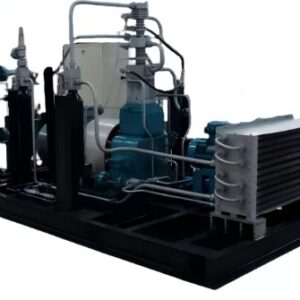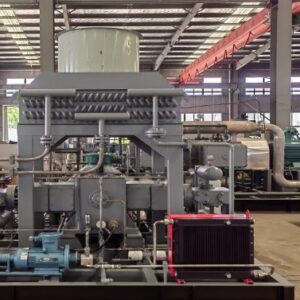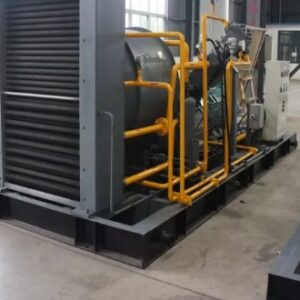
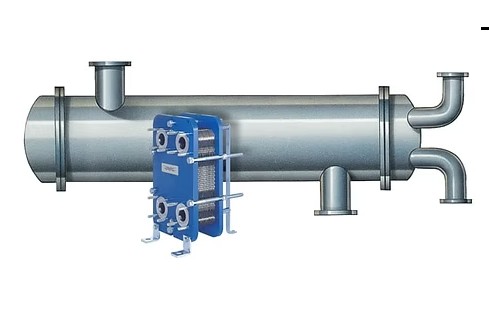
Description
Functions of Plate/Shell Type Heat Exchangers
Plate/shell heat exchangers can be used for:
- Transferring heat between two separate circuits
- Refrigerant subcooling
- Refrigerant superheating
- Suction-gas heat exchange
- Oil cooling
- Liquid cooling
- Process-fluid heating or cooling
- Condensation applications
- Evaporation applications
- Heat recovery
- Thermal management of refrigeration systems
- Improving temperature control between process streams
The exact function depends on the exchanger design and the way it is integrated into the refrigeration or process system.
How a Plate/Shell Heat Exchanger Works
A plate/shell heat exchanger transfers heat through a separating heat-transfer surface.
One medium flows through one side of the exchanger while the second medium flows through a separate flow path. Heat moves through the separating wall from the hotter medium toward the colder medium.
A simplified arrangement is:
Hot Fluid / Refrigerant → Heat Transfer Surface → Cold Fluid / Refrigerant
The two circuits remain separated while thermal energy is transferred between them.
Depending on the design, the exchanger may use internal plates, channels, shells, tubes, or combinations of these structures to create the required heat-transfer area.
Main Components
Depending on the construction and manufacturer, a plate/shell type heat exchanger may include:
- Heat-transfer plates or internal heat-transfer surfaces
- Shell or outer housing
- Refrigerant/fluid inlet connections
- Refrigerant/fluid outlet connections
- Internal flow channels
- Separating walls
- Brazed or welded joints
- Gaskets or sealing elements where applicable
- Mounting supports
- End connections
- Internal distribution arrangements
The materials and construction depend on the refrigerant, fluid being handled, pressure rating, temperature range, corrosion requirements, and application.
Types and Configurations
Plate/shell heat exchangers can be supplied in different configurations depending on the intended application.
Refrigerant-to-Liquid Heat Exchangers
These are used to transfer heat between a refrigerant circuit and a liquid such as water, glycol, or another compatible process fluid.
Refrigerant-to-Refrigerant Heat Exchangers
These can transfer heat between two refrigerant streams within a refrigeration system, subject to the exchanger’s design and pressure requirements.
Suction-Liquid Heat Exchangers
These can be used to transfer heat between a liquid refrigerant line and suction gas line where required by the system design.
Oil Coolers
Heat exchangers can be integrated into compressor or refrigeration systems for controlling lubricant temperature.
Condensers
Certain heat-exchanger designs can be used for condensing refrigerant by transferring heat from the refrigerant to another cooling medium.
Evaporators
Depending on the construction, heat exchangers can also be used as evaporators where refrigerant absorbs heat from a secondary fluid or process.
Applications
Plate/shell type heat exchangers are used in a wide range of refrigeration and industrial applications, including:
- Commercial refrigeration
- Industrial refrigeration
- Cold storage
- Cold rooms
- Chillers
- HVAC-R systems
- Process cooling
- Food and beverage processing
- Pharmaceutical facilities
- Chemical processing
- Industrial cooling systems
- Oil cooling systems
- Heat recovery systems
- Refrigeration plants
- Glycol cooling systems
- Water-cooled refrigeration systems
- Process-fluid temperature control
Heat Transfer Performance
Heat exchanger performance depends on several factors, including:
- Heat-transfer area
- Fluid flow rate
- Refrigerant type
- Secondary fluid type
- Inlet temperature
- Outlet temperature
- Operating pressure
- Temperature difference
- Fluid properties
- Fouling or contamination
- Flow arrangement
- Heat-transfer coefficient
The required exchanger capacity should therefore be determined from the actual operating conditions rather than from physical size alone.
Advantages of Plate/Shell Type Heat Exchangers
Depending on the specific design, these heat exchangers can provide:
- Efficient heat transfer
- Compact construction
- Separation of two operating circuits
- Flexible application across refrigeration and process systems
- Reduced installation footprint compared with some conventional exchanger arrangements
- Suitable operation at different temperature conditions
- Integration with refrigeration and HVAC-R systems
- Support for subcooling and heat-recovery applications
- Application-specific connection configurations
Actual performance depends on exchanger construction, operating conditions, fluid properties, and system design.
Common Heat Exchanger Problems
Heat exchanger performance can be affected by operating conditions, contamination, mechanical damage, or incorrect selection.
Common issues include:
- Reduced heat-transfer performance
- Excessive pressure drop
- Internal fouling
- Fluid-side contamination
- Refrigerant leakage
- Cross-circuit leakage
- Corrosion
- Blocked passages
- Incorrect flow rate
- Incorrect temperature approach
- Damaged connections
- Excessive operating pressure
- Improper exchanger sizing
A sudden change in inlet/outlet temperatures or pressure drop can indicate a need for further system inspection.
Inspection and Maintenance
Inspection requirements depend on the exchanger construction and application.
Typical checks may include:
- Checking inlet and outlet temperatures
- Monitoring pressure drop
- Inspecting connections for leakage
- Checking refrigerant circuit pressure
- Checking secondary-fluid flow
- Inspecting for corrosion
- Monitoring heat-transfer performance
- Checking for abnormal temperature differences
- Inspecting external surfaces
- Checking mounting and supports
- Investigating unusual pressure-drop increases
Where applicable, cleaning procedures should follow the heat exchanger manufacturer’s recommendations and the compatibility of the cleaning method with the exchanger materials.
Installation Considerations
Correct installation is important for heat exchanger performance and service life.
Consider the following:
- Confirm the exchanger is suitable for the intended refrigerant and secondary fluid.
- Verify the pressure and temperature ratings.
- Confirm inlet and outlet connections.
- Follow the manufacturer’s recommended flow direction.
- Provide appropriate supports.
- Avoid excessive mechanical loading on connections.
- Install suitable isolation and service provisions where required.
- Protect the exchanger from freezing conditions where applicable.
- Ensure the system is properly cleaned before commissioning.
- Check all connections for leakage after installation.
- Verify flow rates and operating temperatures during commissioning.
Plate/Shell Heat Exchanger Selection
The heat exchanger should be selected according to the actual thermal and mechanical requirements of the system.
| Specification | Requirement |
|---|---|
| Application | Refrigeration / HVAC-R / Chiller / Process Cooling |
| Heat Exchanger Type | Plate/Shell Type |
| Heat Duty | According to System Requirement |
| Medium 1 | Refrigerant / Water / Glycol / Process Fluid |
| Medium 2 | Refrigerant / Water / Glycol / Process Fluid |
| Refrigerant | Application Specific |
| Flow Rate | According to Design |
| Inlet Temperature | Application Specific |
| Outlet Temperature | Application Specific |
| Operating Pressure | According to System |
| Design Pressure | According to Application |
| Operating Temperature | According to System |
| Heat Transfer Area | According to Required Duty |
| Connection Size | According to Piping |
| Connection Type | Application Specific |
| Material | According to Fluid and Operating Conditions |
| Flow Arrangement | According to Design |
| Pressure Drop | According to System Requirement |
| Mounting | As Required |
| Manufacturer / Part Number | As Required |
Replacement Considerations
When replacing a plate/shell heat exchanger, selecting a replacement based only on connection size is not recommended.
The replacement should be evaluated for:
- Heat-transfer capacity
- Refrigerant compatibility
- Secondary-fluid compatibility
- Operating pressure
- Design pressure
- Operating temperature
- Flow rate
- Pressure drop
- Connection size
- Connection configuration
- Heat-transfer area
- Material compatibility
- Mounting requirements
- Application-specific performance
The replacement exchanger should provide the required thermal performance under the actual system operating conditions.
Plate/Shell Heat Exchanger Supplier – Aegis Projects
Aegis Projects Technology Pvt. Ltd. supplies heat exchangers and refrigeration components for commercial, industrial, and process applications.
Our range can support applications involving refrigeration systems, chillers, cold storage, process cooling, oil cooling, heat recovery, subcooling, and other thermal-management requirements.
Plate/shell type heat exchangers can be selected according to the heat-transfer duty, refrigerant, secondary fluid, flow rate, operating pressure, temperature conditions, connection requirements, and system configuration.
Contact Aegis Projects for plate/shell type heat exchangers and application-specific refrigeration heat-transfer solutions.