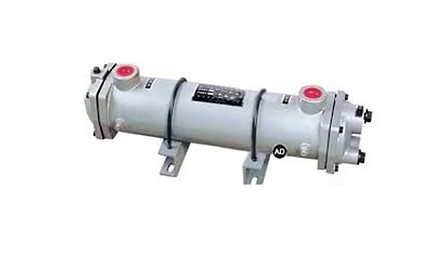
Description
Function of Oil Coolers
The primary function of an oil cooler is to remove excess heat from compressor lubricating oil.
An oil cooler helps to:
- Maintain suitable lubricant temperature
- Prevent excessive oil-temperature rise
- Protect bearings and gears from overheating
- Maintain appropriate lubricant viscosity
- Support continuous oil circulation
- Improve lubrication-system reliability
- Reduce thermal degradation of the lubricant
- Help maintain stable compressor operation
The actual cooling requirement depends on the compressor design, lubrication system, operating conditions, and ambient or cooling-medium conditions.
How an Oil Cooler Works
Hot lubricating oil from the compressor lubrication circuit enters the oil cooler and flows through one side of the heat exchanger.
A separate cooling medium flows through the other side. Depending on the system, the cooling medium may be cooling water, air, or another approved heat-transfer medium.
Heat passes from the hot lubricating oil through the cooler’s heat-transfer surfaces into the cooling medium. The cooled oil then returns to the lubrication circuit.
This continuous heat-transfer process helps maintain the oil at the temperature required by the compressor lubrication system.
Types of Oil Coolers
Oil coolers used with centrifugal compressor systems may have different designs depending on the compressor and cooling arrangement.
Shell-and-Tube Oil Coolers
Shell-and-tube heat exchangers use tubes enclosed within a shell. Oil and cooling water or another cooling medium flow through separate passages.
They are commonly used in industrial lubrication and cooling systems where a dedicated cooling-water supply is available.
Plate-Type Oil Coolers
Plate heat exchangers use a series of thin plates to create separate flow channels for the oil and cooling medium. Their compact construction can provide a relatively high heat-transfer area within a small footprint.
Air-Cooled Oil Coolers
Air-cooled arrangements use ambient air to remove heat from the circulating oil, typically through finned heat-transfer surfaces and a fan arrangement.
Compact Heat Exchanger Designs
Some compressor packages use compact oil coolers designed specifically around the compressor lubrication system, available space, flow requirements, and cooling conditions.
The appropriate configuration depends on the original compressor design.
Main Components of an Oil Cooler
Depending on the cooler design, components may include:
- Cooler body or shell
- Heat-transfer tubes or plates
- Tube sheets
- Headers or end covers
- Oil inlet connection
- Oil outlet connection
- Cooling-medium inlet
- Cooling-medium outlet
- Internal baffles where applicable
- Gaskets and sealing elements
- Mounting supports
- Drain and vent connections where applicable
Material and construction vary according to the oil, cooling medium, operating temperature, pressure, and compressor application.
Importance of Proper Oil Temperature
Lubricating oil must operate within the temperature range specified for the compressor and lubricant.
Excessively high oil temperature can contribute to:
- Reduced lubricant viscosity
- Increased oxidation
- Lubricant degradation
- Reduced bearing protection
- Increased deposits
- Accelerated component wear
Excessively low oil temperature can also affect lubricant behavior and may prevent the lubrication system from reaching its intended operating condition.
Therefore, the oil cooler must be selected and operated as part of the complete compressor lubrication system rather than independently.
Common Oil Cooler Problems
Oil coolers can experience performance and mechanical problems during prolonged operation.
Common issues include:
- Reduced cooling performance
- Fouling of heat-transfer surfaces
- Scaling on the cooling-water side
- Oil-side contamination
- Internal leakage
- Tube damage
- Plate damage
- Gasket deterioration
- Corrosion
- Excessive pressure drop
- Cooling-medium restriction
- Oil leakage
- Incorrect flow
- Air or gas pockets within the system
A gradual increase in oil temperature may indicate cooler fouling, insufficient cooling-medium flow, high ambient conditions, incorrect oil flow, or another lubrication-system problem.
Oil Cooler Fouling
Fouling is one of the common causes of reduced heat-transfer performance.
Depending on the cooling medium and operating environment, deposits may accumulate on heat-transfer surfaces. In water-cooled systems, scaling or suspended solids can reduce the effective heat-transfer area and increase thermal resistance.
Oil-side contamination can similarly reduce heat-transfer efficiency.
Regular monitoring of oil temperature, cooling-medium conditions, pressure drop, and cooler performance can help identify deterioration.
Oil Cooler Maintenance
Maintenance requirements depend on the cooler design and operating environment.
Typical inspection activities may include:
- Monitoring oil inlet and outlet temperatures
- Checking cooling-medium inlet and outlet temperatures
- Monitoring pressure drop
- Inspecting for external leakage
- Checking oil-side flow
- Checking cooling-water or air flow
- Inspecting tubes or plates where accessible
- Cleaning heat-transfer surfaces
- Checking gaskets and seals
- Inspecting for corrosion
- Checking mounting arrangements
- Testing for internal leakage when required
Cleaning procedures should be compatible with the cooler construction and manufacturer’s recommendations.
Oil Cooler Failure Causes
Oil cooler performance may deteriorate because of:
Fouling and Scaling
Deposits on heat-transfer surfaces reduce heat-transfer efficiency.
Corrosion
Corrosion can damage tubes, plates, headers, or other wetted components and may eventually cause leakage.
Excessive Pressure or Mechanical Stress
Operating outside the cooler’s specified pressure range can damage internal components.
Seal or Gasket Failure
Deteriorated seals can result in external leakage or cross-contamination between the oil and cooling medium.
Cooling-Medium Problems
Insufficient cooling-water flow, high cooling-medium temperature, blocked passages, or fan problems in air-cooled systems can reduce cooling performance.
Internal Damage
Tube leakage, damaged plates, or deformed internal components can compromise the cooler’s performance.
Replacement of Oil Coolers
A replacement oil cooler should be selected according to the original compressor lubrication-system requirements.
Important selection parameters include:
- Compressor manufacturer
- Compressor model
- Compressor serial number
- Existing cooler model or part number
- Oil flow rate
- Oil inlet temperature
- Required oil outlet temperature
- Cooling-medium type
- Cooling-medium flow
- Operating pressure
- Heat-transfer capacity
- Oil viscosity
- Connection sizes
- Mounting dimensions
- Material of construction
- Tube or plate arrangement
- Gasket and sealing requirements
The replacement cooler should provide the required heat-transfer performance without creating unacceptable pressure drop in the lubrication circuit.
Applications
Oil coolers are used in centrifugal compressor lubrication and auxiliary cooling systems across industries such as:
- Manufacturing plants
- Steel plants
- Cement plants
- Power plants
- Chemical industries
- Petrochemical facilities
- Refineries
- Pharmaceutical manufacturing
- Food and beverage industries
- Textile industries
- Automotive manufacturing
- Process industries
- Industrial compressed-air plants
Oil Cooler Selection Specifications
| Parameter | Requirement |
|---|---|
| Component | Oil Cooler |
| Equipment | Centrifugal Air Compressor |
| Compressor Make | As per equipment |
| Compressor Model | As per equipment |
| Cooler Type | Shell & Tube / Plate / Air-Cooled / As applicable |
| Oil Flow Rate | As per lubrication-system requirement |
| Oil Inlet Temperature | As per compressor specification |
| Oil Outlet Temperature | As required |
| Cooling Medium | Water / Air / Other applicable medium |
| Cooling-Medium Flow | As required |
| Operating Pressure | As per system |
| Heat-Transfer Capacity | As per application |
| Oil Type | As specified by compressor/lubricant system |
| Connection Size | As per existing arrangement |
| Material | As per oil and cooling-medium conditions |
| Mounting Dimensions | As per compressor package |
| Sealing Arrangement | As per cooler design |
| Application | Compressor lubrication oil cooling |
Why Choose Aegis Projects?
Aegis Projects Technology provides industrial compressor spare parts and replacement cooling components for centrifugal air compressor systems.
Our oil cooler solutions can be evaluated according to the compressor’s lubrication-system design, required heat-transfer capacity, oil flow, cooling-medium conditions, connection arrangement, and available installation space.
We support requirements for:
- Centrifugal compressor oil coolers
- Lubrication-system heat exchangers
- Replacement oil cooler assemblies
- Shell-and-tube oil coolers
- Plate-type oil coolers
- Air-cooled oil cooler arrangements
- Cooler gaskets and sealing components
- Compressor cooling-system spares
- Replacement and retrofit requirements
For accurate selection, share the compressor make, model, serial number, existing cooler nameplate, oil flow, cooling-medium details, dimensions, drawings, or photographs wherever available.
Request a Quote
Looking for an oil cooler for a centrifugal air compressor?
Contact Aegis Projects Technology Pvt. Ltd. with your compressor and cooler details. Our team can assist with identifying a suitable replacement or equivalent oil-cooling solution for your compressor lubrication system.