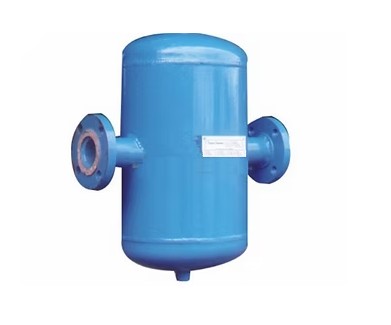
Description
Function of Moisture Separators
The primary purpose of a moisture separator is to remove bulk liquid moisture from compressed air.
Depending on the system design, it can help to:
- Separate condensed water from compressed air
- Reduce liquid carryover into downstream equipment
- Protect air-treatment components
- Reduce moisture accumulation in compressed-air piping
- Improve the quality of compressed air entering downstream equipment
- Support reliable operation of dryers and filters
- Reduce corrosion-related problems in air distribution systems
- Protect pneumatic equipment and instruments
A moisture separator is generally installed at a suitable point downstream of an aftercooler or other cooling stage where condensation occurs.
How a Moisture Separator Works
Compressed air entering the separator is directed through an internal flow path designed to reduce the velocity of liquid droplets and separate them from the air stream.
Depending on the separator design, airflow may be forced through a change in direction or a swirling path. Because liquid droplets have greater inertia than the air stream, they are separated and collected in the lower section of the separator.
The accumulated condensate is then discharged through a suitable condensate drain system.
The exact separation mechanism depends on the separator construction and application.
Types of Moisture Separators
Different separator configurations may be used depending on compressed-air conditions and required separation performance.
Centrifugal Moisture Separators
These separators create a swirling airflow pattern that encourages water droplets and other bulk liquids to move toward the separator wall and fall into the collection area.
Baffle-Type Separators
Baffle arrangements change the direction of airflow, allowing liquid droplets to separate from the compressed-air stream due to inertia.
High-Efficiency Separators
Specially designed separators may incorporate optimized internal flow paths or separation elements for improved liquid removal under specific operating conditions.
Integrated Separator Assemblies
Some compressed-air systems use moisture separation as part of an aftercooler, separator, filter, or dryer package.
Main Components
A typical moisture separator may include:
- Separator body
- Air inlet connection
- Air outlet connection
- Internal separator element or vane assembly
- Baffles or swirl mechanism
- Liquid collection chamber
- Condensate outlet
- Automatic or manual drain
- Inspection or service access
- Mounting supports
- Sealing components
The internal arrangement depends on the separator design and manufacturer.
Importance in Centrifugal Compressor Systems
Compressed air leaving a compressor can contain significant water vapor. When the compressed air is subsequently cooled, part of this vapor may condense into liquid water.
If bulk moisture is not effectively removed, it can enter downstream equipment and cause:
- Corrosion
- Water accumulation in pipelines
- Damage to pneumatic components
- Instrumentation problems
- Reduced dryer performance
- Contamination of processes
- Increased maintenance requirements
A properly selected moisture separator provides an important stage of moisture management within the compressed-air system.
Moisture Separator Installation
Moisture separators are commonly installed where condensation is expected, particularly after cooling stages.
Typical locations may include:
- Downstream of compressor aftercoolers
- Between compressor and air dryer
- Upstream of compressed-air filters
- At air receiver or separator arrangements
- In compressed-air treatment systems
- At specific points in industrial air distribution systems
The installation arrangement should allow adequate condensate collection and reliable drainage.
Condensate Drain Arrangement
A moisture separator requires an effective method for removing the liquid it collects.
Possible arrangements include:
- Automatic zero-loss drains
- Float-operated drains
- Timer-controlled drains
- Manual drains
- Electrically controlled drain systems
The drain must be appropriately sized and maintained to prevent condensate accumulation inside the separator.
Common Moisture Separator Problems
Moisture separators can experience performance problems due to contamination, incorrect sizing, drainage issues, or mechanical damage.
Common issues include:
- Excessive moisture carryover
- Blocked condensate outlet
- Drain malfunction
- Internal element contamination
- Excessive pressure drop
- Corrosion
- Damaged seals
- Leakage at connections
- Internal component damage
- Incorrect installation
- Separator overloading
- Inadequate condensate drainage
If moisture carryover remains high, the entire compressed-air treatment system should be checked rather than assuming the separator itself is the only cause.
Maintenance of Moisture Separators
Regular inspection helps maintain effective moisture separation and reliable compressed-air operation.
Recommended checks may include:
- Inspecting the separator body
- Checking inlet and outlet connections
- Checking for air leakage
- Inspecting internal separation components
- Cleaning where applicable
- Checking condensate accumulation
- Testing the drain system
- Inspecting drain valves and connections
- Monitoring pressure drop
- Checking for corrosion
- Inspecting gaskets and seals
- Verifying correct installation and airflow direction
Maintenance intervals should be determined according to operating conditions, air quality, compressor loading, and manufacturer recommendations.
Replacement of Moisture Separators
A replacement separator should be selected according to the operating requirements of the compressed-air system.
Important parameters include:
- Compressor make and model
- Airflow capacity
- Operating pressure
- Operating temperature
- Separator size
- Inlet and outlet connection size
- Connection configuration
- Required moisture separation performance
- Pressure-drop requirement
- Condensate drain arrangement
- Installation orientation
- Material compatibility
Physical dimensions alone should not be used to select a replacement separator.
Applications
Moisture separators are used with centrifugal and industrial compressed-air systems across industries including:
- Manufacturing plants
- Automotive industries
- Steel plants
- Cement plants
- Chemical industries
- Petrochemical facilities
- Refineries
- Pharmaceutical manufacturing
- Food and beverage industries
- Textile industries
- Power plants
- Process industries
- Instrument-air systems
- General industrial compressed-air networks
Moisture Separator Selection Specifications
| Parameter | Requirement |
|---|---|
| Component | Moisture Separator |
| Equipment | Centrifugal Air Compressor System |
| Compressor Make | As per equipment |
| Compressor Model | As per equipment |
| Airflow Capacity | As per system requirement |
| Operating Pressure | As per application |
| Operating Temperature | As per application |
| Separator Type | Centrifugal / Baffle / Other applicable design |
| Inlet Connection | As per system |
| Outlet Connection | As per system |
| Drain Type | Automatic / Manual / As applicable |
| Body Material | As per operating conditions |
| Internal Element | As per separator design |
| Pressure Drop | As per application requirement |
| Installation | As per compressed-air system |
| Application | Bulk condensate and moisture separation |
Why Choose Aegis Projects?
Aegis Projects Technology provides industrial compressor spare parts and compressed-air system components for centrifugal air compressor applications.
Our moisture separator solutions can be evaluated according to the compressor system, airflow requirements, operating pressure and temperature, connection arrangement, and condensate-management requirements.
We support requirements for:
- Moisture separators
- Condensate separators
- Compressed-air treatment components
- Separator replacement assemblies
- Condensate drain systems
- Compressor spare parts
- Air-treatment system components
- Replacement and retrofit requirements
For accurate selection, share the compressor make, model, airflow, operating pressure, temperature, existing separator details, nameplate, dimensions, or photographs wherever available.
Request a Quote
Looking for a moisture separator for a centrifugal air compressor system?
Contact Aegis Projects Technology Pvt. Ltd. with your compressor and separator requirements. Our team can assist with identifying a suitable replacement or equivalent moisture separation solution for your compressed-air system.