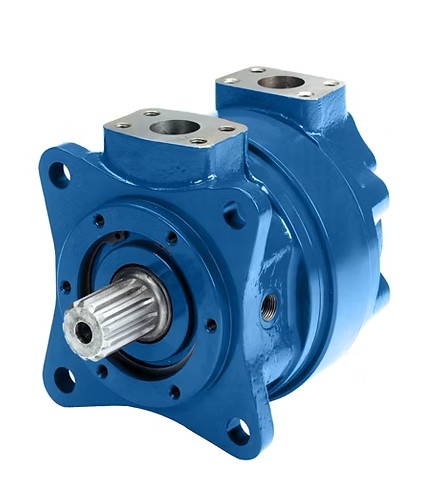
Description
Functions of a Hydraulic Motor
A hydraulic motor performs several important functions within a hydraulic system:
- Converts hydraulic pressure and flow into rotational motion
- Provides controlled rotational torque
- Drives mechanical equipment and machinery
- Enables variable rotational speed
- Supports reversible rotation where the motor design permits
- Provides high starting torque in suitable applications
- Transfers hydraulic power to mechanical loads
- Supports continuous or intermittent rotary operation
- Integrates with hydraulic control valves and power packs
Working Principle
A hydraulic motor receives pressurised hydraulic fluid from a hydraulic pump or hydraulic power unit.
The hydraulic fluid enters the motor and acts on internal components such as gears, vanes or pistons. The hydraulic force creates rotational movement, which is transferred through the motor shaft to the driven equipment.
The basic operating sequence is:
Hydraulic Pump → Pressurised Hydraulic Fluid → Hydraulic Motor → Internal Mechanical Movement → Rotating Shaft → Mechanical Load
The motor’s speed is primarily influenced by hydraulic flow, while the torque produced is related to the operating pressure and motor displacement.
Types of Hydraulic Motors
Hydraulic Gear Motors
Gear motors use meshing gears to convert hydraulic flow and pressure into shaft rotation. They are commonly used in applications requiring a simple and robust hydraulic motor design.
Hydraulic Vane Motors
Vane motors use vanes positioned within a rotor assembly. Hydraulic pressure acting on the vanes produces rotational movement.
Hydraulic Piston Motors
Piston motors use reciprocating pistons to generate rotary motion. They are commonly selected for applications requiring high pressure, high efficiency or variable displacement.
Axial Piston Motors
Axial piston motors use pistons arranged parallel to the drive shaft. Depending on design, they may be fixed or variable displacement.
Radial Piston Motors
Radial piston motors arrange pistons radially around the drive mechanism and can provide high torque characteristics for specific industrial applications.
Fixed and Variable Displacement Motors
Fixed Displacement Hydraulic Motors
A fixed displacement motor provides a defined fluid displacement per revolution. Motor speed is primarily controlled by adjusting hydraulic flow.
Variable Displacement Hydraulic Motors
Variable displacement motors allow the displacement to be changed, providing additional control over speed and torque characteristics.
Main Components
Depending on motor type and construction, hydraulic motors may contain:
- Motor housing
- Drive shaft
- Gears or rotor assembly
- Pistons
- Cylinder block
- Valve plate
- Swash plate
- Vanes
- Bearings
- Bushes
- Shaft seals
- O-rings
- Internal seals
- End covers
- Port connections
- Retaining components
- Springs
- Mounting flange
- Coupling components
The exact construction varies according to motor design and manufacturer specification.
Hydraulic Motor Spare Parts
Aegis Projects can also supply replacement components associated with hydraulic motors, subject to model and application requirements.
Common hydraulic motor spare parts include:
- Drive shafts
- Gear sets
- Pistons
- Cylinder blocks
- Valve plates
- Swash plates
- Vanes
- Bearings
- Bushes
- Shaft seals
- Seal kits
- O-rings
- Springs
- End covers
- Coupling components
- Mounting components
- Repair kits
Replacement parts should be matched with the hydraulic motor model and original component specifications.
Applications
Hydraulic motors are used in a wide range of industrial and mobile equipment, including:
- Hydraulic power units
- Conveyor systems
- Construction machinery
- Excavators
- Cranes
- Winches
- Drilling equipment
- Material-handling machinery
- Agricultural equipment
- Mining machinery
- Industrial automation systems
- Machine tools
- Plastic processing machinery
- Steel and metal processing equipment
- Forestry machinery
- Marine hydraulic systems
- Rotary equipment
- Hydraulic drive systems
Hydraulic Motor Speed and Flow
Hydraulic motor speed is generally related to the hydraulic flow supplied to the motor.
Higher flow can increase motor speed, subject to the motor’s displacement and operating limitations.
A simplified relationship is:
Motor Speed ∝ Hydraulic Flow ÷ Motor Displacement
Actual motor speed also depends on motor efficiency, load conditions, pressure, leakage and system characteristics.
Hydraulic Motor Torque and Pressure
Hydraulic motor torque is primarily related to the pressure differential across the motor and its displacement.
A simplified relationship is:
Motor Torque ∝ Pressure Differential × Motor Displacement
Actual output torque is affected by mechanical and volumetric efficiency, operating temperature, internal leakage and motor condition.
The motor must therefore be selected according to the required torque and speed rather than pressure alone.
Hydraulic Motor Direction of Rotation
Some hydraulic motors are designed to operate in both clockwise and anticlockwise directions.
Bidirectional operation depends on the motor construction and hydraulic circuit.
Before reversing motor rotation, verify that:
- The motor is designed for reversible operation
- Hydraulic ports are correctly connected
- Drain connections are correctly configured where applicable
- Shaft and coupling arrangements are suitable
- Operating pressure remains within specified limits
Hydraulic Motor Efficiency
Hydraulic motor performance can be affected by:
- Internal leakage
- Mechanical friction
- Hydraulic fluid viscosity
- Operating temperature
- Contamination
- Bearing condition
- Seal condition
- Pressure differential
- Flow rate
- Motor loading
Maintaining clean hydraulic fluid and operating the motor within its specified conditions can help maintain reliable performance.
Common Hydraulic Motor Problems
Common problems may include:
- Reduced motor speed
- Low output torque
- Excessive internal leakage
- External oil leakage
- Abnormal noise
- Excessive vibration
- Overheating
- Shaft wear
- Bearing failure
- Seal failure
- Contaminated hydraulic oil
- Incorrect hydraulic flow
- Incorrect operating pressure
- Motor stalling
- Erratic rotation
- Excessive wear of internal components
Hydraulic Motor Inspection and Maintenance
Regular inspection can help identify developing problems before they cause equipment downtime.
Recommended checks include:
- Inspect for hydraulic oil leakage
- Check motor mounting bolts and connections
- Inspect the drive shaft and coupling
- Check for abnormal noise or vibration
- Monitor operating temperature
- Check hydraulic pressure and flow
- Inspect hydraulic hoses and fittings
- Monitor motor speed and torque performance
- Maintain hydraulic fluid cleanliness
- Replace filters at appropriate service intervals
- Inspect seals and bearings during overhaul
- Check internal components when performance deteriorates
Hydraulic Fluid and Contamination Control
Hydraulic motors depend on clean hydraulic fluid for reliable operation.
Contamination can cause wear to precision internal components and may lead to:
- Increased internal leakage
- Reduced efficiency
- Valve or piston damage
- Bearing wear
- Seal damage
- Increased operating temperature
- Premature motor failure
Appropriate filtration and regular hydraulic oil maintenance are therefore important parts of hydraulic motor maintenance.
Installation Considerations
Before installing a hydraulic motor, verify:
- Motor displacement
- Maximum operating pressure
- Required hydraulic flow
- Required rotational speed
- Required torque
- Direction of rotation
- Hydraulic fluid compatibility
- Shaft configuration
- Mounting flange
- Hydraulic port configuration
- Drain connection where applicable
- Coupling alignment
- Operating temperature
The motor should be correctly aligned with the driven equipment to prevent excessive radial or axial loading on the shaft.
Hydraulic Motor Selection Guide
| Specification | Requirement |
|---|---|
| Motor Type | Gear / Vane / Piston / Radial Piston / Application-specific |
| Displacement | As required by application |
| Operating Pressure | According to system requirement |
| Maximum Pressure | According to motor specification |
| Flow Rate | As required |
| Speed | According to application |
| Torque | As required by driven load |
| Rotation | Clockwise / Anticlockwise / Reversible as applicable |
| Hydraulic Fluid | Compatible hydraulic fluid |
| Operating Temperature | According to motor specification |
| Shaft Configuration | Application-specific |
| Mounting | Flange / Foot / Application-specific |
| Hydraulic Connections | As required |
| Application | Industrial / Mobile / Hydraulic Machinery |
Replacement Hydraulic Motors
When replacing an existing hydraulic motor, the replacement should not be selected only according to physical dimensions.
Important parameters include:
- Motor type
- Displacement
- Pressure rating
- Flow requirement
- Operating speed
- Torque requirement
- Shaft dimensions
- Mounting configuration
- Hydraulic port arrangement
- Rotation direction
- Drain requirements
- Hydraulic fluid compatibility
- Operating temperature
Correct motor selection helps ensure compatibility with the existing hydraulic pump, valves, piping and mechanical load.
Hydraulic Motor Failure Investigation
If a hydraulic motor develops reduced performance, unusual noise or excessive heating, the complete hydraulic circuit should be examined.
Possible areas for investigation include:
- Hydraulic pump performance
- System pressure
- Hydraulic flow
- Hydraulic oil condition
- Filter condition
- Pressure losses
- Motor internal leakage
- Shaft alignment
- Coupling condition
- Bearing condition
- Mechanical load
- Motor seals and internal components
A complete system diagnosis can help distinguish between motor-related problems and issues originating elsewhere in the hydraulic circuit.
Why Choose Aegis Projects?
Aegis Projects Technology provides hydraulic components, hydraulic spare parts and industrial equipment solutions for a wide range of hydraulic applications.
Our hydraulic motor requirements can be supported with:
- Hydraulic motors
- Hydraulic motor spare parts
- Motor repair kits
- Seal kits
- Bearings and bushes
- Shafts and internal components
- Hydraulic system components
- Replacement and maintenance parts
- Industrial hydraulic spare parts
Request a Hydraulic Motor
For hydraulic motor requirements, replacement parts or technical assistance, contact Aegis Projects Technology with the motor model, application details, operating pressure, flow rate, speed, torque requirement and available equipment specifications.
Aegis Projects – Hydraulic Components and Industrial Spare Parts for Reliable Hydraulic Systems.