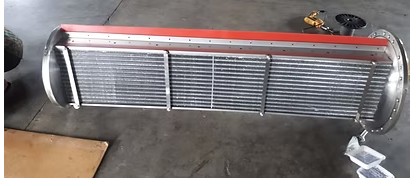
Description
Functions of Heat Exchangers
Heat exchangers in centrifugal compressor systems can perform several important functions:
- Remove heat from lubricating oil
- Cool compressed air
- Provide interstage cooling
- Provide aftercooling
- Control lubricant temperature
- Transfer heat to cooling water or another cooling medium
- Support stable compressor operating temperatures
- Protect bearings and other lubricated components
- Reduce thermal loading on downstream equipment
- Support reliable continuous compressor operation
The actual heat-transfer duty depends on the compressor configuration.
Heat Exchangers in Centrifugal Compressor Systems
A centrifugal compressor can generate substantial heat during compression and through mechanical operation. Thermal management is therefore an important part of the overall compressor package.
Heat exchangers may be incorporated into:
- Lubrication systems
- Compressor cooling systems
- Intercooling systems
- Aftercooling systems
- Gearbox cooling systems
- Auxiliary cooling circuits
A typical cooling arrangement may transfer heat from one fluid to another without allowing the two fluids to mix.
Oil Coolers
Oil coolers are commonly used where the compressor incorporates a circulating lubrication system.
The heat exchanger transfers heat from the lubricant to a cooling medium, helping maintain the oil within its required operating temperature range.
Proper oil-temperature control can support:
- Bearing lubrication
- Gear lubrication
- Lubricant stability
- Heat removal
- Reduced thermal stress
- Reliable compressor operation
The cooler must be selected according to the lubricant flow rate, oil temperature, cooling-medium conditions, and required heat-removal duty.
Air Coolers and Aftercoolers
Heat exchangers may also be used to reduce the temperature of compressed air after compression.
Depending on the compressor arrangement, cooling can occur:
- Between compression stages
- After the final compression stage
- Within an integrated compressor package
- In downstream compressed-air treatment equipment
Cooling compressed air can help reduce downstream thermal loading and may result in condensation when the air temperature falls below its dew point.
Appropriate condensate separation and drainage should therefore be provided where required.
Types of Heat Exchangers
Different heat exchanger designs may be used depending on the application.
Shell & Tube Heat Exchangers
Shell-and-tube designs use tubes carrying one fluid while another fluid flows around the tubes within the shell.
They can be suitable for industrial oil-cooling and process-cooling applications.
Plate Heat Exchangers
Plate heat exchangers use a series of plates to create alternating flow passages for the two fluids.
They provide a compact heat-transfer arrangement where compatible with the compressor application.
Air-Cooled Heat Exchangers
Air-cooled heat exchangers use ambient air as the cooling medium and may incorporate fans to provide forced airflow.
Compact Heat Exchangers
Compact designs can be used where space and weight are important considerations.
The appropriate design depends on the compressor package and required thermal duty.
Heat Exchanger Construction
Depending on the design, a heat exchanger may include:
- Heat-transfer tubes
- Tube sheets
- Shell
- Headers
- Plates
- Gaskets
- Baffles
- Cooling passages
- Inlet connections
- Outlet connections
- Drain connections
- Vent connections
- Temperature measurement points
The exact construction depends on the heat exchanger type and application.
Heat Exchanger Materials
Materials are selected according to the fluids being handled, pressure, temperature, corrosion conditions, heat-transfer requirements, and equipment specifications.
Potential material considerations include:
- Carbon steel
- Stainless steel
- Copper alloys
- Aluminium alloys
- Nickel-based alloys
- Application-specific tube materials
- Specialized gasket and sealing materials
Material compatibility is particularly important when cooling lubricating oils or other fluids.
Heat Transfer Performance
Heat exchanger performance depends on several operating factors, including:
- Fluid flow rate
- Inlet temperature
- Outlet temperature
- Temperature difference
- Heat-transfer surface area
- Fluid properties
- Cooling-medium flow
- Fouling
- Pressure drop
- Heat-transfer coefficient
The required heat-transfer duty should be determined from the compressor operating conditions and thermal design requirements.
Fouling and Contamination
Heat exchanger surfaces can accumulate deposits or contaminants over time.
Depending on the service, fouling can result from:
- Oil degradation
- Scale
- Corrosion products
- Dust
- Suspended solids
- Contaminated cooling water
- Process deposits
Fouling can reduce heat-transfer performance and increase pressure drop.
Regular inspection and appropriate cleaning can help maintain heat exchanger performance.
Heat Exchanger Leakage
A leak within a heat exchanger can allow one fluid to enter another fluid circuit.
Potential consequences depend on the application and may include:
- Lubricant contamination
- Cooling-water contamination
- Reduced cooling performance
- Pressure changes
- Fluid loss
- Compressor protection alarms
Leak testing and inspection should be performed according to the equipment manufacturer’s maintenance requirements.
Heat Exchanger Maintenance
Maintenance activities may include:
- Checking inlet and outlet temperatures
- Monitoring pressure drop
- Inspecting for external leakage
- Checking fluid flow
- Inspecting heat-transfer surfaces
- Cleaning where required
- Checking tubes or plates
- Inspecting gaskets
- Checking connections
- Performing leak testing
- Inspecting cooling-medium quality
- Monitoring overall heat-transfer performance
Maintenance intervals should be established according to operating conditions and manufacturer’s recommendations.
Common Heat Exchanger Problems
Potential problems can include:
- Reduced heat-transfer performance
- Excessive fouling
- Tube blockage
- Plate contamination
- Tube leakage
- Gasket deterioration
- Corrosion
- Excessive pressure drop
- Insufficient cooling-medium flow
- Incorrect operating conditions
Possible indications include:
- High lubricant temperature
- High compressed-air temperature
- Increased pressure drop
- Reduced cooling performance
- Fluid leakage
- Abnormal temperature difference
The actual cause should be confirmed through appropriate inspection and testing.
Heat Exchanger Replacement
Aegis Projects can support heat exchanger requirements for:
- Centrifugal compressor maintenance
- Oil cooler replacement
- Aftercooler replacement
- Intercooler replacement
- Compressor overhaul
- Cooling-system refurbishment
- Planned shutdown maintenance
- Heat exchanger retrofit
- Compressor package modernization
- Replacement of damaged or degraded thermal components
Replacement heat exchangers should be selected according to the original equipment design and required thermal performance.
Heat Exchanger Selection Parameters
| Selection Parameter | Requirement |
|---|---|
| Compressor Type | Centrifugal air compressor |
| Heat Exchanger Type | Shell & tube, plate, air-cooled, etc. |
| Application | Oil cooling, air cooling, intercooling, etc. |
| Heat Duty | Required heat-transfer capacity |
| Hot Fluid | Oil, compressed air, or specified fluid |
| Cold Fluid | Water, ambient air, or specified medium |
| Flow Rate | Hot and cold-side flow |
| Inlet Temperature | Hot and cold-side inlet temperatures |
| Outlet Temperature | Required outlet temperatures |
| Operating Pressure | Normal and design pressure |
| Pressure Drop | Allowable pressure loss |
| Material | Application-specific material |
| Connection | Inlet/outlet connection requirements |
| Installation | Compressor package or remote installation |
| Compressor Model | Equipment compatibility |
Industrial Applications
Heat exchangers associated with centrifugal compressor systems can support industries such as:
- Oil & Gas
- Petrochemical
- Chemical Processing
- Power Generation
- Steel Plants
- Cement Plants
- Automotive Manufacturing
- Pharmaceutical Manufacturing
- Food & Beverage
- Textile Industries
- Engineering Industries
- Process Industries
- Manufacturing Plants
- Industrial Utilities
- Large-Scale Compressed-Air Systems
Why Choose Aegis Projects?
Aegis Projects Technology Pvt. Ltd. provides industrial compressor equipment, spare parts, cooling equipment, heat-transfer components, and engineering support for compressed-air and process applications.
Our heat exchanger solutions can support:
- Centrifugal compressor oil cooling
- Compressed-air cooling
- Intercooling
- Aftercooling
- Compressor lubrication systems
- Cooling-system maintenance
- Heat exchanger replacement
- Compressor overhaul
- Planned shutdown maintenance
- Compressor package refurbishment
We can assist with heat exchanger selection based on the compressor make and model, heat exchanger type, heat duty, fluid flow rates, inlet and outlet temperatures, operating pressure, pressure drop, material requirements, connection details, and available technical drawings.
Request a Quote
For centrifugal compressor heat exchangers, provide the compressor make and model, existing heat exchanger details, application, heat duty, fluid flow rates, operating temperatures and pressures, dimensions, connection details, photographs, and available drawings or datasheets.
Aegis Projects can review the requirements and assist with suitable oil coolers, air coolers, intercoolers, aftercoolers, and other heat exchanger solutions for your centrifugal air compressor system.
Aegis Projects – Industrial Compressor, Cooling & Heat Transfer Solutions