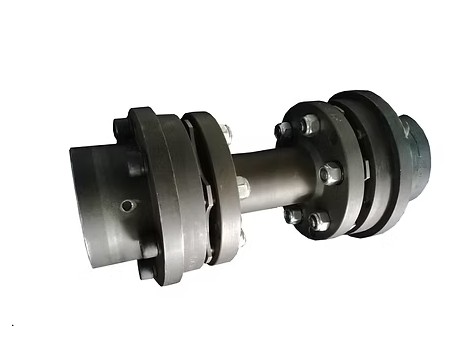
Description
Functions of Couplings
The coupling forms the mechanical connection between the compressor and its driving equipment.
Depending on the coupling design, it can:
- Transfer mechanical torque
- Connect two rotating shafts
- Accommodate permissible shaft misalignment
- Compensate for certain axial or radial movements
- Reduce transmission of undesirable mechanical loads
- Support reliable high-speed rotation
- Allow connection between different shaft arrangements
- Facilitate maintenance and equipment removal where the design permits
The coupling must be appropriately selected for the speed, torque, power, and alignment characteristics of the compressor package.
Coupling Spacers
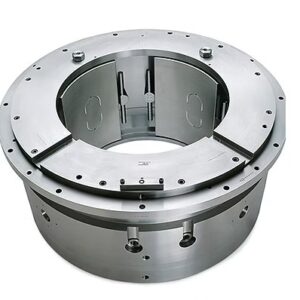
A coupling spacer is an intermediate component installed between coupling hubs or between connected rotating equipment according to the coupling arrangement.
The spacer can provide:
- Required axial distance between shafts
- Access for maintenance
- Simplified removal of certain components
- Correct coupling geometry
- Appropriate shaft separation
- Compatibility with equipment layout
Spacer dimensions are normally determined by the original compressor and driver arrangement.
Couplings in Centrifugal Compressor Packages
Centrifugal compressors may be driven by different types of prime movers, including:
- Electric motors
- Gear-driven arrangements
- Steam turbines
- Gas turbines
- Other industrial drivers
The coupling arrangement must be compatible with the driver, compressor shaft, gearbox where applicable, and overall equipment alignment.
Types of Couplings
Different coupling technologies can be used depending on the compressor application.
Flexible Couplings
Flexible couplings can accommodate specified levels of shaft misalignment while transmitting torque between connected shafts.
Gear Couplings
Gear couplings use gear-tooth engagement to transmit high torque and can accommodate certain types of shaft misalignment within their design limits.
Disc Couplings
Disc couplings use flexible metallic elements to accommodate permitted angular, parallel, and axial movement while transmitting torque.
Diaphragm Couplings
Diaphragm-type couplings use flexible diaphragm elements and can be suitable for high-speed rotating equipment applications.
Elastomeric Couplings
Elastomeric couplings use flexible elements to transmit torque while providing a degree of vibration isolation and misalignment accommodation.
The appropriate coupling type depends on the compressor and driver configuration.
Coupling Construction
A coupling assembly may include:
- Coupling hubs
- Flexible elements
- Disc packs
- Diaphragms
- Gear teeth
- Spacers
- Bolting
- Keys or keyless shaft connections
- Locking components
- Guards
- Balance features
The actual construction varies according to the coupling design and compressor application.
Coupling Materials
Materials are selected according to the coupling design, transmitted torque, operating speed, temperature, environment, and manufacturer’s specifications.
Potential materials may include:
- Alloy steel
- Carbon steel
- Stainless steel
- High-strength steel
- Specialized flexible elements
- Engineering materials for elastomeric components
Material selection should follow the original equipment or approved engineering specification.
High-Speed Operation
Centrifugal compressors operate at high rotational speeds, making coupling balance and alignment particularly important.
A suitable coupling should be designed for the compressor’s:
- Operating speed
- Maximum speed
- Transmitted power
- Torque
- Shaft dimensions
- Balance requirements
- Alignment conditions
- Operating temperature
Poor coupling selection, installation, or alignment can contribute to vibration and mechanical loading.
Coupling Alignment
Correct shaft alignment is essential for reliable operation of the compressor drive train.
Alignment activities may consider:
- Angular alignment
- Parallel or offset alignment
- Axial position
- Shaft centerline
- Thermal growth
- Coupling manufacturer’s allowable misalignment
Alignment should be checked using appropriate measurement methods and according to the equipment manufacturer’s requirements.
Coupling Balance
High-speed centrifugal compressor applications may require dynamically balanced coupling components.
Proper balance can help reduce:
- Rotational vibration
- Bearing loading
- Shaft stress
- Coupling wear
- Mechanical instability
Balance requirements should be established according to the coupling and compressor manufacturer’s specifications.
Coupling Lubrication
Some coupling designs, particularly certain gear coupling arrangements, may require lubrication.
Where lubrication is applicable, requirements can include:
- Correct lubricant type
- Appropriate lubricant quantity
- Lubrication interval
- Seal condition
- Contamination control
Other coupling types may be designed to operate without lubrication.
The coupling manufacturer’s maintenance instructions should always be followed.
Coupling Spacers and Maintenance Access
One of the important advantages of a spacer coupling arrangement can be improved accessibility during maintenance.
Depending on the equipment design, the spacer can allow technicians to remove or service associated components without completely disturbing the connected machinery.
Potential maintenance advantages include:
- Easier access to coupling components
- Simplified equipment disconnection
- Improved access around shaft-end components
- Reduced maintenance time where the design permits
- Easier inspection of coupling elements
The actual maintenance procedure depends on the compressor and coupling arrangement.
Common Coupling Problems
Coupling problems can develop because of incorrect alignment, excessive loading, wear, installation errors, or operating conditions.
Potential problems include:
- Coupling element wear
- Disc damage
- Gear tooth wear
- Elastomer deterioration
- Corrosion
- Excessive vibration
- Coupling overheating
- Loose fasteners
- Key or hub damage
- Incorrect axial position
- Excessive misalignment
Possible indications include abnormal vibration, unusual noise, temperature increase, or visible coupling damage.
Coupling Inspection
During planned compressor maintenance, inspection may include:
- Coupling element condition
- Hub condition
- Gear tooth condition where applicable
- Disc or diaphragm condition
- Spacer condition
- Fasteners
- Shaft connection
- Keyways
- Lubricant condition
- Seals
- Alignment
- Balance condition
- Signs of corrosion or cracking
Critical rotating equipment may require dimensional checks and specialized inspection methods.
Coupling Replacement and Overhaul
Aegis Projects can support coupling and spacer requirements for:
- Centrifugal compressor maintenance
- Compressor overhauls
- Coupling replacement
- Driver replacement projects
- Gearbox-related maintenance
- Shaft alignment work
- Planned shutdowns
- Compressor refurbishment
- Rotating-equipment upgrades
- Coupling retrofit applications
When replacing a coupling, compatibility with both the compressor and driver must be confirmed.
Coupling Selection Parameters
| Selection Parameter | Requirement |
|---|---|
| Compressor Type | Centrifugal air compressor |
| Driver | Motor, turbine, gearbox, or other |
| Power Rating | Transmitted power |
| Torque | Normal and maximum torque |
| Operating Speed | Compressor/driver speed |
| Maximum Speed | Required overspeed capability |
| Shaft Diameter | Connected shaft dimensions |
| Bore | Coupling hub bore |
| Coupling Type | Disc, gear, diaphragm, flexible, etc. |
| Misalignment | Permitted angular/parallel/axial movement |
| Spacer Length | Required axial spacing |
| Material | Approved coupling material |
| Balance | Dynamic balancing requirements |
| Lubrication | Required for applicable coupling types |
| Environment | Temperature, dust, moisture, corrosion |
| Compressor Model | Equipment compatibility |
Industrial Applications
Couplings and coupling spacers for centrifugal compressor systems can be used across:
- Oil & Gas
- Petrochemical
- Chemical Processing
- Power Generation
- Steel Plants
- Cement Plants
- Automotive Manufacturing
- Pharmaceutical Manufacturing
- Food & Beverage
- Textile Industries
- Engineering Industries
- Process Industries
- Manufacturing Plants
- Industrial Utilities
- Large-Scale Compressed-Air Systems
Why Choose Aegis Projects?
Aegis Projects Technology Pvt. Ltd. provides industrial compressor equipment, spare parts, rotating-equipment components, automation solutions, and engineering support for compressed-air and process applications.
Our coupling solutions can support:
- Centrifugal compressor drive systems
- Compressor-to-motor connections
- Compressor-to-gearbox connections
- Turbine-driven compressor systems
- Coupling replacement
- Coupling spacer replacement
- Compressor overhaul
- Shaft alignment
- Planned shutdown maintenance
- Rotating-equipment refurbishment
We can assist with coupling selection based on the compressor make and model, driver type, power rating, shaft speed, torque, shaft dimensions, coupling type, spacer length, alignment requirements, and existing coupling specifications.
Request a Quote
For centrifugal compressor couplings and coupling spacers, provide the compressor make and model, driver details, coupling part number, shaft dimensions, operating speed, power rating, spacer dimensions, photographs, and available technical drawings.
Aegis Projects can review the equipment requirements and assist with suitable coupling and coupling spacer solutions for your centrifugal air compressor system.
Aegis Projects – Industrial Compressor, Rotating Equipment & Spare Parts Solutions