Description
Functions of a Hydraulic Power Pack
A hydraulic power pack can perform several functions within a hydraulic system:
- Generate hydraulic fluid flow
- Supply hydraulic pressure to the system
- Store hydraulic fluid
- Control hydraulic flow
- Regulate system pressure
- Direct hydraulic fluid to actuators
- Protect the hydraulic circuit
- Filter hydraulic oil
- Control hydraulic cylinder movement
- Operate hydraulic motors
- Support automated hydraulic machinery
- Provide centralized hydraulic power
The actual configuration depends on the application and required hydraulic functions.
How a Hydraulic Power Pack Works
The electric motor or other prime mover drives the hydraulic pump. The pump draws hydraulic fluid from the reservoir and delivers it into the hydraulic circuit.
Hydraulic valves then control the direction, pressure, and flow of the fluid according to the machine’s requirements.
A simplified arrangement is:
Reservoir → Hydraulic Pump → Control Valves → Hydraulic Actuator → Return Filter → Reservoir
The actuator may be a hydraulic cylinder, hydraulic motor, clamp, lifting mechanism, or other hydraulic device.
The power pack can operate independently or as part of a larger hydraulic control system.
Main Components of a Hydraulic Power Pack
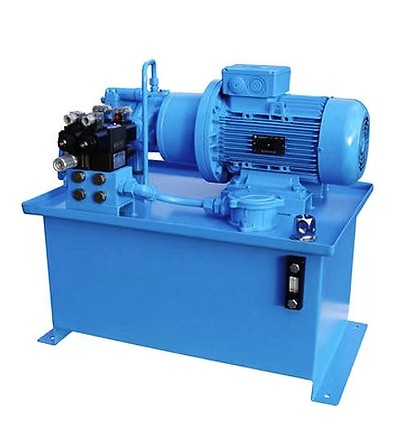
A typical hydraulic power pack may include:
- Hydraulic oil reservoir
- Hydraulic pump
- Electric motor
- Pump-motor coupling
- Hydraulic valves
- Pressure relief valve
- Directional control valve
- Flow control valve
- Check valve
- Hydraulic filter
- Suction strainer
- Pressure gauge
- Oil level indicator
- Oil temperature indicator
- Breather
- Manifold block
- Hydraulic hoses or connections
- Electrical control panel
- Pressure switch or sensor
- Mounting frame
Not every hydraulic power pack contains all of these components. The configuration is selected according to the application.
Types of Hydraulic Power Packs
1. Compact Hydraulic Power Packs
Compact power packs are designed for applications where installation space is limited.
They can integrate the motor, pump, reservoir, and control components into a relatively compact assembly.
2. Industrial Hydraulic Power Packs
Industrial power packs are designed for larger hydraulic systems and can be configured with higher-capacity pumps, larger reservoirs, advanced controls, and multiple hydraulic circuits.
3. Mobile Hydraulic Power Packs
Mobile or equipment-mounted power packs can be used on machinery where hydraulic power needs to move with the equipment.
4. AC Motor Hydraulic Power Packs
These power packs use an AC electric motor to drive the hydraulic pump and are commonly used in industrial installations.
5. DC Hydraulic Power Packs
DC-powered hydraulic power packs can be used in applications where electrical power is supplied from batteries or other DC sources.
6. Custom Hydraulic Power Packs
Application-specific power packs can be configured according to required pressure, flow, reservoir capacity, control valves, electrical requirements, and actuator requirements.
Hydraulic Pump Options
The hydraulic pump is a major component of the power pack.
Depending on the application, the power pack may use:
- Gear pumps
- Vane pumps
- Piston pumps
- Fixed-displacement pumps
- Variable-displacement pumps
- Other application-specific pump designs
Pump selection depends on the required flow, pressure, operating speed, hydraulic fluid, and duty cycle.
Hydraulic Power Pack Applications
Hydraulic power packs are used in:
- Hydraulic presses
- Industrial machinery
- Manufacturing equipment
- Machine tools
- Material-handling equipment
- Lifting equipment
- Hydraulic clamps
- Injection moulding machinery
- Construction equipment
- Agricultural machinery
- Mining equipment
- Packaging machinery
- Steel and metal-processing equipment
- Automation systems
- Process machinery
- Hydraulic test equipment
- Industrial actuation systems
Hydraulic Power Pack Pressure and Flow
The hydraulic power pack should be selected according to the pressure and flow requirements of the connected hydraulic equipment.
Hydraulic Pressure
Pressure capability should be sufficient for the hydraulic actuator and system requirements.
Important parameters can include:
- Normal operating pressure
- Maximum operating pressure
- Relief-valve setting
- Pressure-switch setting
- Peak system pressure
Hydraulic Flow
Flow determines the operating speed of hydraulic cylinders and motors.
Required flow depends on:
- Cylinder size
- Motor displacement
- Desired actuator speed
- Number of actuators
- Simultaneous operation
- Duty cycle
The pump and control valves should be selected to provide the required flow without exceeding their rated limits.
Hydraulic Reservoir
The reservoir stores hydraulic fluid and provides a supply of oil to the hydraulic pump.
It may also provide space for:
- Heat dissipation
- Air separation
- Contaminant settling
- Fluid expansion
Reservoir capacity should be selected according to the hydraulic system, pump flow, operating conditions, available installation space, and application requirements.
Hydraulic Filtration
Filtration is important for maintaining hydraulic fluid cleanliness.
A power pack may incorporate:
- Suction strainers
- Return-line filters
- Pressure-line filters
- Breather filters
The required filtration arrangement depends on the hydraulic components and cleanliness requirements of the system.
Hydraulic Power Pack Control
The control arrangement may include:
- Manual valves
- Solenoid-operated valves
- Directional control valves
- Pressure relief valves
- Pressure switches
- Pressure sensors
- Flow control valves
- Electrical control panels
- PLC interfaces
- Remote control inputs
The selected control system depends on whether the power pack is operated manually, automatically, or as part of a larger machine-control system.
Common Hydraulic Power Pack Problems
Common hydraulic power-pack problems include:
- Pump not starting
- Low hydraulic pressure
- Low hydraulic flow
- Excessive noise
- Excessive vibration
- Hydraulic oil leakage
- Oil overheating
- Motor overheating
- Contaminated hydraulic oil
- Blocked filter
- Incorrect pressure setting
- Valve malfunction
- Low oil level
- Air entering the suction line
- Pump cavitation
- Electrical control failure
The cause should be identified by inspecting the power pack and connected hydraulic circuit.
Hydraulic Power Pack Inspection and Maintenance
Routine maintenance may include:
- Checking hydraulic oil level
- Inspecting hydraulic oil condition
- Checking oil temperature
- Monitoring system pressure
- Checking pump operation
- Inspecting valves
- Checking hoses and fittings
- Inspecting hydraulic filters
- Replacing filter elements when required
- Checking suction strainers
- Inspecting motor and coupling
- Checking electrical connections
- Inspecting for hydraulic leaks
- Checking reservoir condition
- Monitoring abnormal noise or vibration
Maintenance intervals should be established according to the equipment manufacturer’s recommendations and operating conditions.
Installation Considerations
When installing a hydraulic power pack:
- Confirm the required pressure and flow.
- Verify hydraulic fluid compatibility.
- Provide a stable mounting arrangement.
- Ensure adequate ventilation where required.
- Maintain appropriate oil level.
- Connect suction and return lines correctly.
- Use correctly sized hydraulic piping and hoses.
- Install suitable filtration.
- Confirm motor voltage and frequency.
- Verify pump rotation.
- Connect control wiring correctly.
- Check all hydraulic connections for leakage.
- Verify pressure settings before commissioning.
- Test the system under controlled operating conditions.
Hydraulic Power Pack Selection
The correct power pack should be selected according to the complete hydraulic application.
| Specification | Requirement |
|---|---|
| Application | Industrial / Mobile / Process / Automation |
| Hydraulic Pump Type | Gear / Vane / Piston / Other |
| Pump Displacement | According to System |
| Flow Rate | According to Actuator Requirements |
| Operating Pressure | According to System |
| Maximum Pressure | According to Power Pack |
| Reservoir Capacity | According to Application |
| Motor Type | AC / DC / Other |
| Motor Power | According to Pump and System |
| Voltage | According to Electrical Supply |
| Frequency | Application Specific |
| Phase | Single / Three Phase / Application Specific |
| Hydraulic Fluid | Application Specific |
| Fluid Viscosity | According to Manufacturer |
| Valve Configuration | According to Hydraulic Circuit |
| Filtration | Suction / Pressure / Return / Application Specific |
| Control System | Manual / Electrical / PLC / Other |
| Pressure Gauge | Required / Optional |
| Pressure Switch / Sensor | As Required |
| Mounting | Horizontal / Vertical / Equipment Specific |
| Manufacturer / Part Number | As Required |
Replacement and Retrofit Considerations
When replacing an existing hydraulic power pack, the replacement should be selected based on the hydraulic requirements of the machine rather than physical dimensions alone.
Verify:
- Existing power-pack model
- Required hydraulic flow
- Operating pressure
- Maximum pressure
- Pump type
- Pump displacement
- Motor power
- Motor voltage
- Reservoir capacity
- Hydraulic fluid
- Valve configuration
- Filtration arrangement
- Hydraulic connections
- Electrical controls
- Mounting dimensions
- Duty cycle
- Actuator requirements
A power pack with a similar motor rating may not provide the same hydraulic performance if its pump displacement, pressure, or control configuration differs.
Hydraulic Power Pack Failure Investigation
When a hydraulic power pack develops a fault, the complete system should be investigated.
Potential causes can include:
- Low oil level
- Contaminated hydraulic fluid
- Blocked filter
- Restricted suction line
- Incorrect pump rotation
- Pump wear
- Air entering the suction circuit
- Cavitation
- Incorrect relief-valve setting
- Valve malfunction
- Motor or electrical fault
- Excessive hydraulic load
- Incorrect fluid viscosity
Identifying the underlying cause can help prevent repeated equipment failure.
Hydraulic Power Pack Supplier – Aegis Projects
Aegis Projects Technology Pvt. Ltd. supplies hydraulic power packs and hydraulic system components for industrial and commercial applications.
Our hydraulic range includes hydraulic power packs, hydraulic pumps, hydraulic valves, hydraulic cylinders, hydraulic motors, hydraulic filtration systems, hydraulic hoses, hydraulic fittings, hydraulic accumulators, hydraulic filters, pressure-control components, and other hydraulic spare parts.
Hydraulic power packs can be selected according to the required hydraulic flow, operating pressure, pump type, motor power, reservoir capacity, valve configuration, filtration requirements, electrical supply, control system, and application conditions.
Contact Aegis Projects for hydraulic power packs and application-specific hydraulic power solutions for your machinery and industrial equipment.