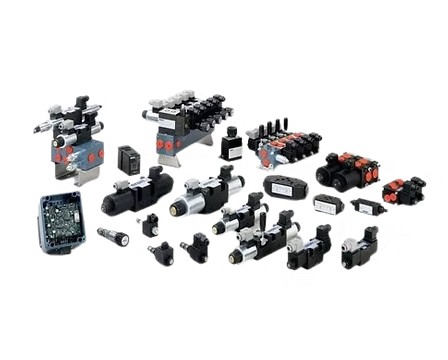
Description
Functions of Hydraulic Valves
Hydraulic valves can perform several important functions:
- Control hydraulic fluid direction
- Regulate hydraulic pressure
- Control hydraulic flow rate
- Start and stop hydraulic actuator movement
- Control cylinder extension and retraction
- Control hydraulic motor operation
- Protect hydraulic circuits from excessive pressure
- Isolate hydraulic circuits
- Control actuator speed
- Provide proportional or servo control where required
- Support automatic hydraulic system operation
- Manage hydraulic flow between different circuits
The exact function depends on the valve type and its application within the hydraulic system.
How Hydraulic Valves Work
Hydraulic valves control hydraulic fluid by changing the available flow path, pressure setting, or flow restriction.
A simplified hydraulic arrangement is:
Hydraulic Pump → Control Valve → Hydraulic Actuator → Return Line → Reservoir
Depending on the valve design, an operator, solenoid, mechanical mechanism, pilot pressure, proportional actuator, or electronic controller can change the valve position.
The resulting change in fluid flow or pressure controls the movement and operation of hydraulic cylinders, motors, and other hydraulic equipment.
Types of Hydraulic Valves
Hydraulic valves are available in several configurations according to their control function.
1. Directional Control Valves
Directional control valves determine the path taken by hydraulic fluid.
They can be used to:
- Start or stop actuator movement
- Reverse cylinder movement
- Control hydraulic motor direction
- Select different hydraulic circuits
Common configurations include 2-way, 3-way, and 4-way valves, with spool arrangements depending on the application.
2. Pressure Relief Valves
Pressure relief valves protect hydraulic systems against excessive pressure by allowing hydraulic fluid to flow when the set pressure is reached.
They are commonly used as safety and pressure-control components.
3. Pressure Reducing Valves
Pressure reducing valves maintain a lower controlled pressure in a specific part of the hydraulic circuit.
They are useful where different portions of a hydraulic system require different pressure levels.
4. Check Valves
Check valves permit hydraulic fluid flow in one direction while restricting reverse flow.
They can be used to protect components, maintain pressure, and control fluid direction.
5. Flow Control Valves
Flow control valves regulate the rate at which hydraulic fluid moves through a circuit.
They can be used to control actuator speed and hydraulic movement.
6. Needle Valves
Needle valves provide adjustable flow restriction and can be used where relatively fine manual flow adjustment is required.
7. Solenoid Valves
Solenoid-operated hydraulic valves use an electromagnetic actuator to change the valve position electrically.
They are commonly integrated into automated hydraulic systems.
8. Proportional Valves
Proportional hydraulic valves allow the valve position or hydraulic output to be varied according to an electrical control signal.
They can provide more controlled hydraulic movement than simple on/off valves.
9. Servo Valves
Servo valves are precision hydraulic control valves used in applications requiring highly controlled hydraulic flow and movement.
They are used in selected industrial and high-performance hydraulic systems.
10. Cartridge Valves
Cartridge valves are installed into hydraulic manifolds or valve blocks and can be configured for various pressure, flow, and directional-control functions.
Main Components of Hydraulic Valves
Construction depends on the valve type. Typical components may include:
- Valve body
- Spool
- Poppet
- Valve seat
- Spring
- Solenoid coil
- Actuator
- Pilot mechanism
- Adjustment screw
- Control knob
- Seals
- O-rings
- Internal passages
- Ports
- Mounting surfaces
- Cartridge assembly
Not every hydraulic valve contains all of these components.
Hydraulic Valve Applications
Hydraulic valves are used in:
- Industrial hydraulic systems
- Hydraulic power units
- Manufacturing machinery
- Machine tools
- Hydraulic presses
- Injection moulding machines
- Construction equipment
- Material-handling machinery
- Lifting equipment
- Mining equipment
- Agricultural machinery
- Mobile hydraulic systems
- Packaging machinery
- Steel and metal-processing equipment
- Automation systems
- Process machinery
- Hydraulic clamping systems
- Hydraulic actuation systems
Hydraulic Valve Control Methods
Hydraulic valves can be operated through different mechanisms depending on the application.
Common control methods include:
- Manual operation
- Mechanical operation
- Solenoid operation
- Pilot operation
- Pneumatic or hydraulic pilot control
- Proportional electrical control
- Servo control
- Electronic control
The selected control method should match the hydraulic system’s operating and automation requirements.
Hydraulic Valve Pressure and Flow
Hydraulic valve selection requires consideration of the system’s pressure and flow requirements.
Important parameters include:
- Maximum operating pressure
- Continuous operating pressure
- Flow rate
- Pressure drop
- Port size
- Valve configuration
- Fluid viscosity
- Operating temperature
A valve should have suitable pressure and flow capabilities for the intended hydraulic circuit.
Common Hydraulic Valve Problems
Valve problems can affect actuator performance and overall hydraulic-system operation.
Common symptoms include:
- Valve not shifting
- Valve sticking
- Internal leakage
- External leakage
- Excessive pressure drop
- Incorrect pressure
- Uncontrolled actuator movement
- Slow actuator operation
- Erratic movement
- Solenoid failure
- Damaged spool
- Worn valve seat
- Contamination-related malfunction
- Incorrect valve adjustment
- Electrical control problems
The complete hydraulic circuit should be inspected when diagnosing valve-related problems.
Hydraulic Valve Contamination
Hydraulic valves can be sensitive to contamination within the hydraulic fluid.
Contamination may cause:
- Spool sticking
- Blocked internal passages
- Increased wear
- Leakage
- Incorrect pressure control
- Delayed valve response
- Solenoid or actuator problems
Proper hydraulic filtration and fluid cleanliness are therefore important for reliable valve operation.
Inspection and Maintenance
Hydraulic valve inspection may include:
- Checking for external leakage
- Inspecting valve mounting
- Checking hydraulic connections
- Inspecting electrical connectors
- Checking solenoid operation
- Monitoring system pressure
- Monitoring flow
- Checking actuator response
- Inspecting hydraulic fluid cleanliness
- Checking valve adjustment
- Inspecting seals and O-rings
- Checking for abnormal noise or vibration
Maintenance procedures should follow the valve manufacturer’s recommendations and the requirements of the hydraulic system.
Installation Considerations
Correct valve installation is important for reliable operation.
Consider the following:
- Confirm the valve type and configuration.
- Verify pressure and flow ratings.
- Confirm port sizes and connection types.
- Check hydraulic fluid compatibility.
- Install the valve in the correct orientation where specified.
- Keep hydraulic connections clean.
- Prevent contamination from entering the valve.
- Confirm electrical voltage for solenoid-operated valves.
- Ensure wiring is correctly connected.
- Tighten connections according to applicable requirements.
- Check for leakage after installation.
- Test valve operation before placing the machine into normal service.
Hydraulic Valve Selection
The correct valve should be selected according to the complete hydraulic system requirements.
| Specification | Requirement |
|---|---|
| Application | Industrial / Mobile / Process / Hydraulic Power Unit |
| Valve Type | Directional / Pressure / Flow / Check / Proportional / Other |
| Function | Direction / Pressure / Flow / Isolation |
| Operating Pressure | According to System |
| Maximum Pressure | According to Valve Specification |
| Flow Rate | According to Hydraulic Circuit |
| Port Size | According to Piping |
| Port Configuration | According to System |
| Valve Position | Normally Open / Normally Closed / Application Specific |
| Actuation | Manual / Mechanical / Solenoid / Pilot / Proportional / Servo |
| Solenoid Voltage | According to Electrical System |
| Number of Positions | According to Application |
| Number of Ports | According to Circuit |
| Hydraulic Fluid | Application Specific |
| Fluid Viscosity | According to Manufacturer |
| Operating Temperature | Application Specific |
| Mounting | Inline / Manifold / Subplate / Cartridge |
| Material | According to Application |
| Manufacturer / Part Number | As Required |
Replacement Considerations
When replacing a hydraulic valve, physical dimensions alone should not be used to determine compatibility.
Verify:
- Existing valve model and part number
- Valve type
- Hydraulic function
- Pressure rating
- Flow capacity
- Port size
- Port configuration
- Actuation method
- Solenoid voltage where applicable
- Number of positions
- Number of ports
- Hydraulic fluid compatibility
- Mounting arrangement
- Electrical connector
- Operating temperature
A valve with similar external dimensions may still have different internal flow paths, pressure settings, spool configurations, or electrical requirements.
Hydraulic Valve Failure Investigation
Before replacing a failed valve, the hydraulic system should be checked for possible contributing causes.
These may include:
- Contaminated hydraulic oil
- Blocked hydraulic filter
- Incorrect system pressure
- Excessive flow
- Incorrect valve adjustment
- Electrical supply problems
- Incorrect solenoid voltage
- Damaged seals
- Internal wear
- Incorrect installation
- Hydraulic circuit contamination
- Excessive operating temperature
Identifying the underlying cause can help prevent repeated valve failure.
Hydraulic Valve Supplier – Aegis Projects
Aegis Projects Technology Pvt. Ltd. supplies hydraulic valves and hydraulic system components for industrial and commercial applications.
Our hydraulic spare-parts range includes hydraulic valves, directional control valves, pressure control valves, flow control valves, check valves, solenoid valves, proportional valves, hydraulic pumps, hydraulic motors, hydraulic cylinders, hydraulic filters, hydraulic hoses, hydraulic fittings, seals, and other hydraulic components.
Hydraulic valves can be selected according to the required hydraulic function, pressure, flow rate, port configuration, actuation method, hydraulic fluid, electrical requirements, mounting arrangement, and application conditions.
Contact Aegis Projects for hydraulic valves and compatible hydraulic spare parts for your machinery and hydraulic system requirements.