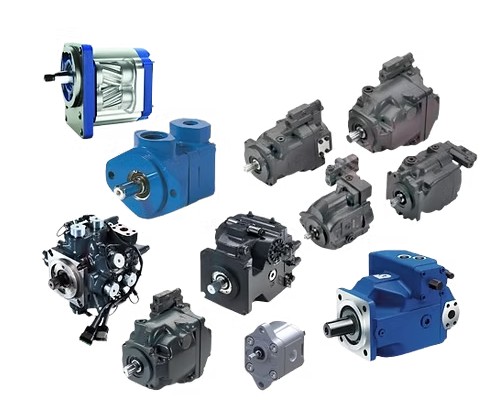
Description
Functions of Hydraulic Pumps
A hydraulic pump is primarily responsible for:
- Generating hydraulic fluid flow
- Supplying hydraulic fluid to the hydraulic circuit
- Converting mechanical energy into hydraulic energy
- Supporting hydraulic actuator operation
- Supplying fluid to hydraulic valves and control circuits
- Supporting hydraulic cylinders and hydraulic motors
- Maintaining required system flow
- Supporting hydraulic power units
- Providing flow for industrial hydraulic machinery
A hydraulic pump generates flow; system pressure develops as the pump flow encounters resistance from the hydraulic circuit and its components.
How a Hydraulic Pump Works
The hydraulic pump draws fluid from the reservoir through the suction side of the pump. Internal pumping elements then transfer the fluid to the discharge side and deliver it into the hydraulic circuit.
The basic arrangement is:
Reservoir → Suction Line → Hydraulic Pump → Control Valves → Hydraulic Actuator → Return Line → Reservoir
The pump’s mechanical input is supplied by an electric motor, engine, gearbox, or another suitable prime mover.
The hydraulic system then uses the generated fluid flow to operate cylinders, motors, valves, and other hydraulic components.
Types of Hydraulic Pumps
Hydraulic pumps are available in several designs. The appropriate type depends on flow requirements, pressure, speed, efficiency, control requirements, and application.
1. Gear Pumps
Gear pumps use rotating gears to move hydraulic fluid from the inlet to the outlet.
They are commonly used where a simple, robust, and economical hydraulic pump arrangement is required.
2. Vane Pumps
Vane pumps use rotating vanes within a pump housing to transport hydraulic fluid.
They can provide relatively smooth flow and are used in various industrial hydraulic systems.
3. Piston Pumps
Piston pumps use reciprocating pistons to generate hydraulic flow.
They are available in different configurations and are commonly selected for applications requiring higher pressure capability or variable flow control.
4. Axial Piston Pumps
Axial piston pumps arrange the pistons parallel to the pump shaft.
They can be supplied as fixed-displacement or variable-displacement designs depending on the application.
5. Radial Piston Pumps
Radial piston pumps arrange pistons radially around the drive shaft.
They can be used in applications requiring specific high-pressure and flow characteristics.
6. Fixed-Displacement Pumps
A fixed-displacement pump delivers a defined volume of fluid per revolution under specified operating conditions.
7. Variable-Displacement Pumps
A variable-displacement pump allows the displacement to be adjusted, enabling the pump flow to change according to system requirements.
Main Components of a Hydraulic Pump
The internal construction depends on the pump type.
Typical components may include:
- Pump housing
- Drive shaft
- Gears or rotors
- Pistons
- Cylinder block
- Valve plate
- Vanes
- Bearings
- Bushings
- Seals
- O-rings
- Inlet port
- Outlet port
- Internal pressure chambers
- Control mechanism
- Displacement-control components
Not every pump contains all of these components. Construction varies according to the specific pump design.
Hydraulic Pump Applications
Hydraulic pumps are used in:
- Industrial hydraulic systems
- Manufacturing machinery
- Machine tools
- Hydraulic power units
- Construction equipment
- Material-handling equipment
- Press machines
- Injection moulding machinery
- Steel and metal-processing equipment
- Packaging machinery
- Mining equipment
- Agricultural machinery
- Mobile hydraulic equipment
- Automation systems
- Process machinery
- Lifting equipment
- Hydraulic clamping systems
- Hydraulic actuation systems
Hydraulic Pump Displacement
Pump displacement refers to the volume of hydraulic fluid theoretically moved by the pump per revolution.
It is commonly expressed in units such as:
- cm³/rev
- cc/rev
- in³/rev
For a fixed-displacement pump, flow is broadly related to displacement and rotational speed.
For a variable-displacement pump, the displacement can be adjusted to control the delivered flow.
Actual flow can be affected by operating conditions, pump efficiency, leakage, fluid viscosity, and pump condition.
Hydraulic Pump Flow and Pressure
Pump selection should consider both the required flow and system pressure.
Flow
Flow determines how quickly hydraulic actuators can move or how much fluid is supplied to the hydraulic circuit.
Pressure
Pressure is related to the resistance encountered by the hydraulic system. The pump must be capable of operating within the pressure requirements specified for the application.
The required pump should therefore be selected according to the complete hydraulic circuit rather than pressure or flow alone.
Hydraulic Pump Drive
Hydraulic pumps can be driven by:
- Electric motors
- Internal-combustion engines
- Gearboxes
- Power take-off systems
- Mechanical drives
- Other application-specific prime movers
The drive speed and direction must be compatible with the pump specifications.
Hydraulic Fluid Compatibility
The hydraulic pump must be compatible with the hydraulic fluid specified for the system.
Important fluid characteristics may include:
- Fluid type
- Viscosity
- Operating temperature
- Cleanliness level
- Additive compatibility
- Material compatibility
Using an unsuitable fluid or operating outside the recommended viscosity range can affect pump lubrication, efficiency, sealing, and service life.
Common Hydraulic Pump Problems
Hydraulic pump problems can affect the performance of the entire hydraulic system.
Common symptoms include:
- Low hydraulic flow
- Low system pressure
- Excessive noise
- Excessive vibration
- Pump overheating
- Hydraulic fluid leakage
- Difficulty maintaining pressure
- Slow actuator movement
- Irregular actuator operation
- Excessive internal leakage
- Cavitation
- Aeration
- Drive-shaft problems
- Bearing wear
- Seal failure
The actual cause should be identified through hydraulic-system testing before replacing the pump.
Hydraulic Pump Cavitation
Cavitation can occur when the pump inlet conditions are insufficient to properly supply fluid to the pump.
Possible contributing factors include:
- Restricted suction line
- Blocked suction strainer
- Insufficient reservoir fluid level
- Excessive suction-line length
- Incorrect suction-line sizing
- High fluid viscosity
- Excessive pump speed
- Air entering the suction circuit
Cavitation can produce abnormal noise, vibration, reduced performance, and accelerated internal wear.
Hydraulic Pump Inspection and Maintenance
Routine inspection can help identify developing hydraulic pump problems.
Depending on the pump and system, checks may include:
- Hydraulic fluid level
- Hydraulic fluid condition
- Fluid cleanliness
- Suction pressure
- Discharge pressure
- Pump flow
- Operating temperature
- Pump noise
- Vibration
- Shaft condition
- Coupling condition
- Hydraulic connections
- Seal condition
- Suction strainer condition
- Filter condition
- Motor or prime-mover operation
Maintenance should follow the pump manufacturer’s recommendations and the requirements of the hydraulic system.
Installation Considerations
Correct installation is important for reliable pump operation.
Consider the following:
- Confirm pump rotation direction.
- Verify displacement and flow requirements.
- Confirm maximum operating pressure.
- Use the correct hydraulic fluid.
- Ensure the suction line is appropriately sized.
- Prevent air from entering the suction circuit.
- Maintain adequate fluid level in the reservoir.
- Align the pump and drive correctly.
- Use suitable couplings where required.
- Ensure hydraulic connections are clean.
- Prevent contamination during installation.
- Check for leakage after commissioning.
- Verify operating pressure and flow.
Hydraulic Pump Selection
The correct hydraulic pump should be selected according to the complete operating requirements of the hydraulic system.
| Specification | Requirement |
|---|---|
| Application | Industrial / Mobile / Process / Hydraulic Power Unit |
| Pump Type | Gear / Vane / Piston / Other |
| Displacement | According to System Requirement |
| Flow Rate | According to Required Actuator Performance |
| Operating Pressure | According to System |
| Maximum Pressure | According to Pump Specification |
| Rotational Speed | According to Pump Specification |
| Rotation Direction | CW / CCW / Application Specific |
| Drive Type | Electric Motor / Engine / Gear Drive / Other |
| Hydraulic Fluid | Application Specific |
| Fluid Viscosity | According to Manufacturer |
| Operating Temperature | Application Specific |
| Inlet Connection | According to Model |
| Outlet Connection | According to Model |
| Shaft Configuration | According to Drive Arrangement |
| Mounting | Application Specific |
| Control Type | Fixed / Variable Displacement |
| Material | According to Pump Construction |
| Manufacturer / Part Number | As Required |
Replacement Considerations
When replacing a hydraulic pump, the replacement should not be selected only on the basis of physical dimensions.
Verify:
- Existing pump model and part number
- Pump type
- Displacement
- Required flow
- Operating pressure
- Maximum pressure
- Rotational speed
- Rotation direction
- Hydraulic fluid
- Drive configuration
- Shaft dimensions
- Mounting arrangement
- Inlet and outlet connections
- Control configuration
- Operating temperature
A pump with the same physical mounting dimensions may not be suitable if its displacement, pressure capability, rotation, or flow characteristics differ from the original pump.
Hydraulic Pump Failure Investigation
Before replacing a failed hydraulic pump, the complete hydraulic system should be inspected.
Potential contributing factors include:
- Contaminated hydraulic fluid
- Incorrect fluid viscosity
- Blocked filters
- Restricted suction line
- Low reservoir level
- Air entering the system
- Cavitation
- Excessive operating pressure
- Incorrect pump rotation
- Misalignment
- Excessive pump speed
- Hydraulic circuit restrictions
- Incorrect installation
- Insufficient lubrication
Identifying the root cause can help prevent repeated pump failure.
Hydraulic Pump Supplier – Aegis Projects
Aegis Projects Technology Pvt. Ltd. supplies hydraulic pumps and hydraulic system components for industrial and commercial applications.
Our hydraulic spare-parts range can include hydraulic pumps, hydraulic motors, hydraulic cylinders, hydraulic valves, hydraulic filters, hydraulic hoses, hydraulic fittings, hydraulic seals, hydraulic accumulators, hydraulic pressure components, and other hydraulic system accessories.
Hydraulic pumps can be selected according to the pump type, displacement, flow requirement, operating pressure, rotational speed, hydraulic fluid, drive arrangement, mounting configuration, and application requirements.
Contact Aegis Projects for hydraulic pumps and compatible hydraulic spare parts for your machinery and hydraulic system requirements.