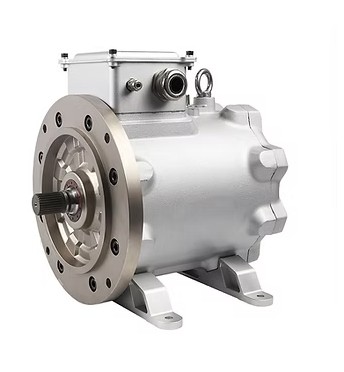
Description
Function of Electric Motors
The primary function of an electric motor in a centrifugal compressor installation is to provide controlled mechanical power.
Depending on the application, motors may be used for:
- Driving the main compressor
- Driving compressor gear trains
- Driving main oil pumps
- Driving prelube oil pumps
- Driving cooling fans
- Driving ventilation systems
- Driving auxiliary pumps
- Driving other compressor-package equipment
The motor must provide the required torque and rotational speed while operating reliably under the compressor’s specified load conditions.
Electric Motor as the Main Compressor Drive
In electrically driven centrifugal compressors, the main motor provides the mechanical power required to rotate the compressor’s impeller or gear train.
The drive arrangement may be:
- Direct coupled
- Gear coupled
- Flexible-coupling arrangement
- Other manufacturer-specific drive configurations
In geared centrifugal compressors, the motor may drive a bullgear, which subsequently drives one or more pinions and compressor rotors at their required operating speeds.
The exact arrangement depends on the compressor design.
Electric Motor for Auxiliary Equipment
Smaller electric motors may be used throughout the compressor package for auxiliary functions.
Applications can include:
Main Oil Pump Motor
Provides mechanical power to an independently driven lubrication pump where applicable.
Prelube Oil Pump Motor
Drives the auxiliary pump used to establish lubrication before compressor start-up.
Cooling Fan Motor
Drives air-cooling fans used for oil coolers, aftercoolers, or other cooling equipment.
Auxiliary Pump Motor
May drive cooling-water, circulation, or other auxiliary pumps depending on the compressor installation.
Types of Electric Motors
Different motor technologies can be used depending on power requirements and compressor design.
Induction Motors
Three-phase induction motors are widely used for industrial compressor and auxiliary applications.
Synchronous Motors
Synchronous motors may be used for certain high-power compressor applications where the system design calls for synchronous operation.
High-Voltage Motors
Large industrial centrifugal compressors may use high-voltage motors depending on the required compressor power and plant electrical system.
Low-Voltage Motors
Low-voltage motors are commonly used for smaller auxiliary equipment such as pumps and fans.
The appropriate motor type must be selected according to the compressor and plant electrical-system requirements.
Main Components of an Electric Motor
A typical industrial motor may include:
- Stator
- Rotor
- Motor frame
- Shaft
- Bearings
- End shields or bearing housings
- Cooling fan
- Fan cover
- Terminal box
- Winding system
- Insulation system
- Seals
- Mounting feet or flange
- Cooling arrangement
The exact construction varies according to motor type, power rating, speed, enclosure, and manufacturer.
Motor Power and Rating
Motor power must be selected according to the mechanical power required by the driven equipment.
Important parameters include:
- Rated power
- Rated voltage
- Rated current
- Rated frequency
- Rated speed
- Starting torque
- Full-load torque
- Efficiency
- Power factor
- Duty rating
For the main compressor motor, the required power must be determined from the compressor’s operating requirements and drive arrangement.
For auxiliary motors, the motor rating must match the specific pump, fan, or other driven equipment.
Motor Speed
Motor speed is an important parameter when selecting a replacement motor.
Common industrial motor speeds depend on:
- Electrical frequency
- Number of poles
- Motor design
- Load requirements
- Drive arrangement
For centrifugal compressors, the required compressor rotor speed may differ from the motor speed when a gearbox is used.
Therefore, motor selection must consider the complete motor–coupling–gearbox–compressor arrangement rather than motor speed alone.
Motor Cooling
Electric motors generate heat during operation and require an appropriate cooling arrangement.
Depending on the motor design, cooling may be provided through:
- Totally enclosed fan cooling
- Open ventilated construction
- Forced-air cooling
- Water-cooled arrangements
- Other manufacturer-specific cooling systems
The cooling method must be suitable for the installation environment and motor duty.
Motor Enclosures
Motor enclosure selection depends on the environment in which the motor operates.
Possible configurations include:
- Totally enclosed motors
- Open ventilated motors
- Weather-protected designs
- Application-specific industrial enclosures
Where the compressor is installed in a hazardous or classified area, the motor must have the appropriate certification and protection arrangement for that location.
Motor Bearings
Motor bearings support the rotor and allow smooth rotation.
Depending on the motor design, bearings may be:
- Rolling-element bearings
- Sleeve bearings
- Journal bearings
- Other application-specific bearing arrangements
For large high-speed motors, bearing design and lubrication requirements are particularly important.
Bearing temperature and vibration may be monitored as part of the compressor or motor protection system.
Motor Insulation and Windings
The stator windings convert electrical energy into the electromagnetic forces required to rotate the rotor.
The winding insulation system must withstand the motor’s operating voltage, temperature, electrical stresses, and environmental conditions.
Important factors include:
- Insulation class
- Temperature rise
- Winding configuration
- Rated voltage
- Frequency
- Starting conditions
- Environmental exposure
Insulation condition should be evaluated during major motor maintenance and overhaul activities.
Motor Starting Arrangements
Large compressor motors can require specific starting arrangements to manage starting current and mechanical loading.
Depending on the installation, starting may involve:
- Direct-on-line starting
- Soft starters
- Variable-frequency drives
- Reduced-voltage starting
- Other plant-specific starting systems
The starting method must be compatible with the motor, compressor, electrical supply, and control system.
Motor and Compressor Coupling
The electric motor must be correctly connected to the compressor drive system.
A coupling may be used to transmit torque while accommodating specified alignment and mechanical requirements.
Important factors include:
- Shaft diameter
- Coupling type
- Keyway or shaft-end configuration
- Alignment
- Axial position
- Rotor balance
- Coupling rating
Incorrect motor-to-compressor alignment can result in increased vibration, bearing loading, coupling wear, and premature component failure.
Common Electric Motor Problems
Electric motors used with compressor systems may experience electrical, mechanical, thermal, or bearing-related problems.
Common issues include:
- Motor overheating
- Excessive vibration
- Bearing wear
- Bearing overheating
- Winding insulation deterioration
- Winding failure
- Rotor imbalance
- Shaft wear
- Coupling misalignment
- Loose electrical connections
- Excessive current
- Abnormal noise
- Cooling-system problems
- Starter or drive-system faults
A motor fault should be diagnosed by considering the complete electrical and mechanical drive system.
Electric Motor Maintenance
Regular inspection helps maintain motor reliability and availability.
Typical maintenance activities may include:
- Monitoring motor current
- Checking winding temperature
- Monitoring bearing temperature
- Monitoring vibration
- Inspecting cooling arrangements
- Checking terminal connections
- Inspecting coupling alignment
- Checking shaft condition
- Inspecting bearings
- Checking insulation condition
- Cleaning ventilation passages
- Checking cooling fans
- Performing electrical tests during scheduled maintenance
Maintenance intervals should be based on motor design, operating conditions, manufacturer recommendations, and plant maintenance procedures.
Electric Motor Failure Causes
Overheating
Overloading, inadequate cooling, high ambient temperature, or electrical problems can increase motor temperature.
Bearing Failure
Insufficient lubrication, contamination, misalignment, excessive loads, or normal wear can affect bearing life.
Electrical Faults
Winding insulation deterioration, voltage imbalance, loose connections, or other electrical problems can result in motor malfunction.
Misalignment
Incorrect alignment between the motor and driven equipment can increase vibration and bearing or coupling loads.
Rotor Problems
Rotor imbalance, shaft damage, or mechanical interference can cause vibration and reduce motor reliability.
Replacement of Electric Motors
A replacement motor should be selected based on the original motor specification and the requirements of the driven equipment.
Important parameters include:
- Compressor manufacturer
- Compressor model
- Motor manufacturer
- Existing motor model
- Motor part number
- Rated power
- Rated voltage
- Rated frequency
- Rated current
- Rated speed
- Number of poles
- Motor efficiency
- Power factor
- Starting method
- Duty rating
- Mounting arrangement
- Shaft dimensions
- Coupling configuration
- Enclosure type
- Cooling method
- Insulation class
- Bearing arrangement
- Environmental conditions
- Hazardous-area certification where applicable
For main compressor drives, the motor must also be evaluated against the complete compressor operating envelope and drive-train requirements.
Electric Motor Selection Specifications
| Parameter | Requirement |
|---|---|
| Component | Electric Motor |
| Application | Main Compressor Drive / Auxiliary Equipment |
| Compressor Make | As per equipment |
| Compressor Model | As per equipment |
| Motor Type | Induction / Synchronous / As applicable |
| Rated Power | As required |
| Rated Voltage | As specified |
| Rated Frequency | As specified |
| Rated Current | As specified |
| Rated Speed | As required |
| Number of Poles | As specified |
| Starting Method | DOL / Soft Starter / VFD / As applicable |
| Duty | As specified |
| Efficiency | As required |
| Power Factor | As specified |
| Enclosure | As required |
| Cooling Method | As specified |
| Insulation Class | As specified |
| Mounting | Foot / Flange / As applicable |
| Shaft Diameter | As per driven equipment |
| Bearing Arrangement | As specified |
| Coupling | As per drive arrangement |
| Environmental Protection | As required |
| Certification | As applicable |
| Application | Compressor or auxiliary drive |
Why Choose Aegis Projects?
Aegis Projects Technology provides industrial compressor spare parts and replacement drive components for centrifugal air compressor systems.
Our electric motor solutions can be evaluated according to the compressor drive arrangement, power requirement, operating speed, electrical supply, mounting dimensions, coupling arrangement, cooling method, and environmental conditions.
We support requirements for:
- Main compressor electric motors
- Auxiliary motors
- Oil pump motors
- Prelube pump motors
- Cooling fan motors
- Industrial high-voltage motors
- Industrial low-voltage motors
- Motor replacement assemblies
- Compressor drive-system spares
- Replacement and retrofit requirements
For accurate motor selection, share the compressor make, model, existing motor nameplate, motor power, voltage, frequency, RPM, mounting dimensions, shaft details, coupling information, photographs, or drawings wherever available.
Request a Quote
Looking for an electric motor for a centrifugal air compressor or compressor auxiliary system?
Contact Aegis Projects Technology Pvt. Ltd. with your compressor and motor details. Our team can assist with identifying a suitable replacement or equivalent electric motor for your compressor drive or auxiliary application.