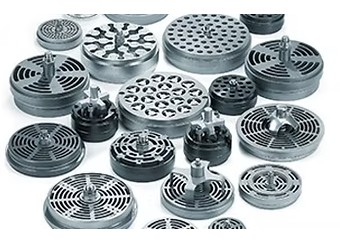
Description
What Is a Reciprocating Compressor Valve?
A reciprocating compressor valve is an automatically actuated flow-control component installed in the compressor cylinder.
Unlike conventional externally actuated valves, reciprocating compressor valves typically operate through the pressure differential created during the piston cycle.
A simplified compression cycle is:
Suction → Compression → Discharge → Expansion
The compressor valve system controls gas movement during these stages.
A typical cylinder may contain:
- Suction valve
- Discharge valve
- Valve plates or elements
- Springs
- Valve seat
- Valve guard
- Damper or cushioning elements, where applicable
- Retaining components
The exact construction depends on the compressor manufacturer and valve design.
Main Functions of Compressor Valves
1. Controls Gas Inlet
The suction valve allows the working gas to enter the cylinder when the cylinder pressure falls below the suction pressure.
2. Controls Gas Discharge
The discharge valve opens when cylinder pressure rises above the discharge-side pressure, allowing compressed gas to leave the cylinder.
3. Prevents Reverse Flow
When operating correctly, the valves close during the appropriate part of the compressor cycle to prevent unwanted reverse gas flow.
4. Supports Compression Efficiency
Correct valve operation helps the compressor achieve the intended capacity and pressure ratio.
5. Controls Cylinder Gas Flow
Valve geometry and timing influence gas-flow resistance, pressure losses, temperature, and compressor performance.
Types of Reciprocating Compressor Valves
Depending on the compressor design, valves may include:
Suction Valves
Suction valves control the entry of gas into the compressor cylinder.
They are subjected to repeated opening and closing cycles and must provide reliable flow with controlled pressure drop.
Discharge Valves
Discharge valves control the release of compressed gas from the cylinder into the discharge system.
They typically operate under higher pressure and temperature conditions than the suction side.
Plate Valves
Plate-type valves use thin valve plates or elements that move against the valve seat.
They are used in various reciprocating compressor designs.
Ring Valves
Ring valves use concentric rings as moving sealing elements.
They can be configured for suction or discharge service depending on the compressor design.
Poppet-Type Valves
Poppet valves use a shaped movable element that operates against a seat.
The exact design depends on the compressor application.
Reed-Type Valves
Reed-type elements use flexible strips or reeds that move in response to pressure differences.
They are used in specific compressor applications and designs.
The correct valve type must always be matched to the compressor’s original configuration.
Compressor Valve Construction
A reciprocating compressor valve assembly may contain several precision components, including:
- Valve body
- Valve seat
- Valve plate
- Valve rings
- Valve springs
- Valve guard
- Damper
- Lift limiter
- Retaining components
- Gaskets
- Fasteners
The exact component arrangement varies according to the valve manufacturer and compressor design.
Valve Materials
Valve materials are selected according to the gas, pressure, temperature, speed, and mechanical loading.
Important considerations include:
- Gas composition
- Suction pressure
- Discharge pressure
- Operating temperature
- Compressor speed
- Valve impact loading
- Corrosion resistance
- Wear resistance
- Fatigue resistance
- Chemical compatibility
Depending on the design, valves may incorporate suitable alloy steels, stainless steels, engineered polymers, composites, spring materials, or other specialized materials.
Material selection should be confirmed against the original compressor or valve specification.
Valve Plate & Ring Selection
The valve plate or ring is one of the primary moving elements within the valve assembly.
Its design influences:
- Flow area
- Pressure drop
- Valve response
- Closing characteristics
- Impact loading
- Temperature
- Wear
- Compressor capacity
Incorrect valve plate or ring dimensions can result in poor valve performance and premature failure.
Valve Springs
Valve springs control the closing force and movement characteristics of the valve elements.
Spring selection depends on:
- Valve design
- Operating pressure
- Gas density
- Compressor speed
- Valve lift
- Required closing characteristics
- Operating temperature
Weak, damaged, or incorrect springs can cause valve flutter, delayed closing, excessive leakage, or abnormal impact.
Valve Seat
The valve seat provides the sealing surface against which the valve element closes.
A properly maintained valve seat helps prevent gas leakage when the valve is closed.
Seat damage may include:
- Pitting
- Erosion
- Cracking
- Wear
- Deformation
- Surface damage
Seat condition should be checked whenever valve elements are replaced.
Valve Guard & Lift Limiter
Depending on the valve design, a guard or lift limiter controls the movement of the valve element.
Correct lift is important because excessive lift can increase impact and mechanical stress, while insufficient lift can restrict gas flow.
The lift setting should be established according to the compressor manufacturer’s specification.
Compressor Valve Operation
A simplified suction and discharge sequence is:
Suction Stroke
As the piston moves to increase cylinder volume, cylinder pressure decreases.
When the pressure differential reaches the required operating condition, the suction valve opens and gas enters the cylinder.
Compression Stroke
The piston reverses direction and compresses the gas.
The suction valve closes to prevent reverse flow.
Discharge
When cylinder pressure exceeds the discharge-side pressure by the required differential, the discharge valve opens.
Compressed gas flows into the discharge system.
Valve Closing
As the pressure differential changes, the discharge valve closes and the cycle begins again.
Actual valve operation depends on the compressor design, gas properties, pressure ratio, valve characteristics, and operating speed.
Signs of Compressor Valve Problems
Valve problems may be associated with:
- Reduced compressor capacity
- Increased discharge temperature
- Increased suction or discharge pressure fluctuations
- Excessive valve noise
- Valve knocking
- Increased power consumption
- Gas leakage
- Reduced volumetric efficiency
- High interstage temperature
- Frequent compressor trips
- Abnormal vibration
- Increased valve failure frequency
These symptoms can also be caused by piston rings, cylinder problems, incorrect clearances, gas conditions, or other compressor components.
Proper diagnosis should therefore be performed before replacing valves.
Causes of Valve Failure
Potential contributing factors include:
- Excessive valve impact
- Incorrect valve lift
- Broken valve plates
- Broken valve rings
- Spring failure
- Valve-seat damage
- Excessive temperature
- Corrosive gas
- Contaminated gas
- Liquid carryover
- Foreign particles
- Incorrect installation
- Incorrect valve material
- Excessive compressor speed
- Incorrect operating conditions
Liquid entering a compressor cylinder can cause severe mechanical loading and may damage valves and other cylinder components.
Compressor Valve Inspection
During compressor maintenance, valves can be inspected for:
- Broken plates
- Cracked rings
- Spring damage
- Seat wear
- Guard damage
- Lift-limiter damage
- Erosion
- Corrosion
- Pitting
- Carbon or deposit accumulation
- Abnormal contact marks
- Excessive clearance
- Incorrect assembly
Valve components should be inspected according to the compressor manufacturer’s maintenance procedure.
Valve Replacement
Compressor valves may require replacement during:
- Scheduled compressor overhaul
- Preventive maintenance
- Reduced-capacity troubleshooting
- High discharge-temperature investigation
- Valve leakage correction
- Compressor refurbishment
- Breakdown maintenance
- Major inspection
Depending on the condition, individual valve components or the complete valve assembly may be replaced.
Valve Selection Information
For accurate identification of a replacement compressor valve, provide:
| Parameter | Required Information |
|---|---|
| Compressor Make | Manufacturer / Brand |
| Compressor Model | Exact model number |
| Serial Number | Compressor serial number |
| Valve Part Number | Existing valve part number |
| Valve Type | Suction / discharge / other |
| Cylinder Number | Applicable cylinder / stage |
| Stage | First / second / third etc. |
| Valve Diameter | Existing valve diameter |
| Valve Height | Existing valve height |
| Valve Configuration | Plate / ring / poppet / other |
| Valve Seat | Existing seat configuration |
| Valve Lift | Manufacturer-specified lift |
| Spring Arrangement | Number / configuration |
| Gas | Working medium |
| Suction Pressure | Operating pressure |
| Discharge Pressure | Operating pressure |
| Temperature | Operating temperature |
| Compressor Speed | RPM |
| Lubrication | Oil-free / lubricated |
| Material | Existing specification, if known |
| Drawing | Original valve drawing, if available |
Providing the compressor make, model, serial number, valve part number, photographs, dimensions, and original valve drawings can help identify the correct replacement.
Valves for Oil-Free Compressors
Oil-free reciprocating compressors require valve components that are compatible with the lubrication conditions and gas environment.
Selection may require consideration of:
- Low-friction materials
- Valve plate/ring material
- Spring characteristics
- Gas compatibility
- Operating temperature
- Pressure ratio
- Compressor speed
- Deposits or contamination
- Valve-seat material
Valve components should be selected as a complete engineered assembly where required rather than mixing components from incompatible designs.
Valves for Natural Gas & CNG Compressors
Reciprocating compressor valves are widely used in:
- CNG compressor skids
- CNG refueling stations
- Natural gas booster compressors
- Pipeline compression
- Gas gathering
- Natural gas storage
- Gas transfer
- High-pressure gas compression
For high-pressure natural gas applications, correct valve material, geometry, pressure rating, and installation are important for safe and reliable operation.
Valves for Hydrogen Compressors
Hydrogen compressor valves require application-specific engineering because of the gas properties and potentially high operating pressures.
Selection may consider:
- Hydrogen compatibility
- Valve material
- Seal and packing materials
- Pressure
- Temperature
- Compressor speed
- Valve lift
- Fatigue resistance
- Leakage requirements
The final valve configuration should be confirmed according to the compressor manufacturer’s engineering requirements.
Compressor Valve Maintenance
Regular valve inspection can help identify developing problems before they result in compressor downtime.
Maintenance may include:
- Valve removal and inspection
- Plate/ring inspection
- Spring inspection
- Seat inspection
- Guard inspection
- Deposit removal where appropriate
- Dimensional checks
- Valve lift verification
- Gasket replacement
- Correct torque during reassembly
Maintenance intervals should follow the compressor manufacturer’s recommendations and actual operating conditions.
Applications
Reciprocating compressor valves are used across:
- Natural Gas Compression
- CNG Compression
- Hydrogen Compression
- Industrial Air Compression
- Process Gas Compression
- Hydrocarbon Gas Compression
- Oil & Gas
- Chemical Processing
- Petrochemical
- Refineries
- Gas Processing
- Gas Storage
- Power Generation
- Industrial Manufacturing
Related Reciprocating Compressor Spare Parts
Aegis Projects can also support associated components including:
- Cylinders
- Pistons
- Piston Rods
- Piston Rings
- Rider Rings
- Distance Pieces
- Rod Packing
- Tangent Rings
- Radial Rings
- Pressure Breaker Rings
- Backup Rings
- Packing Cases
- Oil Scraper Rings
- Crossheads
- Crosshead Shoes
- Crosshead Pins
- Connecting Rods
- Crankshafts
- Crank Pins
- Main Bearings
- Connecting-Rod Bearings
- Valve Plates
- Valve Rings
- Valve Springs
- Valve Seats
- Valve Guards
- Gaskets
- Seals
- Intercoolers
- Aftercoolers
- Pulsation Dampeners
- Lubrication Components
Aegis Projects – Reciprocating Compressor Valves
Aegis Projects Technology Pvt. Ltd. supplies replacement compressor valves and reciprocating compressor spare parts for industrial maintenance, overhaul, refurbishment, and repair applications.
Valve requirements can be supported using OEM part numbers, compressor make and model, serial number, valve dimensions, original drawings, photographs, samples, and operating conditions.
Because compressor valve performance depends on the complete cylinder and gas-flow arrangement, selection should consider suction and discharge conditions, cylinder dimensions, valve type, valve lift, spring arrangement, gas composition, temperature, compressor speed, and material compatibility.
For critical compressor applications, valve components should be inspected and installed according to the applicable compressor engineering specification and manufacturer’s procedures.
Contact Aegis Projects Technology for reciprocating compressor valves, suction valves, discharge valves, valve plates, valve rings, valve springs, valve seats, and complete compressor spare parts solutions.