Description
What Is Rod Packing?
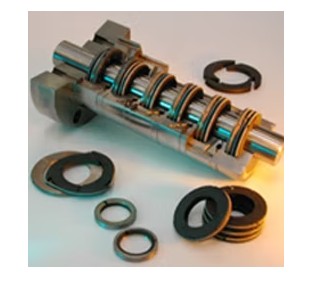
Rod packing is a multi-ring sealing assembly installed around the piston rod of a reciprocating compressor.
A simplified compressor arrangement is:
Cylinder → Packing Case → Distance Piece → Crosshead → Connecting Rod → Crankshaft
As the piston rod moves back and forth through the packing assembly, the packing rings maintain a controlled sealing interface around the rod.
Unlike a static seal, rod packing must accommodate continuous reciprocating movement while controlling gas leakage.
Main Functions of Rod Packing
1. Controls Gas Leakage
Rod packing helps limit the movement of compressed gas along the piston rod toward the distance piece and crankcase.
2. Accommodates Reciprocating Movement
The packing must seal around a piston rod that continuously moves in and out of the cylinder.
3. Protects the Crankcase
Effective packing helps reduce the migration of process gas toward the compressor crankcase.
4. Supports Gas Containment
For hazardous or valuable gases, properly functioning packing contributes to controlled containment and leakage management.
5. Reduces Contamination
Depending on compressor design, the packing arrangement also helps reduce unwanted interaction between process gas and crankcase lubrication systems.
Rod Packing Construction
Rod packing normally consists of multiple rings or ring sets installed within a packing case.
Depending on the compressor design, the packing arrangement can include:
- Sealing rings
- Packing rings
- Radial sealing elements
- Tangential rings
- Pressure-breaker rings
- Venting arrangements
- Oil scraper arrangements
- Packing case
- Springs or loading elements, where applicable
- Intermediate leakage collection arrangements
The exact number, geometry, material, and arrangement of rings depend on the compressor manufacturer and operating conditions.
How Rod Packing Works
During compressor operation, the piston rod reciprocates through the packing assembly.
The packing rings maintain controlled contact or clearance around the rod, creating a series of sealing points that restrict gas movement.
A simplified sequence is:
Compressed Gas → Cylinder → Rod Packing → Controlled Leakage/Vent → Distance Piece
The actual leakage management arrangement depends on compressor design and may include vent, drain, recovery, or collection systems.
Rod Packing Materials
Packing materials must be selected according to the gas and operating conditions.
Important factors include:
- Gas composition
- Pressure
- Temperature
- Rod speed
- Compressor RPM
- Lubrication
- Rod surface finish
- Chemical compatibility
- Required leakage control
- Oil-free or lubricated compressor design
Depending on the application, packing components may use suitable engineered polymeric, composite, metallic, or other materials specified for the compressor.
Material selection should be confirmed against the compressor manufacturer’s specification, particularly for hydrogen, natural gas, CNG, corrosive gases, toxic gases, and high-pressure applications.
Rod Packing for Oil-Free Compressors
Rod packing is especially important in oil-free reciprocating compressors, where process gas and crankcase lubrication must be effectively separated.
For oil-free applications, packing selection should consider:
- Low-friction operation
- Rod surface finish
- Packing material compatibility
- Gas composition
- Operating pressure
- Operating temperature
- Compressor speed
- Leakage requirements
- Cooling arrangement
- Manufacturer’s original design
Oil-free compressor packing should not be selected solely on physical dimensions. Material and ring geometry must be compatible with the complete compressor operating system.
Rod Packing for Natural Gas & CNG Compressors
Natural gas and CNG compressors operate at potentially high pressures, making effective piston rod sealing particularly important.
Rod packing systems may be used in:
- CNG compressor skids
- CNG filling stations
- Natural gas booster systems
- Gas gathering systems
- Pipeline compression
- Gas storage systems
- Gas transfer systems
- Industrial natural gas compressors
The packing arrangement must be selected according to the gas composition, pressure, temperature, piston rod dimensions, compressor speed, and applicable safety requirements.
Rod Packing for Hydrogen Compressors
Hydrogen presents specific sealing challenges because of its physical properties and its ability to migrate through small clearances.
For hydrogen compressor applications, packing selection may require consideration of:
- Hydrogen compatibility
- Leakage control
- Material compatibility
- Rod surface finish
- Packing geometry
- Pressure differential
- Temperature
- Compressor speed
- Vent and leakage management
Final material and packing design should be confirmed according to the compressor manufacturer’s engineering requirements and the specific hydrogen application.
Signs of Rod Packing Wear
Worn or damaged rod packing can be associated with:
- Increased gas leakage
- Visible leakage around the packing area
- Increased packing temperature
- Abnormal packing wear
- Excessive rod surface wear
- Gas migration toward the crankcase
- Oil contamination
- Increased gas consumption
- Unusual packing noise
- Frequent packing replacement requirements
These symptoms can also result from piston rod damage, misalignment, incorrect clearances, excessive rod runout, or other compressor problems. Proper inspection is recommended before replacing packing components.
Causes of Premature Rod Packing Failure
Common contributing factors can include:
- Incorrect packing material
- Incorrect ring clearance
- Damaged piston rod
- Poor piston rod surface finish
- Rod misalignment
- Excessive rod runout
- High operating temperature
- Excessive pressure
- Incorrect installation
- Inadequate cooling
- Contaminated gas
- Improper lubrication where applicable
- Incorrect packing arrangement
The underlying cause should be identified before installing new packing to avoid repeated failures.
Rod Packing Inspection & Maintenance
During compressor maintenance, the packing assembly can be inspected for:
- Ring wear
- Cracks
- Chipping
- Deformation
- Excessive clearance
- Heat damage
- Chemical degradation
- Carbon deposits
- Abnormal wear patterns
- Piston rod scoring
- Packing case damage
The piston rod should also be inspected because a damaged rod surface can rapidly damage newly installed packing.
Rod Packing Replacement
Rod packing is commonly replaced during:
- Scheduled compressor overhauls
- Preventive maintenance
- Packing leakage correction
- Compressor refurbishment
- Breakdown maintenance
- Major compressor inspections
- Piston rod replacement
When replacing packing, it is important to verify:
- Piston rod diameter
- Packing case dimensions
- Ring configuration
- Ring orientation
- Radial clearance
- Tangential clearance
- Axial clearance
- Material specification
- Gas compatibility
- Manufacturer’s installation procedure
Exact clearances should be established from the applicable compressor manufacturer’s specification rather than using generic values.
Rod Packing Selection Information
For accurate identification of replacement rod packing, provide as much of the following information as possible:
| Parameter | Required Information |
|---|---|
| Compressor Make | Manufacturer / Brand |
| Compressor Model | Exact model number |
| Serial Number | Compressor serial number |
| Packing Part Number | Existing part number |
| Cylinder Number | Applicable cylinder / stage |
| Piston Rod Diameter | Rod diameter |
| Packing Case Size | Existing packing case dimensions |
| Number of Rings | Existing ring arrangement |
| Ring Configuration | Sealing arrangement |
| Gas | Working medium |
| Suction Pressure | Operating pressure |
| Discharge Pressure | Operating pressure |
| Temperature | Operating temperature |
| Compressor Speed | RPM |
| Lubrication | Oil-free / lubricated |
| Cooling | Air / water / other |
| Existing Material | If known |
| Drawing | Original packing drawing, if available |
Photographs of the existing packing, piston rod, packing case, and identification plate can also assist with component identification.
Applications
Rod packing is used in reciprocating compressor systems across:
- Natural Gas Compression
- CNG Compression
- Hydrogen Compression
- Industrial Air Compression
- Process Gas Compression
- Hydrocarbon Gas Compression
- Oil & Gas
- Chemical Processing
- Petrochemical
- Refineries
- Gas Processing
- Gas Storage
- Power Generation
- Industrial Manufacturing
Related Reciprocating Compressor Spare Parts
Aegis Projects can also support associated compressor components including:
- Cylinders
- Pistons
- Piston Rods
- Piston Rings
- Rider Rings
- Distance Pieces
- Packing Cases
- Oil Scraper Rings
- Crossheads
- Crosshead Shoes
- Connecting Rods
- Crankshafts
- Cylinder Valves
- Valve Plates
- Valve Springs
- Bearings
- Gaskets
- Seals
- Intercoolers
- Aftercoolers
- Pulsation Dampeners
- Lubrication Components
Aegis Projects – Rod Packing Solutions
Aegis Projects Technology Pvt. Ltd. supplies reciprocating compressor spare parts and replacement sealing components for industrial compressor maintenance and overhaul applications.
Our rod packing supply can be supported using OEM part numbers, compressor make and model, serial number, existing packing dimensions, photographs, drawings, samples, and application conditions.
Correct rod packing selection requires consideration of the piston rod, packing case, gas composition, pressure, temperature, compressor speed, lubrication, and leakage-management arrangement.
For high-pressure or hazardous gas applications, packing installation and leakage management should be carried out according to the compressor manufacturer’s procedures and applicable site safety requirements.
Contact Aegis Projects Technology for rod packing, reciprocating compressor spare parts, sealing components, and application-specific technical assistance.