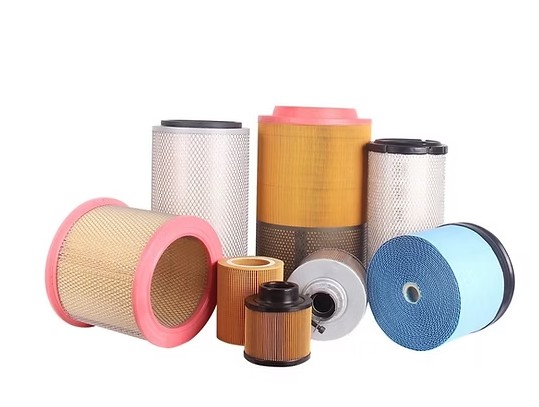
Description
What Is an In-Suction Air Filter?
An in-suction air filter, also known as a compressor intake air filter or suction air filter, is installed on the compressor’s air inlet.
Its primary function is to filter atmospheric air before it reaches the compressor element.
Typical Air Flow
Atmospheric Air → In-Suction Air Filter → Compressor Air Inlet → Compression Chamber → Compressed Air System
The filter captures particulate contaminants while allowing the required volume of air to pass through the compressor intake system.
Key Functions
An in-suction air filter helps:
- Remove dust and airborne particles
- Protect the compressor air end
- Reduce contamination of internal components
- Support reliable compressor operation
- Maintain clean compressor intake air
- Reduce abrasive particle entry
- Support compressor efficiency
- Protect precision rotor and housing surfaces
- Reduce contamination-related maintenance
Why Suction Air Filtration Is Important
Industrial environments can contain significant levels of dust, dirt, fibers, oil mist, moisture, and other airborne contaminants.
If these contaminants enter the compressor, they may accumulate within the air-end and associated components.
Depending on the compressor configuration, contamination can contribute to:
- Rotor wear
- Housing contamination
- Reduced compression efficiency
- Increased pressure drop
- Increased maintenance requirements
- Premature component wear
- Reduced compressor service life
A properly selected and maintained intake filter helps reduce these risks.
In-Suction Air Filter for Rotary Screw Compressors
Rotary screw compressors rely on precision clearances between the compressor rotors and housing. Maintaining clean intake air is therefore important for long-term compressor reliability.
The suction filter is typically positioned upstream of the compressor air inlet and may be integrated into the compressor package or supplied as a separate filter assembly.
Depending on the compressor design, the intake filtration system can include:
- Filter housing
- Filter element
- Air inlet connection
- Differential pressure indicator
- Restriction indicator
- Service access
- Sealing components
Filter Element
The filter element is the primary filtration component within the suction air filter.
Filter elements can be manufactured using suitable filtration media selected according to:
- Required filtration efficiency
- Air flow
- Compressor capacity
- Operating environment
- Dust loading
- Pressure drop
- Service interval
The correct replacement element should be matched to the original filter housing and compressor specifications.
Applications
In-suction air filters can be used with:
- Rotary screw compressors
- Oil-injected screw compressors
- Oil-free screw compressors
- Industrial air compressors
- Process air compressors
- Factory compressed air systems
- Instrument air systems
- Pneumatic systems
- Manufacturing plants
- Automotive industries
- Pharmaceutical facilities
- Food and beverage plants
- Chemical industries
- Petrochemical facilities
- Power plants
- Textile industries
- Packaging plants
- General industrial utilities
Replacement Suction Air Filters
Replacement may be required when the existing filter becomes:
- Clogged
- Damaged
- Contaminated
- Mechanically deformed
- Excessively restrictive
- Beyond its recommended service interval
A blocked intake filter can increase suction-side restriction and may affect compressor performance and energy consumption.
Differential Pressure & Filter Condition
Monitoring pressure drop across the intake filter can provide an indication of filter condition.
As dust accumulates on the filter media, resistance to airflow can increase.
Depending on the compressor system, a restriction indicator or differential pressure monitoring arrangement can be used to identify when servicing or replacement may be required.
The actual replacement interval depends on:
- Operating hours
- Ambient dust concentration
- Compressor duty
- Air quality
- Filter capacity
- Site conditions
Selection Parameters
The correct in-suction air filter should be selected according to the compressor and operating environment.
| Parameter | Selection Requirement |
|---|---|
| Compressor Manufacturer | Make / Brand |
| Compressor Model | Exact model |
| Compressor Capacity | Air delivery |
| Air Flow | Required intake flow |
| Operating Pressure | System requirement |
| Filter Type | Intake / suction filter |
| Filtration Requirement | Application dependent |
| Connection Size | Air inlet connection |
| Filter Element | Compatible element |
| Operating Environment | Dust / temperature / humidity |
| Pressure Drop | System requirement |
| Housing Type | Integrated / external |
Final filter selection should be confirmed against the compressor manufacturer’s specifications.
Maintenance
Regular inspection and replacement of the suction air filter are important for compressor reliability.
Maintenance may include:
- Inspecting the filter element
- Monitoring pressure drop
- Cleaning or replacing the element as applicable
- Checking the filter housing
- Inspecting seals and gaskets
- Checking air inlet connections
- Ensuring there are no air leaks around the filter
- Inspecting the intake ducting
Filter cleaning should only be carried out when permitted by the filter manufacturer’s recommendations. Some filter elements are intended for replacement rather than cleaning.
Signs of a Restricted Air Filter
A heavily restricted suction filter may be associated with:
- Reduced compressor air delivery
- Increased suction restriction
- Increased power consumption
- Compressor alarms
- Reduced operating efficiency
- Abnormal compressor operating conditions
- Increased temperature in some applications
These symptoms can also have other causes, so appropriate compressor diagnostics should be performed.
Industrial Compressor Spare Parts
The in-suction air filter is part of the broader range of screw compressor spare parts and compressed air system components supplied for maintenance and replacement.
Related components include:
- Rotary screw elements
- Compression chamber components
- Compressor motors
- Separator vessels
- Air-oil separator elements
- After coolers
- Water separators
- Non-return check valves
- Discharge valves
- System controllers
- Gaskets and seals
- Oil filters
- Minimum pressure valves
- Thermostatic valves
- Solenoid valves
- Bearings
- Couplings
- Compressor service kits
- Compressor overhaul kits
Aegis Projects Technology
Aegis Projects Technology supplies in-suction air filters, replacement filter elements, and industrial screw compressor spare parts for compressor maintenance, repair, overhaul, and refurbishment applications.
For accurate filter identification, provide the compressor make, model, serial number, existing filter part number, filter dimensions, air flow requirement, or a photograph of the existing filter and compressor nameplate.
Aegis Projects Technology — Industrial Compressor Spare Parts & Compressed Air Solutions.