Description
Vapor Recovery Unit Applications
Vapor Recovery Units can be used to support several operational and environmental objectives.
Vapor Emission Reduction
VRUs can capture hydrocarbon vapors that would otherwise be released from storage or process equipment, helping facilities reduce uncontrolled vapor emissions.
Regulatory Compliance
Vapor recovery systems can form part of an emission-control strategy where applicable environmental regulations and facility requirements call for vapor management.
The supplied source specifically identifies the Clean Air Act (CAA) and EPA requirements as regulatory considerations. Applicable requirements should be confirmed for the specific facility, product and jurisdiction.
Operational Cost Reduction
Recovered gas can potentially be redirected for use within the facility, reducing the requirement for purchased fuel gas in suitable applications.
Product Recovery
Vapors containing recoverable hydrocarbons can potentially be captured and transferred to downstream processing or sales systems.
Why Vapor Recovery is Important
Vapor generation from storage tanks and tank batteries is a common consideration in oil and gas operations and crude oil storage facilities.
Hydrocarbon vapors can contain valuable components as well as regulated emissions. A properly engineered VRU provides a controlled method of collecting and compressing these vapors.
Depending on the gas composition and facility configuration, recovered vapors may be used as:
- On-site fuel gas
- Pipeline gas
- Feed to gas processing facilities
- Recovered hydrocarbon products
- Other suitable downstream applications
The economic value of a VRU depends on factors such as vapor composition, recovery rate, operating hours, gas value, compression requirements and applicable regulatory requirements.
Benefits of Vapor Recovery Units
On-Site Fuel Gas
Recovered vapor can potentially be used as fuel gas within the facility, reducing the need to purchase additional fuel resources.
Pipeline Gas
Where gas quality and pipeline specifications permit, recovered gas can be compressed and transferred to a pipeline or downstream gas system.
NGL Recovery Potential
Depending on the composition of the recovered vapor and downstream processing arrangement, valuable natural gas liquids (NGLs) may be recovered through suitable gas processing systems.
Reduced Vapor Losses
Recovering vapors can help reduce the loss of potentially valuable hydrocarbons from storage and process systems.
Emission Management
A VRU can form part of a facility’s strategy for managing hydrocarbon vapor emissions.
Vapor Recovery Unit Components
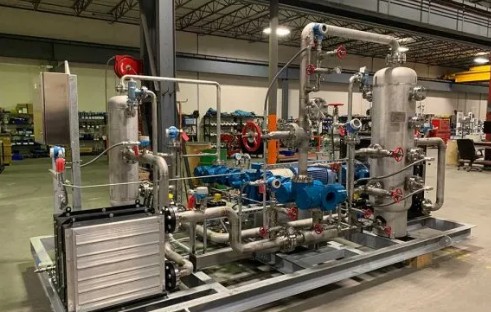
A typical Aegis Projects VRU package can incorporate:
Industrial Skid Frame
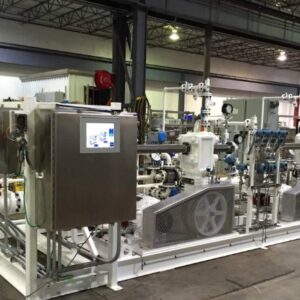
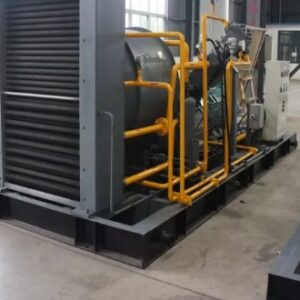
A fabricated industrial skid frame provides structural support for the compressor, knockout vessel, piping, instrumentation and control equipment.
Oil-Free Reciprocating Compressor
An oil-free reciprocating compressor can be used to compress recovered vapors for downstream use or transfer.
Compressor selection depends on the vapor composition, suction pressure, discharge pressure, flow rate and operating conditions.
ASME-Coded Knock-Out Vessel
A knockout vessel can be incorporated upstream of the compressor to separate entrained liquids from the vapor stream and help protect the compressor.
The vessel specification and applicable certification depend on the project requirements.
Hazardous-Area Control Panel
The system can incorporate a control panel suitable for the applicable hazardous-area classification.
The supplied source specifies Class I, Division 2 rated control equipment for the referenced VRU configuration.
Pressure & Temperature Instrumentation
The VRU can include pressure and temperature switches or transmitters for monitoring system operating conditions.
Safety Relief Valves
Flanged piping-away safety relief valves can be incorporated to provide pressure protection according to the system design.
Interconnecting Piping
The package can include welded interconnecting process piping with appropriate flanged process connections.
Piping materials, pressure classes and connection specifications are selected according to the product and operating conditions.
Typical VRU Process Arrangement
A typical vapor recovery process can operate as follows:
- Hydrocarbon vapors are collected from storage tanks or process equipment.
- The vapor stream enters the VRU system.
- A knockout vessel separates any entrained liquid from the vapor.
- The vapor enters the reciprocating compressor.
- The compressor increases the vapor pressure to the required discharge condition.
- Instrumentation continuously monitors pressure and temperature.
- Safety systems provide protection against abnormal operating conditions.
- Recovered gas is directed to the designated downstream system.
The exact process arrangement depends on the vapor source, gas composition, pressure conditions and intended destination of the recovered gas.
Mobile Vapor Recovery Units
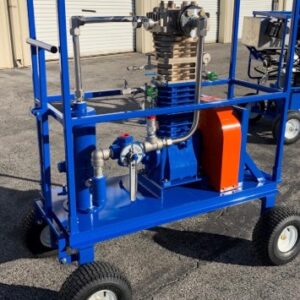
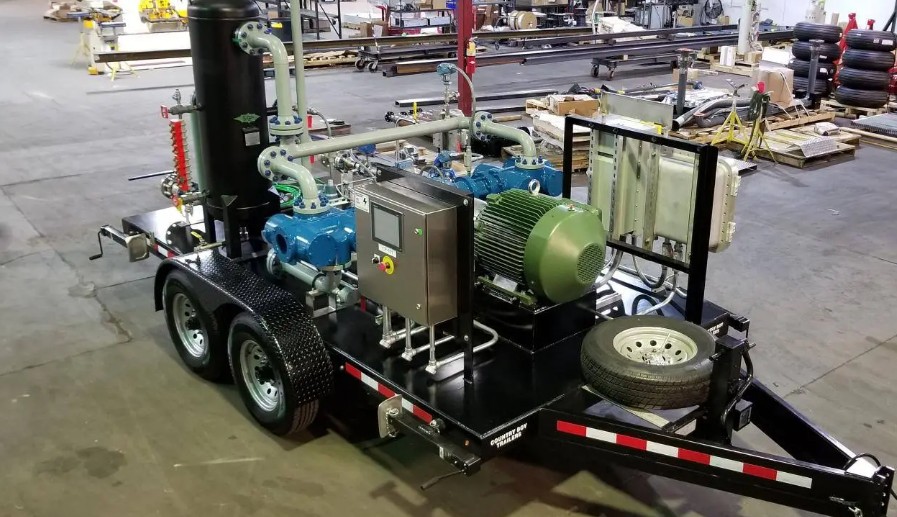
Aegis Projects can also engineer mobile or trailer-mounted vapor recovery systems for applications where the VRU needs to be transported between locations or deployed temporarily.
Mobile VRU packages can integrate:
- Trailer-mounted skid
- Reciprocating compressor
- Electric motor
- VFD
- Local control panel
- PLC
- HMI
- Pressure transmitters
- Temperature transmitters
- Static grounding and bonding
- Process piping
- Safety equipment
The mobile configuration can be customized according to the application and transport requirements.
Example Mobile Propane Vapor Recovery Configuration
The supplied source describes a mobile propane vapor recovery application using a trailer-mounted system for evacuating propane vapors from cavern storage.
The referenced configuration included:
- Custom-built trailer
- Reciprocating compressor
- 60 HP motor
- VFD for capacity control
- NEMA 4X stainless-steel control panel
- PLC
- 10.5-inch full-color HMI
- Pressure and temperature indicating transmitters
- Static grounding and bonding system
- Class I, Division II-rated equipment
This example demonstrates how a mobile VRU can combine compression, variable-speed control, instrumentation, automation and hazardous-area safety equipment into a transportable package.
Final equipment selection should always be based on the actual vapor composition, flow, pressure, hazardous-area classification and project requirements.
Automation & Control
Aegis Projects VRUs can be supplied with integrated PLC and HMI-based automation.
Depending on the application, the control system can provide:
- Compressor start/stop control
- VFD capacity control
- Suction pressure monitoring
- Discharge pressure monitoring
- Temperature monitoring
- Knockout vessel monitoring
- Alarm management
- Emergency shutdown
- Equipment protection
- Automatic operating sequences
- Local HMI operation
- Remote monitoring interfaces
The VRU can also be designed for integration with an existing PLC, SCADA or plant automation system.
Safety & Hazardous-Area Protection
Vapor recovery applications can involve flammable hydrocarbon vapors, making appropriate equipment selection and safety engineering essential.
Depending on the application, the VRU may incorporate:
- Hazardous-area rated electrical equipment
- Emergency shutdown
- Pressure relief
- Temperature monitoring
- Gas detection interfaces
- Static grounding and bonding
- Automated isolation
- Compressor protection
- Knockout vessel protection
- Pressure and temperature alarms
- Suitable control-panel classification
The hazardous-area classification and equipment certification must be established according to the site conditions and applicable standards.
Custom VRU Engineering
Every vapor recovery application has different operating conditions. Aegis Projects can engineer the VRU according to the specific requirements of the facility.
Important design considerations include:
- Vapor composition
- Hydrocarbon content
- Flow rate
- Suction pressure
- Discharge pressure
- Vapor temperature
- Liquid carryover
- Required recovery rate
- Compressor type
- Motor power
- Hazardous-area classification
- Downstream gas requirements
- Storage tank configuration
- Automation requirements
- Fixed or mobile installation
Factory Assembly & Testing
VRU packages can be factory assembled and tested before shipment.
Testing may include:
- Compressor operation
- Motor/VFD operation
- Control-panel functionality
- PLC programming
- HMI operation
- Instrumentation
- Alarm functions
- Emergency shutdown
- Valve operation
- Pressure and temperature monitoring
- Control sequences
Factory Acceptance Testing (FAT) can be arranged according to the agreed project requirements.
Industries & Applications
Vapor Recovery Units can be engineered for applications including:
- Oil & Gas
- Crude Oil Storage
- Tank Batteries
- Natural Gas Facilities
- Petroleum Terminals
- LPG Facilities
- NGL Facilities
- Fuel Storage
- Petrochemical Plants
- Biofuel Facilities
- Gas Processing
- Hydrocarbon Storage
- Gas Gathering Systems
Packaged VRU Solutions by Aegis Projects Technology
Aegis Projects Technology Pvt. Ltd. provides engineered compressor, vapor recovery, gas handling, pumping, automation and skid-mounted process solutions.
Our Vapor Recovery Units can be configured to collect and compress vapors from storage tanks, tank batteries and other suitable process sources.
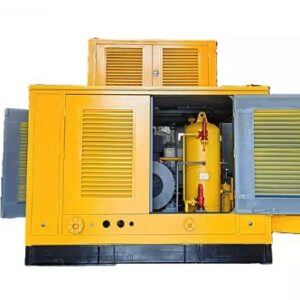
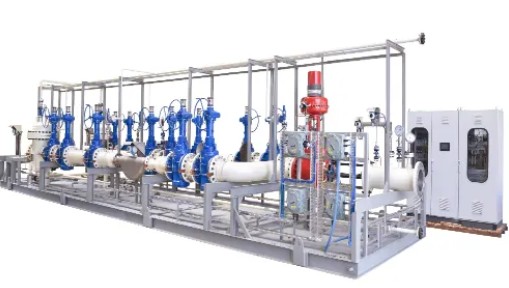
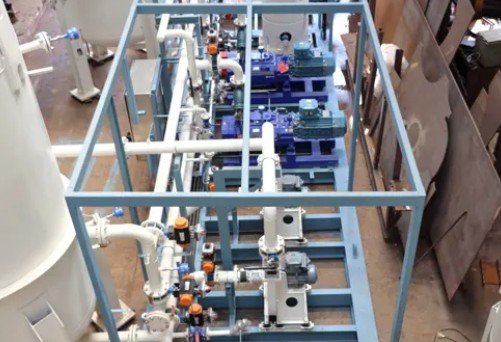
A complete VRU package can integrate an oil-free reciprocating compressor, knockout vessel, hazardous-area control panel, pressure and temperature instrumentation, safety relief equipment, process piping and PLC/HMI automation into a single skid-mounted system.
Both fixed and mobile vapor recovery configurations can be developed according to the project requirements.
Request a Customized Vapor Recovery Unit
Contact Aegis Projects Technology with your vapor composition, flow rate, suction pressure, required discharge pressure, storage configuration and intended recovered-gas destination to discuss a customized VRU package.
Final compressor selection, recovery capacity, pressure ratings, materials, hazardous-area classification, control architecture, safety systems and applicable environmental or industry requirements are subject to application-specific engineering and project specifications.