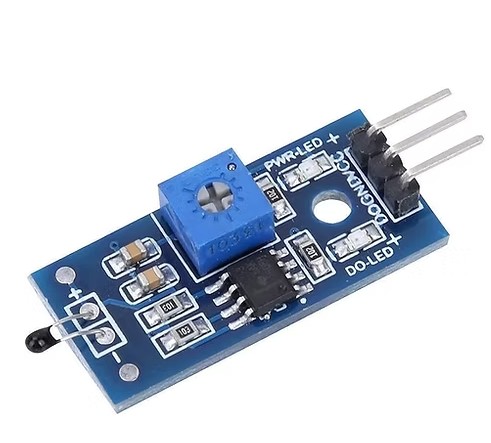
Description
Functions of Temperature Sensors
Temperature sensors are used for several important refrigeration control and monitoring functions:
- Measuring evaporator temperature
- Monitoring suction-line temperature
- Measuring discharge or compressor outlet temperature
- Monitoring cold-room and cabinet temperature
- Providing feedback for superheat control
- Supporting electronic expansion valve control
- Controlling refrigeration cycles
- Monitoring defrost temperature
- Controlling evaporator and condenser fans where applicable
- Providing high-temperature or low-temperature alarms
- Monitoring process cooling systems
- Supporting automatic refrigeration control systems
How a Refrigeration Temperature Sensor Works
The sensor detects the temperature at its installation point and converts the temperature into an electrical signal.
Depending on the sensor type, this signal may be based on a change in electrical resistance, voltage, or another measurable electrical characteristic. The refrigeration controller interprets this signal and uses the measured temperature for control, monitoring, alarms, or protection.
A typical arrangement is:
Temperature Sensor → Controller → Control Output → Refrigeration Equipment
For example, an evaporator temperature sensor can provide temperature feedback to a refrigeration controller, which can then regulate cooling operation, fan operation, defrost cycles, or an electronic expansion valve depending on the system configuration.
Types of Temperature Sensors
Temperature sensors used in refrigeration systems can be available in different configurations depending on the controller and application.
1. NTC Temperature Sensors
NTC thermistors change their electrical resistance as temperature changes. They are widely used with electronic refrigeration controllers and temperature-control systems.
2. PTC Temperature Sensors
PTC sensors exhibit an increase in electrical resistance with increasing temperature and can be used in specific control and protection applications.
3. RTD Temperature Sensors
RTDs provide temperature measurement based on a predictable resistance change. Common configurations include sensors based on platinum elements such as Pt100 or Pt1000, subject to system requirements.
4. Probe Temperature Sensors
Probe-style sensors are designed for direct measurement at refrigeration equipment, piping, evaporators, cabinets, or other measurement locations.
5. Surface Temperature Sensors
Surface-mounted or clamp-type sensors can be used to measure the temperature of refrigeration pipes and other surfaces without requiring direct insertion into the system.
6. Air Temperature Sensors
Air sensors are used for measuring room, cabinet, duct, or circulating air temperature in refrigeration and HVAC-R applications.
Main Components
Depending on construction and application, a refrigeration temperature sensor may include:
- Temperature-sensing element
- Protective probe or housing
- Sensor cable
- Electrical terminals or connector
- Protective insulation
- Stainless steel or other probe material
- Mounting clip or clamp
- Sealing components
- Sensor tip
- Cable sheath
The construction and materials should be selected according to the operating temperature, installation environment, refrigerant-system location, moisture exposure, and controller compatibility.
Temperature Sensor Applications
Temperature sensors are commonly used in:
- Commercial refrigeration systems
- Industrial refrigeration systems
- Cold rooms
- Cold storage facilities
- Freezer rooms
- Refrigerated display cabinets
- Supermarket refrigeration
- Food and beverage refrigeration
- Pharmaceutical storage refrigeration
- Process cooling systems
- Chillers
- Evaporator systems
- HVAC-R equipment
- Refrigeration control panels
- Electronic expansion valve systems
- Compressor monitoring systems
- Defrost control systems
Temperature Sensors for Evaporator Control
In electronically controlled refrigeration systems, temperature sensors can provide important feedback for evaporator operation.
The sensor may measure:
- Evaporator outlet temperature
- Suction-line temperature
- Evaporator coil temperature
- Air temperature
- Defrost temperature
The controller uses this information to regulate the refrigeration system according to the programmed control strategy.
Accurate sensing is particularly important where temperature feedback is used for superheat control, electronic expansion valve operation, evaporator protection, or defrost termination.
Common Temperature Sensor Problems
A faulty or incompatible sensor can result in incorrect temperature readings and improper refrigeration control.
Common problems include:
- Incorrect temperature reading
- Sensor open circuit
- Sensor short circuit
- Intermittent signal
- Damaged sensor cable
- Moisture entering the sensor
- Loose electrical connection
- Incorrect sensor type
- Incorrect resistance characteristics
- Incorrect sensor location
- Damaged probe
- Poor contact with the measured surface
- Controller and sensor incompatibility
A sensor that provides an incorrect signal may cause the refrigeration controller to operate outside the intended temperature range.
Inspection and Testing
Temperature sensors should be inspected during refrigeration system maintenance.
Recommended checks may include:
- Inspecting the probe for physical damage
- Checking cable insulation
- Checking electrical connections
- Measuring sensor resistance where applicable
- Comparing measured resistance with the manufacturer’s temperature/resistance characteristics
- Checking controller sensor settings
- Verifying the sensor type
- Checking the sensor installation position
- Inspecting for moisture or corrosion
- Comparing the displayed temperature with an independent reference measurement where appropriate
Sensor testing should be performed according to the specifications of the particular sensor and controller.
Installation Considerations
Correct installation is important for accurate temperature measurement.
Consider the following:
- Install the sensor at the specified measurement location.
- Ensure adequate contact with the surface when using a surface-mounted sensor.
- Use the correct sensor type for the controller.
- Protect sensor cables from mechanical damage.
- Avoid routing sensor cables where they may be exposed to excessive electrical interference.
- Ensure electrical connections are secure.
- Use suitable mounting clips, clamps, or holders.
- Follow the specified cable length and installation requirements.
- Maintain appropriate protection against moisture where required.
Temperature Sensor Selection
The correct sensor should be selected according to the refrigeration equipment, controller, measurement location, temperature range, and electrical characteristics.
| Specification | Requirement |
|---|---|
| Application | Refrigeration / HVAC-R / Cold Storage / Process Cooling |
| Sensor Type | NTC / PTC / RTD / Other |
| Measurement Location | Evaporator / Suction Line / Discharge Line / Air / Cabinet / Room |
| Temperature Range | As required by application |
| Sensor Characteristic | According to controller specification |
| Resistance | According to sensor type and temperature |
| Accuracy | As required by application |
| Probe Material | Stainless Steel / Suitable Material |
| Probe Diameter | As required |
| Probe Length | As required |
| Cable Length | As required |
| Connector | As required by controller |
| Mounting | Probe / Clip / Clamp / Surface Mount |
| Protection | According to installation environment |
| Operating Temperature | Application dependent |
| Controller Compatibility | Must be verified |
| Refrigeration System | Commercial / Industrial / Cold Room / Chiller / Process Cooling |
| Manufacturer / Part Number | As required |
Replacement Considerations
When replacing a refrigeration temperature sensor, the replacement should not be selected only on the basis of physical dimensions. The sensor type, resistance characteristic, temperature range, controller compatibility, probe construction, connector, and cable configuration should also be verified.
Using an incorrect sensor characteristic can result in inaccurate temperature readings even if the replacement sensor physically fits the installation.
For replacement applications, it is recommended to check the existing sensor’s:
- Manufacturer and part number
- Sensor type
- Resistance characteristics
- Temperature range
- Probe dimensions
- Cable length
- Connector configuration
- Controller compatibility
- Installation location
Temperature Sensor Supplier – Aegis Projects
Aegis Projects Technology Pvt. Ltd. supplies refrigeration and HVAC-R components for industrial and commercial applications, including temperature sensors, refrigeration controllers, expansion valves, solenoid valves, pressure switches, filter driers, sight glasses, and other refrigeration spare parts.
Our temperature-sensor solutions can be selected according to the refrigeration equipment, controller requirements, measurement location, operating temperature, and application conditions.
Contact Aegis Projects for temperature sensors and refrigeration spare parts matched to your equipment requirements.