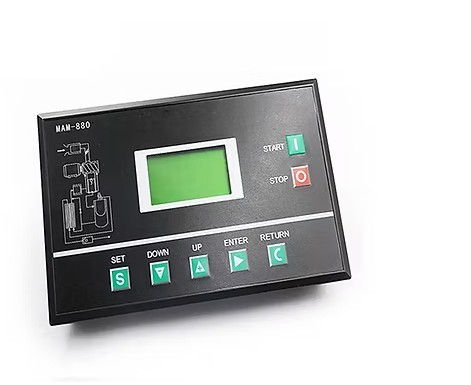
Description
What Is a Screw Compressor System Controller?
A system controller is an electronic control unit used to monitor operating parameters and manage the operation of a screw compressor or compressed air system.
The controller can receive signals from various sensors and equipment, process operating conditions, and issue commands to the compressor and associated components.
Typical monitored parameters can include:
- Discharge pressure
- Suction pressure, where applicable
- Discharge temperature
- Oil temperature
- Oil pressure
- Motor status
- Compressor running hours
- Load/unload status
- System pressure
- Filter condition
- Separator differential pressure
- Alarm status
The exact functions depend on the controller model and compressor configuration.
Key Functions
A compressor system controller may provide:
- Compressor start and stop control
- Load/unload control
- Automatic pressure control
- Operating parameter monitoring
- Alarm indication
- Fault detection
- Protective shutdown
- Operating-hour monitoring
- Maintenance reminders
- Sensor monitoring
- Multiple compressor sequencing
- Remote monitoring interfaces
- Communication with plant control systems
Compressor Protection
One of the important functions of a system controller is protecting the compressor from abnormal operating conditions.
Depending on the compressor configuration, protective functions can include monitoring for:
- High discharge temperature
- High oil temperature
- Low oil pressure
- High system pressure
- Motor overload
- Motor fault
- Sensor failure
- High separator differential pressure
- Filter restriction
- Emergency stop
- Other application-specific faults
When a critical fault is detected, the controller can generate an alarm and, where configured, initiate a controlled shutdown.
Pressure Control
The controller can monitor compressed air system pressure and regulate compressor operation according to the programmed pressure range.
Depending on the compressor system, control strategies can include:
- Load/unload control
- Automatic start/stop
- Modulating control
- Multiple compressor sequencing
- Pressure setpoint management
Correct control strategy depends on compressor type, receiver capacity, demand profile, and plant compressed air requirements.
Multi-Compressor System Control
For installations with multiple screw compressors, a system controller can coordinate compressor operation to match changing compressed air demand.
A centralized controller may coordinate:
- Lead compressor
- Lag compressors
- Standby compressor
- Compressor sequencing
- Pressure setpoints
- Operating hours
- Load distribution
This can help avoid unnecessary simultaneous operation of compressors when system demand is lower.
User Interface
Depending on the controller configuration, the operator interface may provide a display or HMI through which users can access:
- System pressure
- Compressor status
- Operating temperatures
- Running hours
- Load/unload status
- Alarm history
- Maintenance information
- Setpoints
- Operating modes
- Fault information
The exact interface and functions depend on the selected controller.
Communication & Remote Monitoring
Industrial compressor controllers may support communication with external control and monitoring systems.
Depending on the model, communication options may include:
- RS485
- Modbus
- Ethernet
- Digital inputs and outputs
- Analog inputs
- Remote start/stop
- Building or plant management integration
- PLC communication
- SCADA integration
Communication capability must be confirmed according to the specific controller and compressor system.
Applications
System controllers can be used with:
- Rotary screw compressors
- Oil-injected screw compressors
- Oil-free screw compressors
- Industrial air compressors
- Compressed air stations
- Multi-compressor systems
- Factory compressed air networks
- Instrument air systems
- Process air systems
- Manufacturing plants
- Automotive facilities
- Pharmaceutical plants
- Chemical industries
- Petrochemical facilities
- Power plants
- Textile industries
- Packaging facilities
Replacement Compressor Controllers
Aegis Projects can support replacement requirements for compressor system controllers where compatible components are available.
Controller replacement may be required because of:
- Electronic controller failure
- Display failure
- Communication problems
- Sensor interface failure
- Obsolete controller
- Damaged control board
- Compressor modernization
- Control system upgrade
- Compressor refurbishment
Replacement should be based on the exact compressor configuration and controller compatibility.
Controller Selection Parameters
The correct controller depends on the compressor and control system requirements.
| Parameter | Required Information |
|---|---|
| Compressor Manufacturer | Make / Brand |
| Compressor Model | Exact model |
| Compressor Serial Number | Equipment identification |
| Existing Controller | Model / Part Number |
| Compressor Type | Oil-injected / Oil-free |
| Motor Rating | Motor capacity |
| Control Voltage | System requirement |
| Sensors | Connected sensor types |
| Communication | RS485 / Ethernet / other |
| Control Method | Load/unload / modulation / sequencing |
| Number of Compressors | For centralized control |
| HMI | Display requirement |
| Remote Monitoring | Required / not required |
Providing the existing controller part number or a clear photograph of the controller nameplate can help with identification.
Controller for Compressor Spare Parts
The system controller is an important electronic component within a modern screw compressor package. It works together with sensors, valves, motor controls, protection devices, and the compressor air end.
Other related spare parts include:
- Rotary screw elements
- Separator vessels
- Air-oil separator elements
- After coolers
- Water separators
- Non-return check valves
- Gaskets and seals
- Air filters
- Oil filters
- Minimum pressure valves
- Thermostatic valves
- Solenoid valves
- Sensors
- Pressure switches
- Temperature sensors
- Compressor service kits
- Compressor overhaul kits
Maintenance & Troubleshooting
Controller-related problems can sometimes result from sensors, wiring, communication connections, power supplies, or associated compressor components rather than the controller itself.
Before replacing a controller, appropriate checks may include:
- Power supply
- Wiring and terminals
- Sensor signals
- Communication connections
- Emergency-stop circuit
- Motor protection
- Input/output signals
- Controller error codes
- Connected valves and actuators
Replacement and commissioning should be carried out by suitably qualified personnel familiar with the compressor system.
Aegis Projects Technology
Aegis Projects Technology supplies system controllers and industrial screw compressor spare parts for compressor maintenance, repair, refurbishment, modernization, and control-system replacement applications.
For controller identification, provide the compressor make, model, serial number, existing controller model/part number, and photographs of the controller or nameplate.
Aegis Projects Technology — Industrial Compressor Spare Parts & Compressed Air Control Solutions.