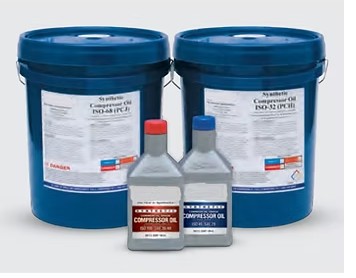
Description
Function of Synthetic Lubricants
The primary purpose of compressor lubricant is to provide a stable lubricating film between moving surfaces.
Depending on the application, synthetic lubricants can help to:
- Reduce friction between moving components
- Minimize mechanical wear
- Remove heat from lubricated components
- Protect against corrosion
- Reduce oxidation-related degradation
- Maintain lubrication performance over the operating temperature range
- Support smooth bearing and gear operation
- Reduce deposits and varnish formation where the formulation is suitable
- Extend lubricant service intervals where permitted by the equipment manufacturer
The actual benefits depend on the lubricant formulation and compressor operating conditions.
Applications in Centrifugal Compressors
Synthetic lubricants may be used in different parts of a centrifugal compressor system, depending on the original equipment design.
Typical applications can include:
Bearing Lubrication
Lubricant is supplied to radial, journal, thrust, or other bearings to reduce friction and remove heat.
Gear Lubrication
In geared centrifugal compressors, the lubricant may be used to lubricate bullgears, pinions, and other gear components.
Drive and Auxiliary Systems
Certain compressor packages may use synthetic lubricants in associated gearboxes or auxiliary mechanical systems.
The lubricant must be approved for the specific component and lubrication system.
Advantages of Synthetic Lubricants
Compared with conventional mineral-based lubricants, appropriately formulated synthetic lubricants can provide specific performance advantages in demanding applications.
Potential benefits include:
- Improved thermal stability
- Good oxidation resistance
- Consistent viscosity over a broader temperature range
- Reduced deposit formation with suitable formulations
- Good low-temperature flow characteristics
- Potentially longer oil service life
- Reduced volatility in suitable applications
- Reliable lubrication under demanding operating conditions
These characteristics vary significantly between synthetic base oils and finished lubricant formulations.
Synthetic Lubricant Base Types
Synthetic lubricants can be formulated using different base-fluid technologies.
Depending on the product specification, these may include:
- PAO-based lubricants
- Synthetic hydrocarbon formulations
- Ester-based lubricants
- Other engineered synthetic base fluids
- Blended synthetic formulations
The correct base fluid depends on the compressor manufacturer’s requirements, seal materials, operating conditions, additive compatibility, and lubrication-system design.
Lubricant Viscosity
Viscosity is one of the most important lubricant-selection parameters.
The correct viscosity must provide an appropriate lubricating film at the operating temperature and speed of the compressor.
Important considerations include:
- Operating oil temperature
- Bearing speed
- Gear loading
- Bearing design
- Oil circulation rate
- Ambient temperature
- Compressor manufacturer’s specified viscosity grade
Using a lubricant with an unsuitable viscosity can affect lubrication performance, heat generation, oil circulation, and component life.
Thermal Stability
Centrifugal compressor lubrication systems can operate continuously under demanding thermal conditions.
A suitable lubricant should maintain its required properties throughout the specified operating-temperature range.
Thermal degradation can result in:
- Oxidation
- Varnish formation
- Deposits
- Increased viscosity
- Reduced lubrication performance
- Filter contamination
Oil temperature should therefore be monitored as part of the compressor lubrication-system maintenance program.
Oxidation Resistance
Lubricating oil is exposed to oxygen and elevated temperatures during operation. Oxidation can gradually change the lubricant’s physical and chemical properties.
A lubricant with appropriate oxidation stability can help reduce degradation under the conditions for which it was formulated.
However, oil life also depends on:
- Operating temperature
- Contamination
- Moisture
- Air exposure
- Compressor loading
- Oil cleanliness
- Reservoir conditions
- Oil-circulation system design
Lubricant Cleanliness
Clean lubricant is essential for high-speed compressor bearings and gears.
Contaminants may include:
- Dust
- Metallic particles
- Water
- Process contamination
- Degraded lubricant
- Foreign particles
Contaminated lubricant can accelerate wear and damage precision components.
Appropriate filtration and regular oil-condition monitoring are therefore important.
Synthetic Lubricants and Compressor Bearings
Bearings in centrifugal compressors operate at high speeds and may be sensitive to lubricant viscosity, cleanliness, temperature, and flow.
A suitable lubricant helps maintain the required oil film between the bearing surfaces.
For bearing lubrication, important factors include:
- Oil viscosity
- Oil supply pressure
- Oil temperature
- Oil flow
- Bearing type
- Shaft speed
- Bearing loading
- Lubricant cleanliness
The lubricant grade must be selected according to the bearing and compressor manufacturer’s requirements.
Synthetic Lubricants for Gear Systems
Geared centrifugal compressors may require specialized lubrication for bullgears and pinions.
Gear lubrication requirements can differ from bearing lubrication requirements because gear teeth experience:
- Sliding
- Rolling
- Surface contact
- Cyclic loading
- Heat generation
Where the compressor uses a common lubrication system, the lubricant must satisfy the requirements of all components served by that system.
Lubricant Compatibility
Before changing lubricant type or brand, compatibility should be evaluated.
Important considerations include:
- Base-oil chemistry
- Additive system
- Seal and gasket materials
- Existing lubricant
- Flushing requirements
- Filter compatibility
- Operating temperature
- Manufacturer approval
Different lubricant formulations should not be mixed unless compatibility has been confirmed.
Common Lubricant Problems
Lubricant-related problems may include:
- Excessive oil temperature
- Oil oxidation
- Varnish or deposit formation
- Contamination
- Water ingress
- Incorrect viscosity
- Foaming
- Oil discoloration
- Reduced oil pressure
- Filter loading
- Increased bearing temperature
- Abnormal gear wear
These symptoms can also result from mechanical or lubrication-system problems, so proper diagnosis is important.
Lubricant Maintenance
Regular lubricant monitoring helps maintain compressor reliability.
Maintenance activities may include:
- Checking oil level
- Monitoring oil temperature
- Checking oil pressure
- Inspecting oil appearance
- Monitoring oil cleanliness
- Checking filter condition
- Sampling lubricant for analysis
- Monitoring viscosity
- Checking for water contamination
- Monitoring oxidation or degradation indicators
- Replacing lubricant according to the approved maintenance program
Oil-change intervals should be determined according to the compressor manufacturer’s recommendations, lubricant condition, and operating environment.
Oil Analysis
Periodic oil analysis can provide useful information about lubricant condition and equipment wear.
Depending on the maintenance program, analysis may evaluate:
- Viscosity
- Water content
- Particle contamination
- Oxidation
- Acid number
- Additive condition
- Wear metals
- Other lubricant-condition indicators
Trend analysis can help identify changes in lubricant condition over time.
Storage and Handling
Synthetic lubricants should be stored and handled according to the lubricant manufacturer’s instructions.
Recommended practices generally include:
- Keeping containers sealed
- Protecting lubricant from water contamination
- Avoiding excessive heat
- Keeping storage areas clean
- Using clean transfer equipment
- Preventing cross-contamination
- Clearly identifying lubricant grades
- Following appropriate first-in/first-out inventory practices
The lubricant container should be checked for product grade and specification before filling the compressor system.
Replacement and Lubricant Selection
A replacement lubricant should not be selected solely because it has the same viscosity grade as the existing oil.
Important selection parameters include:
- Compressor manufacturer
- Compressor model
- Compressor serial number
- Existing lubricant specification
- Approved lubricant grade
- Base-oil type
- Viscosity grade
- Operating temperature
- Bearing type
- Gear arrangement
- Lubrication-system design
- Oil circulation method
- Seal and gasket compatibility
- Oil-change requirements
- Manufacturer approval
Where available, the existing lubricant’s product name, technical data sheet, compressor manual, and oil-analysis report can assist with correct selection.
Synthetic Lubricant Selection Specifications
| Parameter | Requirement |
|---|---|
| Product | Synthetic Petroleum Lubricant |
| Equipment | Centrifugal Air Compressor |
| Compressor Make | As per equipment |
| Compressor Model | As per equipment |
| Application | Bearings / Gears / Auxiliary System |
| Base Oil | PAO / Synthetic Hydrocarbon / Ester / As specified |
| Viscosity Grade | As specified |
| Operating Temperature | As per application |
| Lubrication Method | Circulating / Bath / As applicable |
| Oil Flow | As per lubrication-system requirement |
| Oil Pressure | As specified |
| Oxidation Stability | As required |
| Thermal Stability | As required |
| Additive System | As specified |
| Seal Compatibility | As required |
| Filter Compatibility | As required |
| Manufacturer Approval | As applicable |
| Packaging | As required |
| Application | Compressor lubrication |
Why Choose Aegis Projects?
Aegis Projects Technology provides industrial compressor spare parts, lubricants, and lubrication-system components for centrifugal air compressor applications.
Our synthetic lubricant solutions can be evaluated according to the compressor manufacturer’s approved lubricant requirements, viscosity grade, operating conditions, bearing and gear configuration, and lubrication-system design.
We support requirements for:
- Synthetic compressor lubricants
- Bearing lubricants
- Gear lubricants
- Circulating oils
- High-temperature compressor lubricants
- Long-life synthetic lubricants
- Compressor lubrication-system requirements
- Replacement lubricant supplies
- Lubrication-system maintenance requirements
For accurate lubricant selection, share the compressor make, model, existing lubricant grade or product name, lubrication-system details, operating temperature, bearing/gear arrangement, and manufacturer specification wherever available.
Request a Quote
Looking for synthetic petroleum lubricants for a centrifugal air compressor?
Contact Aegis Projects Technology Pvt. Ltd. with your compressor and lubricant requirements. Our team can assist with identifying a suitable lubricant grade or equivalent product based on the compressor manufacturer’s specifications and operating conditions.