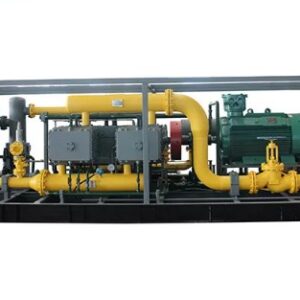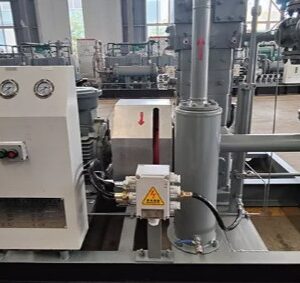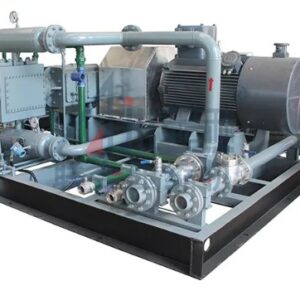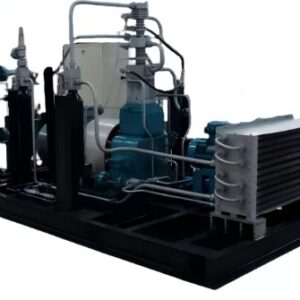
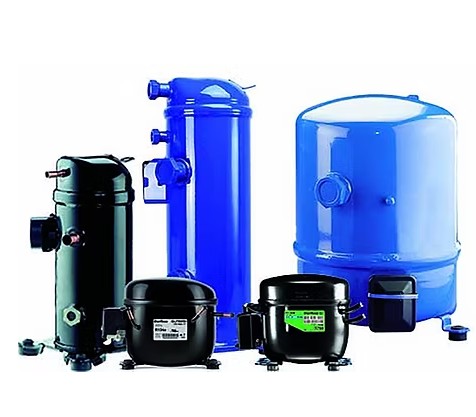
Description
Functions of a Refrigeration Compressor
A refrigeration compressor performs several critical functions:
- Compresses low-pressure refrigerant vapor
- Maintains refrigerant circulation
- Creates the pressure difference required for the refrigeration cycle
- Draws refrigerant vapor from the evaporator
- Delivers compressed refrigerant to the condenser
- Supports continuous refrigeration operation
- Helps maintain required evaporating and condensing conditions
- Responds to changing refrigeration loads depending on the control system
- Supports temperature control in refrigerated spaces and processes
The compressor must be selected according to the refrigerant, cooling capacity, operating conditions, application, and system design.
How a Refrigeration Compressor Works
The compressor receives low-pressure refrigerant vapor from the evaporator through the suction line.
The refrigerant vapor enters the compressor, where mechanical compression increases its pressure and temperature. The compressed vapor then leaves through the discharge line and travels toward the condenser.
The basic refrigeration compression cycle can be represented as:
Evaporator → Suction Line → Compressor → Discharge Line → Condenser
After condensation and expansion, the refrigerant returns to the evaporator and the cycle continues.
Types of Refrigeration Compressors
Refrigeration compressors are available in different mechanical configurations depending on the required capacity, operating conditions, and application.
1. Reciprocating Compressors
Reciprocating compressors use pistons moving inside cylinders to compress refrigerant vapor.
They are widely used in commercial and industrial refrigeration applications and can be supplied in different cylinder configurations and capacities.
2. Scroll Compressors
Scroll compressors use two intermeshing scroll elements to compress refrigerant continuously.
They are commonly used in refrigeration, air-conditioning, heat-pump, and smaller commercial applications where their compact design is suitable.
3. Screw Compressors
Screw compressors use rotating screw elements to compress refrigerant vapor.
They are commonly used for larger industrial refrigeration and process-cooling applications where continuous compression and higher capacities are required.
4. Semi-Hermetic Compressors
Semi-hermetic compressors combine the compressor and motor within a serviceable housing.
Their construction allows access to internal components for inspection and repair, depending on the specific design.
5. Hermetic Compressors
Hermetic compressors enclose the compressor and motor within a sealed housing.
They are commonly used in refrigeration equipment where a compact, sealed compressor arrangement is required.
6. Rotary Compressors
Rotary compressor designs use rotating compression elements and are used in selected refrigeration and HVAC-R applications according to capacity and system requirements.
Main Components of a Refrigeration Compressor
The internal components depend on the compressor type.
Typical components may include:
- Compressor housing
- Electric motor
- Crankshaft or rotor
- Pistons and cylinders
- Bearings
- Connecting rods
- Valves
- Suction and discharge ports
- Oil pump or lubrication system
- Oil sump
- Seals
- Gaskets
- Terminal assembly
- Motor protection components
- Internal pressure and temperature protection components
Not every compressor contains all of these components. Construction varies according to the compressor design.
Refrigerant Compatibility
Refrigeration compressors must be compatible with the refrigerant used in the system.
Depending on the compressor model, applications may involve refrigerants such as:
- HFC refrigerants
- HFO refrigerants
- Hydrocarbon refrigerants where specifically approved
- CO₂ refrigerant systems where the compressor is designed for CO₂ operation
- Other refrigerants specified by the compressor manufacturer
Refrigerant compatibility must always be confirmed from the compressor manufacturer’s specifications before installation.
The compressor must also be compatible with the refrigeration oil and operating pressure range associated with the selected refrigerant.
Refrigeration Compressor Applications
Refrigeration compressors are used in:
- Commercial refrigeration
- Industrial refrigeration
- Cold rooms
- Cold storage facilities
- Freezer rooms
- Supermarket refrigeration
- Refrigerated display cabinets
- Food and beverage refrigeration
- Pharmaceutical storage
- Process cooling
- Chillers
- HVAC-R systems
- Ice-making equipment
- Industrial cooling plants
- Temperature-controlled warehouses
- Cold-chain applications
Compressor Capacity and Operating Conditions
Compressor selection should consider the complete refrigeration system rather than compressor capacity alone.
Important operating parameters include:
- Required refrigeration capacity
- Refrigerant type
- Evaporating temperature
- Condensing temperature
- Suction pressure
- Discharge pressure
- Suction gas temperature
- Refrigerant mass flow
- Compressor displacement
- Motor power
- Operating frequency
- Ambient conditions
- Cooling method
- Lubrication requirements
The actual refrigeration capacity of a compressor varies with the refrigerant and operating conditions.
Compressor Lubrication
Lubrication is important for compressors containing moving mechanical components.
Compressor oil can provide:
- Lubrication of moving components
- Reduction of friction and wear
- Heat transfer from internal components
- Support for sealing between moving surfaces
- Protection against corrosion where applicable
The correct oil type and viscosity must be compatible with the compressor, refrigerant, operating temperature, and manufacturer requirements.
Common Refrigeration Compressor Problems
Compressor problems can affect the entire refrigeration system.
Common symptoms include:
- Compressor not starting
- Excessive electrical current
- Abnormal noise or vibration
- High discharge temperature
- Low refrigeration capacity
- Excessive suction pressure
- Low suction pressure
- High discharge pressure
- Oil circulation problems
- Insufficient lubrication
- Motor overheating
- Repeated thermal protection trips
- Refrigerant leakage
- Mechanical wear
- Valve damage
- Bearing wear
- Internal compressor damage
The cause of a compressor problem should be identified before replacing the compressor, as refrigeration-system faults can produce similar symptoms.
Compressor Inspection and Maintenance
Routine inspection can help identify developing problems before major failure occurs.
Depending on the compressor type and system, checks may include:
- Suction and discharge pressures
- Suction and discharge temperatures
- Compressor current
- Motor winding condition
- Oil level
- Oil condition
- Vibration
- Operating noise
- Refrigerant charge
- Electrical connections
- Terminal condition
- System superheat
- Condenser performance
- Evaporator performance
- Safety-control operation
Maintenance procedures should follow the compressor manufacturer’s instructions and the requirements of the refrigeration system.
Installation Considerations
Correct compressor installation is important for reliable operation.
Consider the following:
- Confirm refrigerant compatibility.
- Confirm compressor capacity and operating envelope.
- Verify voltage and frequency.
- Check motor electrical requirements.
- Confirm oil type and quantity where applicable.
- Ensure correct suction and discharge connections.
- Follow the specified installation orientation.
- Use suitable vibration isolation where required.
- Prevent contaminants from entering the refrigeration circuit.
- Perform appropriate leak testing.
- Confirm electrical protection.
- Check system evacuation before charging refrigerant.
- Verify operating pressures and temperatures during commissioning.
Refrigeration Compressor Selection
The correct compressor should be selected according to the refrigeration load and complete operating conditions.
| Specification | Requirement |
|---|---|
| Application | Commercial / Industrial / Cold Storage / Chiller / Process Cooling |
| Compressor Type | Reciprocating / Scroll / Screw / Hermetic / Semi-Hermetic / Other |
| Refrigerant | Application Specific |
| Refrigeration Capacity | According to System Load |
| Evaporating Temperature | Application Specific |
| Condensing Temperature | Application Specific |
| Suction Pressure | According to Operating Conditions |
| Discharge Pressure | According to Operating Conditions |
| Compressor Displacement | Model Specific |
| Motor Power | Model Specific |
| Voltage | According to Electrical Supply |
| Frequency | 50 / 60 Hz or Application Specific |
| Phase | Single / Three Phase / Application Specific |
| Lubricant | Manufacturer Specified |
| Cooling Method | Application Specific |
| Suction Connection | According to Model |
| Discharge Connection | According to Model |
| Oil Charge | According to Manufacturer |
| Starting Method | According to Compressor Design |
| Operating Envelope | Must Match Application |
| Manufacturer / Part Number | As Required |
Replacement Considerations
When replacing a refrigeration compressor, the replacement should not be selected solely by horsepower or physical dimensions.
The following should be verified:
- Original compressor model
- Refrigerant
- Required refrigeration capacity
- Evaporating temperature
- Condensing temperature
- Compressor type
- Motor voltage
- Frequency
- Phase
- Oil type
- Oil quantity
- Suction and discharge connections
- Operating envelope
- Cooling method
- Starting arrangement
- Controller compatibility
- Physical dimensions
- Mounting configuration
A compressor that has the same nominal motor power may not provide the same refrigeration capacity under the required operating conditions.
Compressor Failure and System Investigation
When a compressor fails, replacing the compressor without investigating the cause can lead to repeated failure.
The refrigeration system should be checked for possible contributing conditions such as:
- Incorrect refrigerant charge
- Liquid refrigerant return
- Excessive discharge temperature
- Insufficient lubrication
- Contaminated refrigerant circuit
- Moisture
- Blocked filter drier
- Restricted expansion device
- Condenser airflow problems
- Evaporator airflow problems
- Incorrect pressure controls
- Electrical supply problems
- Incorrect compressor selection
The appropriate corrective action depends on the actual cause identified during system inspection.
Refrigeration Compressor Supplier – Aegis Projects
Aegis Projects Technology Pvt. Ltd. supplies refrigeration compressors and refrigeration system components for commercial, industrial, and process-cooling applications.
Our refrigeration range includes refrigeration compressors, electronic expansion valves, thermostatic expansion valves, solenoid valves, pressure switches, temperature sensors, evaporator controllers, filter driers, sight glasses, heat exchangers, check valves, and other refrigeration spare parts.
Refrigeration compressors can be selected according to the refrigerant, cooling capacity, evaporating and condensing conditions, electrical requirements, compressor type, lubrication requirements, and complete system operating conditions.
Contact Aegis Projects for refrigeration compressors and compatible refrigeration components for your application.