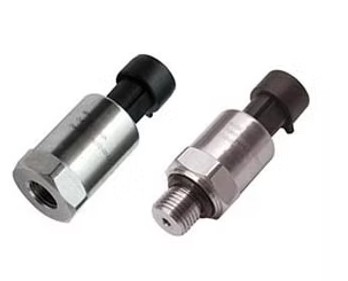
Description
Function of Pressure Transmitters
A pressure transmitter converts the pressure applied to its sensing element into a standardized electrical output signal.
Depending on its installation point, a pressure transmitter may be used to:
- Measure compressor suction pressure
- Measure compressor discharge pressure
- Monitor lubrication-oil pressure
- Monitor cooling-system pressure
- Monitor filter differential pressure where applicable
- Monitor control-air pressure
- Provide pressure feedback to the compressor controller
- Generate high- and low-pressure alarms
- Support compressor protection interlocks
- Provide pressure data to PLC, DCS, or SCADA systems
The exact measurement points depend on the compressor design and control philosophy.
How a Pressure Transmitter Works
A pressure transmitter contains a pressure-sensitive sensing element that responds to the pressure of the measured medium.
The sensing element detects changes in pressure and the transmitter’s electronics convert this measurement into a standardized electrical signal.
Common industrial output signals include:
- 4–20 mA
- 4–20 mA with HART communication
- Other digital communication protocols where specified
The control system receives this signal and converts it into a pressure value for display, monitoring, control, alarms, and protective functions.
Pressure Transmitter Applications in Centrifugal Compressors
Pressure transmitters may be installed at several points within a centrifugal compressor package.
Suction Pressure Measurement
Measures the pressure at the compressor inlet and can provide information required for compressor monitoring and capacity-control functions.
Discharge Pressure Measurement
Measures compressor outlet pressure and can be used for system monitoring, pressure control, and protective functions.
Lubrication Oil Pressure
Pressure transmitters or pressure instruments may monitor oil pressure supplied to bearings and other lubricated components.
Cooling-System Pressure
Transmitters may be used to monitor cooling-water, cooling-air, or other auxiliary-system pressure where required.
Filter and Separator Monitoring
Pressure measurement may be used to identify restrictions or operating changes across filters, separators, or other components when the system is designed for such monitoring.
Types of Pressure Measurement
Pressure transmitters can be configured for different pressure measurement requirements.
Gauge Pressure Transmitters
Gauge pressure transmitters measure pressure relative to atmospheric pressure.
Absolute Pressure Transmitters
Absolute pressure transmitters measure pressure relative to an absolute vacuum reference and may be used where absolute pressure measurement is required.
Differential Pressure Transmitters
Differential pressure transmitters measure the difference between two pressure points. They can be used for applications such as filter monitoring, flow measurement, or other differential-pressure measurements.
The correct measurement type must be selected according to the compressor application.
Main Components
A typical pressure transmitter assembly may include:
- Pressure sensing element
- Sensor diaphragm
- Process connection
- Electronic signal-processing circuit
- Transmitter housing
- Terminal or electrical connection
- Output electronics
- Calibration mechanism
- Display where applicable
- Mounting accessories
The actual construction varies according to transmitter design and application.
Pressure Range
The pressure range must be selected according to the expected operating pressure at the measurement point.
Important considerations include:
- Normal operating pressure
- Minimum operating pressure
- Maximum operating pressure
- Pressure fluctuations
- Overpressure conditions
- Required measurement accuracy
Selecting a range that is unsuitable for the application can affect measurement accuracy or transmitter reliability.
Output Signals and Communication
Pressure transmitters used in industrial compressor systems commonly provide standardized signals for integration with control systems.
Possible outputs include:
- 4–20 mA
- 4–20 mA with HART
- Digital communication
- Other manufacturer-specific interfaces
The output must be compatible with the compressor PLC, DCS, monitoring system, or instrumentation architecture.
Process Connections
Pressure transmitters can be supplied with different process connections depending on the existing compressor instrumentation arrangement.
Possible connections include:
- Threaded connections
- Metric threaded connections
- NPT connections
- BSP connections
- Flanged connections
- Application-specific connections
The connection type, size, material, and sealing arrangement should match the existing installation.
Materials and Wetted Parts
The material of the pressure-sensing and wetted components must be compatible with the measured medium.
Depending on the application, materials may include:
- Stainless steel
- Alloy materials
- Industrial elastomers
- Other manufacturer-specified materials
Material selection depends on the measured fluid, pressure, temperature, corrosion conditions, and installation environment.
Importance of Pressure Transmitter Accuracy
Accurate pressure measurement is important because compressor control and protection functions may depend on transmitter signals.
Incorrect pressure readings can result from:
- Sensor drift
- Incorrect calibration
- Electrical faults
- Damaged sensing elements
- Process-line blockage
- Leakage
- Incorrect pressure range
- Signal wiring problems
- Temperature effects
- Installation problems
A transmitter showing an incorrect pressure value can therefore affect both monitoring and automatic compressor-control functions.
Common Pressure Transmitter Problems
Common issues encountered during service include:
- No output signal
- Incorrect pressure reading
- Signal fluctuation
- Measurement drift
- Zero offset
- Slow response
- Electrical connection failure
- Sensor damage
- Process connection leakage
- Blocked impulse line
- Moisture ingress
- Corrosion
- Incorrect calibration
- Communication failure
Troubleshooting should consider both the transmitter and the associated process connection, wiring, power supply, and control-system input.
Pressure Transmitter Maintenance
Pressure transmitters generally require less mechanical maintenance than moving compressor components, but their measurement accuracy and connections should be periodically checked.
Maintenance activities may include:
- Checking the displayed pressure
- Comparing readings with a calibrated reference instrument
- Inspecting electrical connections
- Checking process connections for leakage
- Inspecting impulse lines where applicable
- Checking for blockage
- Verifying transmitter output
- Checking calibration
- Inspecting transmitter housing
- Checking cable glands and wiring
- Testing alarms and interlocks associated with the transmitter
Calibration intervals should be established according to the application, instrumentation requirements, and compressor manufacturer’s recommendations.
Calibration and Verification
Calibration verifies that the transmitter output corresponds correctly to the applied pressure.
A typical verification may involve applying known pressure points across the transmitter’s operating range and checking the resulting output signal.
Important calibration points may include:
- Zero
- Low-range point
- Mid-range point
- High-range point
Calibration procedures should use appropriate certified reference equipment and follow the applicable instrumentation procedure.
Pressure Transmitter Failure Causes
Sensor Damage
Excessive pressure, contamination, vibration, or unsuitable process conditions can damage the sensing element.
Electrical Problems
Incorrect supply voltage, damaged cables, loose terminals, or grounding problems can affect the output.
Process Connection Blockage
A blocked pressure connection or impulse line can prevent the transmitter from accurately sensing the actual system pressure.
Calibration Drift
Long-term operation and environmental conditions can cause measurement drift.
Incorrect Selection
An unsuitable pressure range, connection, material, or output configuration can cause unreliable operation.
Replacement of Pressure Transmitters
A replacement pressure transmitter should be matched to the original measurement application and control-system requirements.
Important selection parameters include:
- Compressor manufacturer
- Compressor model
- Compressor serial number
- Measurement location
- Pressure type
- Pressure range
- Overpressure rating
- Accuracy
- Output signal
- Communication protocol
- Process connection
- Electrical connection
- Wetted-part material
- Operating temperature
- Ambient temperature
- Power supply
- Display requirement
- Hazardous-area certification where applicable
The replacement transmitter must also be compatible with the compressor’s PLC, DCS, or instrumentation system.
Applications
Pressure transmitters are used in centrifugal compressor systems across industries including:
- Manufacturing plants
- Steel plants
- Cement plants
- Power plants
- Chemical industries
- Petrochemical facilities
- Refineries
- Pharmaceutical manufacturing
- Food and beverage industries
- Automotive manufacturing
- Textile industries
- Process industries
- Industrial compressed-air plants
Pressure Transmitter Selection Specifications
| Parameter | Requirement |
|---|---|
| Component | Pressure Transmitter |
| Equipment | Centrifugal Air Compressor |
| Compressor Make | As per equipment |
| Compressor Model | As per equipment |
| Measurement Point | Suction / Discharge / Oil / Cooling / Other |
| Pressure Type | Gauge / Absolute / Differential |
| Pressure Range | As per application |
| Overpressure Rating | As specified |
| Accuracy | As required |
| Output Signal | 4–20 mA / HART / Other |
| Communication | As applicable |
| Process Connection | Threaded / Flanged / As specified |
| Electrical Connection | As specified |
| Wetted Material | As required |
| Power Supply | As specified |
| Operating Temperature | As per application |
| Ambient Temperature | As specified |
| Display | With / Without display |
| Certification | As required |
| Application | Pressure measurement and compressor control |
Why Choose Aegis Projects?
Aegis Projects Technology provides industrial compressor spare parts and instrumentation components for centrifugal air compressor systems.
Our pressure transmitter solutions can be evaluated according to the compressor’s measurement requirements, pressure range, control-system interface, process connection, environmental conditions, and existing instrumentation configuration.
We support requirements for:
- Compressor suction pressure transmitters
- Compressor discharge pressure transmitters
- Oil pressure transmitters
- Cooling-system pressure transmitters
- Differential pressure transmitters
- Replacement instrumentation
- Pressure measurement accessories
- Compressor control-system instrumentation
- Replacement and retrofit requirements
For accurate selection, share the compressor make, model, serial number, existing transmitter nameplate, pressure range, output signal, process connection, photographs, or instrumentation details wherever available.
Request a Quote
Looking for a pressure transmitter for a centrifugal air compressor?
Contact Aegis Projects Technology Pvt. Ltd. with your compressor and instrumentation details. Our team can assist with identifying a suitable replacement pressure transmitter for your compressor monitoring and control system.