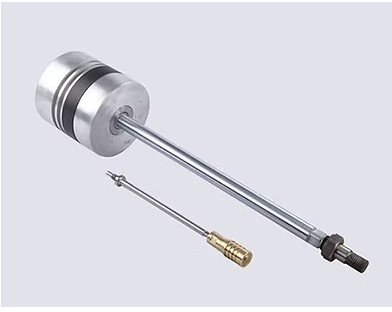
Description
What Is a Piston Rod?
A piston rod is the mechanical link between the compressor’s piston and crosshead assembly.
During compressor operation, the crankshaft and connecting rod convert rotary motion into reciprocating motion. This movement is transferred through the crosshead and piston rod to the piston.
The piston rod therefore experiences repeated:
- Tensile loads
- Compressive loads
- Bending loads
- Reciprocating forces
- Packing friction
- Temperature exposure
- Gas-side pressure effects
The rod must maintain accurate alignment and surface condition throughout its operating life.
Key Functions of a Piston Rod
1. Transfers Reciprocating Motion
The piston rod transfers movement from the crosshead to the piston, enabling the piston to complete the compression cycle.
2. Transmits Compression Forces
It transfers the mechanical forces required to compress the working gas inside the cylinder.
3. Maintains Piston Alignment
Proper piston rod geometry and alignment help maintain the correct position of the piston within the cylinder.
4. Works with the Packing System
The piston rod passes through the cylinder packing arrangement in many reciprocating compressor designs. Its surface finish and dimensional accuracy are therefore important for controlling leakage and minimizing packing wear.
5. Supports Reliable Compressor Operation
A correctly manufactured and installed piston rod contributes to stable compressor operation and helps reduce abnormal wear of connected components.
Piston Rod Construction
Piston rods are precision-engineered according to the compressor’s mechanical and process requirements.
Important characteristics may include:
- Correct rod diameter
- Accurate overall length
- Controlled dimensional tolerances
- Suitable surface finish
- Correct connection geometry
- Proper thread or fastening arrangement
- Accurate alignment
- Appropriate material selection
- Suitable hardness and wear characteristics where required
The exact construction depends on the compressor manufacturer, model, cylinder design, pressure rating, and application.
Piston Rod Surface Finish
The section of the piston rod operating through the packing system requires a carefully controlled surface finish.
An unsuitable or damaged rod surface can contribute to:
- Increased packing wear
- Excessive gas leakage
- Increased friction
- Rod scoring
- Packing temperature rise
- Premature component failure
During compressor overhaul, the piston rod should therefore be inspected for scoring, wear, corrosion, bending, surface damage, and dimensional deviations.
Piston Rod Materials
Material selection depends on the compressor design and operating environment.
Factors considered include:
- Gas composition
- Suction and discharge pressure
- Operating temperature
- Compressor speed
- Cylinder configuration
- Lubrication arrangement
- Packing arrangement
- Corrosion requirements
- Fatigue loading
- Surface treatment requirements
Suitable alloy steels and other engineered materials may be used according to the original compressor specification.
For critical applications involving natural gas, hydrogen, CNG, corrosive process gases, or high-pressure compression, material compatibility and engineering requirements should be confirmed before replacement.
Piston Rod and Packing System
The piston rod operates closely with the compressor packing system.
A typical arrangement may include:
Cylinder → Packing Case → Packing Rings → Piston Rod → Crosshead
The packing system helps limit the escape of compressed gas along the piston rod as it passes between the cylinder and crankcase side of the compressor.
The piston rod therefore needs to provide the required:
- Diameter
- Straightness
- Surface finish
- Hardness, where specified
- Concentricity
- Alignment
Incorrect piston rod dimensions can negatively affect packing performance and may result in increased leakage or premature packing wear.
Piston Rod Inspection
During maintenance or compressor overhaul, the piston rod can be inspected for:
- Surface scoring
- Scratches
- Pitting
- Corrosion
- Wear
- Bending
- Cracks
- Thread damage
- Excessive diameter reduction
- Surface finish deterioration
- Misalignment
- Abnormal contact marks
Where required, dimensional inspection and appropriate non-destructive examination should be carried out according to the compressor manufacturer’s maintenance requirements and applicable inspection procedures.
Applications
Aegis Projects can support piston rod requirements for various reciprocating compressor systems, including:
Natural Gas Compressors
Used in natural gas gathering, transportation, boosting, storage, processing, and distribution systems.
CNG Compressors
Suitable for reciprocating compressor systems used in CNG compression, refueling, storage, transfer, and high-pressure gas applications.
Hydrogen Compressors
For hydrogen compression applications where appropriate materials, sealing arrangements, and compressor design requirements are satisfied.
Industrial Air Compressors
Used in reciprocating compressed-air systems across industrial and manufacturing facilities.
Process Gas Compressors
For chemical, petrochemical, refinery, and industrial process gas applications.
Oil & Gas Compressors
Used in upstream, midstream, and downstream gas compression systems.
Piston Rod Replacement
Piston rod replacement may be required when the existing component has reached its allowable wear limit or has suffered mechanical or surface damage.
Common reasons for replacement include:
- Excessive rod wear
- Deep scoring
- Corrosion
- Bending
- Cracking
- Damaged threads
- Incorrect rod dimensions
- Excessive packing leakage
- Surface finish deterioration
- Damage caused by misalignment
- Compressor overhaul requirements
The replacement piston rod should match the original component’s dimensional and mechanical requirements.
Piston Rod Selection Information
For accurate identification and replacement, the following information is recommended:
| Parameter | Required Information |
|---|---|
| Compressor Make | Manufacturer / Brand |
| Compressor Model | Exact model |
| Serial Number | Compressor serial number |
| Part Number | Existing piston rod part number |
| Cylinder Number | Applicable cylinder / stage |
| Rod Diameter | Existing rod diameter |
| Overall Length | Total rod length |
| Stroke | Compressor stroke |
| Gas | Working medium |
| Suction Pressure | Operating suction pressure |
| Discharge Pressure | Operating discharge pressure |
| Operating Temperature | Relevant temperature |
| Compressor Speed | RPM |
| Piston Type | Single / double acting as applicable |
| Packing Type | Packing arrangement |
| Crosshead Connection | Connection configuration |
| Piston Connection | Piston-end configuration |
| Material | Existing material specification, if available |
| Drawing | Original drawing, if available |
Providing the compressor make, model, serial number, existing part number, photographs, and dimensions can significantly assist in identifying the correct replacement piston rod.
Piston Rods for Oil-Free Compressors
Oil-free reciprocating compressors require particular attention to piston rod and packing compatibility because cylinder lubrication may be limited or absent.
For these applications, piston rod selection should consider:
- Packing material
- Rod surface finish
- Rod hardness
- Gas composition
- Operating pressure
- Temperature
- Compressor speed
- Required leakage control
- Manufacturer’s original specifications
This is particularly important for applications involving CNG, natural gas, hydrogen, and other high-pressure gases.
Industries Served
Piston rods are used in reciprocating compressor systems across:
- Oil & Gas
- Natural Gas
- CNG
- Hydrogen
- Chemical Processing
- Petrochemical
- Refineries
- Power Generation
- Manufacturing
- Gas Processing
- Gas Storage
- Industrial Utilities
- Process Industries
Related Reciprocating Compressor Spare Parts
Aegis Projects can also support associated reciprocating compressor components, including:
- Cylinders
- Pistons
- Piston Rings
- Rider Rings
- Connecting Rods
- Crossheads
- Crankshafts
- Cylinder Valves
- Valve Plates
- Valve Springs
- Packing Rings
- Oil Scraper Rings
- Bearings
- Gaskets
- Seals
- Intercoolers
- Aftercoolers
- Pulsation Dampeners
- Lubrication Components
Aegis Projects – Reciprocating Compressor Spare Parts
Aegis Projects Technology Pvt. Ltd. supplies industrial compressor spare parts and replacement components for reciprocating compressor systems.
Our piston rod replacement support can be based on OEM part numbers, compressor model and serial number, original drawings, existing component dimensions, photographs, samples, and application requirements.
Whether required for a scheduled compressor overhaul, corrective maintenance, breakdown replacement, or spare inventory, piston rods should be selected according to the compressor’s original engineering specifications and actual operating conditions.
Contact Aegis Projects Technology for piston rods, reciprocating compressor spare parts, replacement components, and application-specific technical assistance.