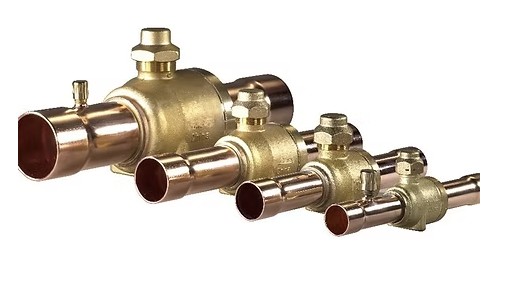
Description
Function of a Hand Shut-Off Valve
A hand shut-off valve provides manual isolation of refrigerant or compatible fluid lines.
Its functions may include:
- Isolating refrigeration-system sections
- Stopping refrigerant flow during maintenance
- Isolating compressors and other components
- Supporting refrigerant recovery and servicing procedures
- Allowing controlled isolation of liquid or suction lines
- Supporting pressure testing and troubleshooting
- Facilitating component replacement
- Providing manual flow control where required by system design
The valve is primarily intended for isolation, rather than automatic refrigerant-flow regulation.
How a Hand Shut-Off Valve Works
A hand shut-off valve uses a manually operated stem or handle to move an internal valve element between open and closed positions.
Valve Open
The internal passage is opened, allowing refrigerant to flow through the valve.
Valve Closed
The valve element closes against its seat, restricting or stopping flow through the designated circuit.
The valve should be operated according to the manufacturer’s specified procedure and operating conditions.
Types of Hand Shut-Off Valves
Hand Shut-Off Valve with Stem
A threaded stem moves the internal valve element when the handwheel is rotated.
Service Shut-Off Valve
Designed to provide isolation and servicing access within refrigeration systems.
Angle Shut-Off Valve
The inlet and outlet are arranged at an angle, which can be useful where piping layout requires directional changes.
Straight-Through Shut-Off Valve
The inlet and outlet are positioned along the same general flow axis.
Packed Stem Valve
Uses packing around the stem to help prevent refrigerant leakage through the stem assembly.
Main Components
Depending on the design, a refrigeration hand shut-off valve may include:
- Valve body
- Handwheel or operating handle
- Valve stem
- Valve seat
- Valve disc or internal sealing element
- Packing
- Bonnet
- Sealing components
- Inlet connection
- Outlet connection
Materials and construction vary according to refrigerant compatibility, pressure rating, temperature range, connection type, and manufacturer specification.
Applications
Hand shut-off valves are commonly used in:
- Commercial refrigeration systems
- Industrial refrigeration plants
- Cold rooms
- Cold storage systems
- Freezers
- Refrigerated display cabinets
- Chillers
- Condensing units
- Food processing refrigeration
- Beverage cooling systems
- Process cooling systems
- HVAC-R systems
- Refrigeration compressor circuits
- Refrigerant liquid lines
- Suction lines
- Discharge lines
- Service and maintenance circuits
Importance of Manual Isolation
Manual shut-off valves provide technicians with a means of isolating specific parts of the refrigeration system.
They can be useful when:
- Replacing a compressor
- Servicing a filter drier
- Replacing a solenoid valve
- Servicing an expansion valve
- Performing pressure testing
- Isolating equipment for maintenance
- Conducting troubleshooting procedures
- Separating sections of a larger refrigeration installation
Proper isolation procedures should always account for refrigerant pressure and applicable safety requirements.
Common Hand Shut-Off Valve Problems
Refrigerant Leakage
Leakage may occur through:
- Valve stem packing
- Body joints
- Connection points
- Sealing surfaces
- Damaged internal components
Valve Difficult to Operate
A stiff or difficult-to-turn valve may be associated with:
- Corrosion
- Contamination
- Mechanical damage
- Excessive tightening
- Deteriorated internal components
- Long periods without operation
Valve Does Not Fully Close
Possible causes include:
- Damaged valve seat
- Internal contamination
- Worn sealing surface
- Mechanical damage
- Incorrect operation
Valve Does Not Fully Open
Restriction can affect system flow and may result from internal damage, contamination, or mechanical problems.
Inspection & Maintenance
Regular inspection can help maintain reliable valve operation.
Recommended checks include:
- Inspect valve body for physical damage
- Check for refrigerant leakage
- Inspect stem and packing area
- Verify smooth handwheel operation
- Check valve connections
- Inspect for corrosion
- Verify the valve reaches the required open and closed positions
- Check sealing surfaces during service
- Replace damaged valves or service components as required
Valves should not be forced beyond their designed operating range.
Installation Considerations
Correct installation is important for reliable operation.
Important considerations include:
- Select a valve compatible with the refrigerant
- Confirm the pressure and temperature ratings
- Match the connection size and type
- Install according to the manufacturer’s flow-direction requirements where applicable
- Avoid excessive mechanical stress on the valve body
- Support adjacent piping properly
- Follow appropriate brazing or connection procedures
- Check the completed installation for leakage
- Operate the valve according to manufacturer instructions
Before servicing an installed refrigeration valve, the relevant section of the system must be safely isolated and depressurized or handled according to the applicable refrigerant-service procedure.
Hand Shut-Off Valve Selection Parameters
| Parameter | Requirement |
|---|---|
| Application | Refrigeration / HVAC-R |
| Valve Type | Hand-operated shut-off valve |
| Refrigerant | System-specific |
| Line Application | Liquid / suction / discharge / service |
| Valve Size | According to piping |
| Connection Type | Flare / solder / brazed / threaded / other |
| Pressure Rating | According to system |
| Temperature Range | Application-specific |
| Flow Direction | As specified |
| Valve Configuration | Straight / angle / other |
| Body Material | As specified |
| Sealing Material | Refrigerant-compatible |
| Stem Arrangement | As applicable |
| Operating Method | Handwheel / handle |
| Manufacturer | As specified |
| Part Number | Required for exact replacement |
Replacement Considerations
When replacing a hand shut-off valve, compatibility should be checked using the original valve information and refrigeration-system requirements.
Important details include:
- Original valve part number
- Refrigeration equipment model
- Refrigerant type
- Line application
- Pipe size
- Connection type
- Pressure rating
- Temperature range
- Valve configuration
- Installation arrangement
- Material and sealing requirements
A replacement valve should not be selected solely based on pipe diameter. The pressure rating, refrigerant compatibility, connection type, and application must also be verified.
Why Choose Aegis Projects?
Aegis Projects Technology supplies hand shut-off valves and refrigeration isolation components for commercial, industrial, cold-storage, and HVAC-R applications.
We can assist with replacement selection based on:
- Original part number
- Refrigeration equipment model
- Refrigerant
- Line application
- Valve size
- Connection type
- Pressure and temperature requirements
- Installation configuration
Contact Aegis Projects Technology for refrigeration hand shut-off valves and other refrigeration spare parts.