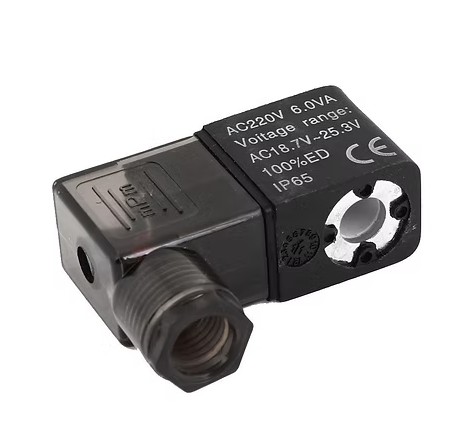
Description
Function of a Solenoid Valve Coil
The coil provides the electromagnetic force required to operate the solenoid valve.
Its main functions include:
- Energizing the solenoid valve
- Creating the magnetic field required for valve actuation
- Controlling refrigerant flow through the associated valve
- Supporting automatic refrigeration-system operation
- Responding to signals from thermostats and controllers
- Interfacing with refrigeration control panels and PLC systems
- Enabling automatic opening or closing of the associated valve
The coil itself does not regulate refrigerant flow. Its primary function is to provide the electromagnetic actuation required by the compatible solenoid valve.
How a Solenoid Coil Works
A solenoid coil consists of an electrical winding around a magnetic core or armature assembly.
When the correct electrical voltage is applied:
Electrical Energy → Magnetic Field → Armature Movement → Solenoid Valve Operation
When the coil is de-energized, the magnetic field disappears and the valve mechanism returns to its normal position according to the valve’s design.
The exact operation depends on whether the associated valve is normally closed, normally open, or another configuration.
Main Components
A refrigeration solenoid valve coil may include:
- Copper electrical winding
- Insulating material
- Magnetic core or armature interface
- Coil housing
- Electrical terminals
- Connector or plug
- Protective encapsulation
- Mounting arrangement
- Identification label or rating information
Construction varies according to the valve manufacturer, coil series, voltage, temperature rating, and application.
Coil Voltage
Correct voltage selection is essential for reliable operation.
Depending on the application, solenoid coils may be available in different electrical configurations, such as:
- AC voltage
- DC voltage
- Different nominal voltage ratings
- Different operating frequencies
The replacement coil must match the electrical requirements of the compatible solenoid valve and control circuit.
Do not select a replacement coil based only on physical appearance. Always verify the voltage, frequency, valve compatibility, and manufacturer’s part number where available.
Types of Solenoid Valve Coils
AC Solenoid Coils
Designed for alternating-current electrical supplies and available in application-specific voltage and frequency configurations.
DC Solenoid Coils
Designed for direct-current control systems and commonly used where the refrigeration controller provides a DC output.
Encapsulated Coils
Encapsulated construction can provide protection for the electrical winding against environmental conditions and mechanical damage.
Detachable Replacement Coils
Some refrigeration solenoid valves use removable coils, allowing the coil to be replaced without replacing the complete valve body, subject to the manufacturer’s service procedure.
Applications
Solenoid valve coils are used with refrigeration systems including:
- Commercial refrigeration
- Industrial refrigeration
- Cold rooms
- Cold storage systems
- Freezers
- Refrigerated display cabinets
- Beverage coolers
- Chillers
- Food processing refrigeration
- HVAC-R systems
- Industrial cooling systems
- Refrigeration pump-down systems
- Defrost control arrangements
- Liquid-line refrigerant control systems
Common Solenoid Coil Problems
Coil Does Not Energize
Possible causes include:
- No electrical supply
- Incorrect voltage
- Broken coil winding
- Loose electrical connection
- Damaged connector
- Faulty controller
- Wiring failure
Coil Overheating
Excessive heating can be associated with:
- Incorrect voltage
- Incorrect coil specification
- Continuous operation outside the rated conditions
- Electrical faults
- Poor heat dissipation
- Improper installation
Valve Does Not Operate Despite Energized Coil
If the coil is receiving the correct electrical supply but the valve does not operate, possible causes can include:
- Damaged or stuck plunger
- Contamination inside the valve
- Incorrect pressure conditions
- Mechanical damage
- Incorrect coil-to-valve compatibility
Intermittent Operation
Intermittent operation may result from:
- Loose electrical connections
- Damaged wiring
- Coil overheating
- Voltage fluctuations
- Controller problems
- Internal coil deterioration
Testing a Solenoid Valve Coil
A coil can be checked as part of refrigeration-system troubleshooting.
Depending on the coil and manufacturer’s procedure, checks may include:
- Verify rated supply voltage
- Inspect electrical terminals
- Check coil resistance
- Check for open circuit
- Check for signs of overheating
- Inspect the coil housing
- Check connector condition
- Verify electrical insulation where appropriate
- Confirm that the coil is receiving the control signal
Resistance measurements alone should not be used to determine complete coil functionality. Electrical testing should be performed using appropriate instruments and procedures.
Inspection & Maintenance
Routine inspection can help identify potential coil failures before they affect refrigeration operation.
Recommended checks include:
- Inspect the coil for discoloration or overheating
- Check electrical connections
- Verify voltage and frequency
- Inspect connectors
- Check coil mounting
- Keep the coil and surrounding area free from excessive contamination
- Check for moisture ingress where applicable
- Verify valve operation
- Replace damaged coils with compatible components
Before replacing or testing a coil, electrical power should be isolated according to applicable safety procedures.
Solenoid Coil Selection Parameters
| Parameter | Requirement |
|---|---|
| Application | Refrigeration / HVAC-R |
| Compatible Valve | Required |
| Valve Series | As specified |
| Coil Type | AC / DC |
| Rated Voltage | As specified |
| Frequency | As specified for AC coils |
| Electrical Power | According to coil specification |
| Connector Type | As required |
| Mounting Arrangement | Valve-specific |
| Temperature Rating | Application-specific |
| Enclosure / Protection | According to application |
| Insulation | According to manufacturer |
| Refrigeration Environment | Required |
| Manufacturer | As specified |
| Coil Part Number | Required for exact replacement |
Replacement Considerations
A replacement solenoid valve coil should be selected by matching the original coil specifications and compatible valve.
Important details include:
- Original coil part number
- Solenoid valve model
- Valve series
- Rated voltage
- AC or DC operation
- Frequency
- Electrical connector
- Coil dimensions
- Mounting arrangement
- Temperature requirements
- Manufacturer specification
A coil that physically fits the valve may still be electrically incompatible. Therefore, voltage, frequency, valve compatibility, and electrical rating should always be verified before installation.
Why Choose Aegis Projects?
Aegis Projects Technology supplies replacement coils for refrigeration solenoid valves for commercial, industrial, cold-storage, and HVAC-R applications.
We can assist with replacement selection based on:
- Solenoid valve model
- Original coil part number
- Voltage
- Frequency
- AC/DC configuration
- Connector type
- Mounting arrangement
- Application requirements
Contact Aegis Projects Technology for solenoid valve coils and other refrigeration spare parts.