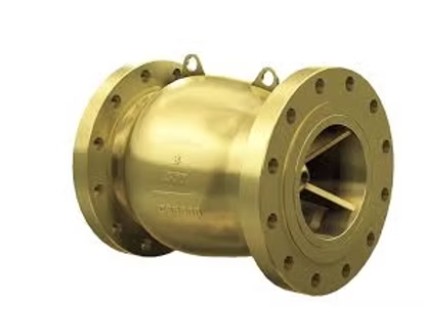
Description
Function of Check Valves
The primary function of a check valve is to allow flow in one direction and restrict flow in the opposite direction.
In centrifugal compressor systems, check valves can help:
- Prevent reverse airflow
- Protect the compressor from backflow
- Maintain intended flow direction
- Protect downstream equipment
- Prevent pressure equalization through unwanted flow paths
- Support compressor shutdown sequences
- Isolate sections of a compressed-air system
- Protect parallel compressor installations
- Reduce the possibility of reverse rotation where applicable
The exact application depends on the compressor package and piping arrangement.
Check Valves in Centrifugal Compressor Systems
Check valves may be installed at different points within a centrifugal compressor installation.
Typical applications can include:
Compressor Discharge
A check valve can be installed downstream of the compressor discharge to help prevent compressed air from flowing back toward the compressor when the compressor is stopped or when downstream pressure becomes higher.
Parallel Compressor Systems
Where multiple compressors operate in parallel, check valves can help prevent compressed air from one operating compressor from flowing back through a compressor that is stopped or unloaded.
Auxiliary Systems
Check valves may also be used in associated air, water, oil, or other auxiliary circuits where reverse flow must be controlled.
Types of Check Valves
Different check valve designs may be selected according to the required flow characteristics and installation conditions.
Swing Check Valves
A hinged disc opens with forward flow and closes when flow reverses.
Lift Check Valves
The valve element moves vertically to permit or restrict flow according to pressure conditions.
Wafer Check Valves
Compact check valves that can be installed between flanges where the piping configuration permits.
Dual Plate Check Valves
These use two independently operating plates and can provide a compact non-return arrangement.
Piston Check Valves
A piston-type closure mechanism controls flow according to pressure differential.
Spring-Loaded Check Valves
A spring assists the valve element in returning to the closed position when forward flow decreases.
The appropriate design should be selected according to the compressor and piping requirements.
Operating Principle
A check valve generally operates automatically through the pressure difference across the valve.
During normal forward flow:
Upstream Pressure → Check Valve → Downstream
The pressure differential moves the valve element away from the seat, allowing flow to pass.
When flow decreases or attempts to reverse:
Downstream Pressure → Check Valve → Upstream
The valve element moves toward the seat, restricting reverse flow.
The exact opening and closing characteristics depend on the valve design.
Check Valve Construction
Depending on the valve type, a check valve may incorporate:
- Valve body
- Disc
- Seat
- Hinge
- Spring
- Piston
- Shaft
- Retainer
- Sealing elements
- Cover or bonnet
- Flanged or wafer connections
The construction is selected according to pressure, temperature, service medium, flow characteristics, and installation requirements.
Valve Materials
Material selection depends on the service medium and operating conditions.
Potential material considerations include:
- Carbon steel
- Stainless steel
- Alloy steel
- Cast materials
- Forged materials
- Engineering materials for seals and seats
The final material should be selected according to the original equipment specification or approved engineering requirements.
Pressure and Temperature Considerations
Check valves must be capable of handling the operating conditions of the compressor system.
Important parameters include:
- Normal operating pressure
- Maximum operating pressure
- Design pressure
- Normal operating temperature
- Maximum temperature
- Pressure differential
- Flow rate
- Pressure drop
- Service medium
Incorrect valve selection can result in leakage, excessive pressure drop, premature wear, or unreliable operation.
Check Valve Pressure Drop
Every check valve introduces some resistance to flow.
For centrifugal compressor applications, the valve should therefore be selected to provide the required non-return function without creating an unacceptable pressure loss.
Selection may consider:
- Valve internal diameter
- Flow velocity
- Valve design
- Pressure differential
- Flow direction
- Valve opening characteristics
- Required compressor discharge pressure
The allowable pressure drop should be established according to the compressor system design.
Check Valve Installation
Correct installation is important for reliable check valve operation.
Installation considerations may include:
- Correct flow direction
- Correct valve orientation
- Suitable pipe alignment
- Proper flange alignment
- Adequate support
- Correct gasket selection
- Appropriate tightening of fasteners
- Accessibility for maintenance
The manufacturer’s installation instructions should be followed for the specific valve design.
Check Valve Maintenance
Check valves generally operate automatically, but periodic inspection may be required in critical compressor systems.
Maintenance can include:
- Inspecting the valve body
- Checking the seat
- Inspecting the disc or piston
- Checking springs where applicable
- Inspecting sealing surfaces
- Checking for leakage
- Removing contamination
- Checking valve movement
- Inspecting connected piping
- Verifying correct flow direction
Inspection intervals should be established according to the operating environment and equipment maintenance program.
Common Check Valve Problems
Potential check valve problems include:
- Reverse leakage
- Valve not closing completely
- Valve sticking
- Damaged seat
- Disc or piston wear
- Broken or weakened spring
- Corrosion
- Foreign-particle obstruction
- Excessive pressure drop
- Mechanical damage
- Incorrect installation
Possible indications of a problem may include:
- Reverse flow
- Pressure loss
- Abnormal pressure behavior
- Unusual valve noise
- Compressor shutdown problems
- Backflow during compressor stoppage
- Increased system instability
The actual cause should be confirmed through inspection.
Check Valves for Compressor Shutdown Protection
When a centrifugal compressor is shut down, downstream pressure may remain higher than compressor discharge pressure.
Without suitable reverse-flow protection, compressed air can potentially flow back toward the compressor.
A properly selected check valve can help restrict this reverse flow and support the intended shutdown and isolation sequence.
For critical compressor installations, the check valve should be considered as part of the overall compressor protection and control philosophy.
Check Valves for Multiple Compressor Installations
Industrial plants may use multiple centrifugal compressors connected to a common compressed-air header.
In such systems, check valves can help prevent:
- Backflow into a stopped compressor
- Reverse flow between compressor packages
- Unwanted pressure equalization
- Flow through an offline compressor
The valve arrangement should be designed according to the plant piping and compressor operating philosophy.
Replacement Check Valves
Aegis Projects can support check valve requirements for:
- Centrifugal compressor maintenance
- Compressor discharge systems
- Compressor overhaul
- Non-return valve replacement
- Planned shutdowns
- Compressor package refurbishment
- Parallel compressor systems
- Piping modifications
- Retrofit applications
Replacement valves should match the required dimensions, pressure rating, flow capacity, connection type, and service conditions.
Check Valve Selection Parameters
| Selection Parameter | Requirement |
|---|---|
| Compressor Type | Centrifugal air compressor |
| Valve Type | Swing, lift, wafer, dual plate, piston, etc. |
| Service Medium | Compressed air or specified fluid |
| Valve Size | Connected piping size |
| Flow Rate | Normal and maximum flow |
| Operating Pressure | Normal operating pressure |
| Design Pressure | Required pressure rating |
| Operating Temperature | Normal and maximum temperature |
| Connection | Flanged, wafer, threaded, etc. |
| Body Material | Based on service conditions |
| Seat Material | Based on temperature and medium |
| Installation | Horizontal or vertical as applicable |
| Pressure Drop | Allowable system pressure loss |
| Compressor Model | Equipment compatibility |
Industrial Applications
Check valves associated with centrifugal compressor systems can be used across:
- Oil & Gas
- Petrochemical
- Chemical Processing
- Power Generation
- Steel Plants
- Cement Plants
- Automotive Manufacturing
- Pharmaceutical Manufacturing
- Food & Beverage
- Textile Industries
- Engineering Industries
- Process Industries
- Manufacturing Plants
- Industrial Utilities
- Large-Scale Compressed-Air Systems
Why Choose Aegis Projects?
Aegis Projects Technology Pvt. Ltd. provides industrial compressor equipment, spare parts, valves, automation solutions, and engineering support for compressed-air and process applications.
Our check valve solutions can support:
- Centrifugal compressor discharge systems
- Reverse-flow protection
- Compressor maintenance
- Compressor overhauls
- Parallel compressor installations
- Non-return valve replacement
- Planned shutdowns
- Compressor package refurbishment
- Industrial compressed-air systems
We can assist with valve selection based on the compressor make and model, valve size, service medium, operating pressure, temperature, flow rate, connection type, installation orientation, and existing valve specifications.
Request a Quote
For centrifugal compressor check valves, provide your compressor make and model, existing valve details, valve size, pressure rating, operating temperature, flow requirement, connection details, photographs, and available technical drawings.
Aegis Projects can review the application and assist with an appropriate check valve / non-return valve solution for your centrifugal air compressor system.
Aegis Projects – Industrial Compressor, Valve & Spare Parts Solutions